
In the tenth episode (The Edge of Forever) of the TV series Cosmos, speaking about Hinduism, Carl Sagan says, “Here, there is a tradition of skeptical questioning and unselfconscious humility before the great cosmic mysteries.” He was most intrigued by the famous creation poem in the Rigveda Samhita known popularly as the ‘Nasadiya Sukta.’ A short poem of only seven verses, it discusses the great mystery of creation.
Author:Hari Ravikumar

Bahinabai, the renowned folk poetess, lived in a small village in Maharashtra. She was illiterate and unschooled but was a prolific composer of poetry (mostly set to the folk poetic meter called ovi). While she composed all these poems orally, her son Sopandev wrote them down and got them published with the help of the Marathi polymath P. K. Atre.
ऐश्वर्य-मद-मत्तोऽसि मामवज्ञाय वेत्स्यसे ।
उपस्थितेषु बौद्धेषु मदधीना तव स्थितिः ॥
The uniqueness of sanatana dharma is its universality. Three cardinal features confer upon it its universal character. These three are however not mutually exclusive; they, in fact, nourish one another.
Often I come across people who say things like: “I’m not religious but I’m spiritual,” “I like the philosophy of Hinduism but I don’t know why we have all these rituals,” or “If we can rid our religion of all superstitions and rituals, then it would become relevant.” I must confess that at one point of time, I too had similar thoughts.
The Sanskrit Podcast hosted by Shoba Narayan and featuring Dr. Shankar Rajaraman, where he discusses the relevance of poetry in the modern world.
One the one hand, poetry or any art should not need any justification. Poetry, said Wordsworth, is emotion recollected in tranquility. It is a way to compress emotion and aesthetics through words. We get all that. Poetry is important. Yet, when was the last time you read poetry? How do schools and colleges teach poetry? Why does poetry get cut when there is a funding crunch. To cut to the chase, is poetry relevant in today’s world?
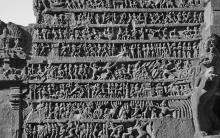
When describing Rama, Valmiki says, “कुलोचितमिति क्षात्रं धर्मं स्वं बहुमन्यते” in the beginning of the Ayodhya Kanda (1.16). Rama opined that kshaatra was the most appropriate path for his clan and took great pride in his valor. Rama knew elephant-riding, horse-riding, and was well-versed in all martial arts and techniques. If he went for war, he always returned victorious. Valmiki describes this in about 24 verses.

तात बाहट मा रोदीरेषा वै कर्मणो गतिः ।
दुषि धातोरिवास्माकं गुणो दोषाय क्ल्प्यते ॥
The central character of this story is Vikatanitamba, who lives on to this day through her muktakas (stray, independent verses). No work of this fine poet has come down to us in full; they have been swept away in the flood of time.
In the Bhagavata Purana, there is the moving episode of Kuchela’s visit to Krishna’s palace. Kuchela and Krishna were classmates in the gurukula of Sandipani. Kuchela leads an impoverished life while Krishna is a king. Kuchela visits his old friend with a view to ask him for help but when he actually meets him, he is unable to bring himself to ask for a favor.
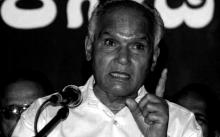
One of the greatest writers of modern Kannada literature, Padma Shri Dr S. L. Bhyrappa speaks about a wide range of issues including history, academia, politics, linguistics, and literature in this no-holds-barred conversation.