

Padma then goes on to the line tau pituḥ vācā pañcavaṭi-vane viharataḥ to continue the story and in the process, she indicates how Rāma, Sītā, and Lakṣmaṇa were ferried across the River Gaṅgā – she uses a special movement of the feet while she rows (the invisible boat) with her hands; it gives the viewer the illusion of a real boat moving across the stage. The movement is also along the diagonal of the stage, giving us the three-dimensional feel. She even depicts the boat stopping with a mild jerk at the banks of the river and each getting off with different mannerisms.
Author:hari

Unity in Variety
Humans differ from one another in many ways: physical, intellectual, moral, social, cultural, etc. There are inherent temperamental differences in people. If we do not take into account these differences while prescribing a certain path to lead a good life—and instead offer a single formula to all, it will only lead to incompatibility. Moreover, it is this variety in human beings that makes them valuable to one another.
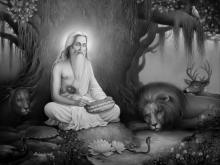
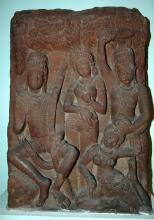
The ekārtha presentation Rāmāya Tubhyaṃ Namaḥ by Dr. Padma Subrahmanyam has captured the imagination of three generations of audience and has touched the hearts of the lay and the learned alike. As typical to an ekārtha presentation, Padma presents several episodes and characters, and thereby, sketches the physical, emotional, and spiritual journey – ayana – of Rāma. In the Indian tradition, Rāma is held as one of the highest ideals of a son, brother, husband, friend, king, and lord.

Creation and Dissolution

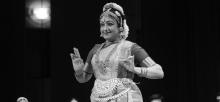
Padma is widely recognized for her path-breaking reconstruction of the mārga-karaṇas. Her achievements as a researcher and performer of this universal language are comparable only to the combined efforts of Bhagavān Pāṇini (as well as Maharṣi Patañjali) and Amarasiṃha, the masters of Sanskrit grammar and thesaurus respectively. At an early stage in life, she realized that the sublime scheme of Bharata accommodates all beautiful movements, regardless of the barriers of space and time.

Liberation: Here and Now
One of the remarkable contributions of Hindus is that they not only crystallized the concept of Ultimate Liberation but also established its immediacy. In other words, mokṣa is not restricted to a post-death stage but can happen here and now.
This glorious conception—of being liberated during one’s lifetime—is called jīvanmukti.