
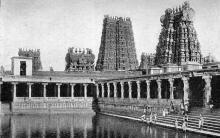
It seems to me that we Indians are quite talented at criticism. Rapier-sharp logic and critical reasoning has been a part of our heritage for millennia. Such criticality, in the right measure leads us to growth, but in excess leads us to pessimism, cynicism and eventually inaction. I often hear people complain about several historical blunders that we have committed and how it has brought us down, but I rarely get to hear solutions (especially ones we can implement at a personal level).
Author:Hari Ravikumar
Dharma is broadly classified into two groups – general or universal (samanyadharma) and special or particular (visheshadharma). In the category of samanyadharma, all the basic values which generally never change with space and time are included. Here, the divisions of caste, creed, occupation, nationality, gender, race and other distinctions are not decisive. What we would call as human values today – values like truth, non-violence, freedom from greed, purity of thought, word and action, self-control, etc.

The Sanskrit Podcast hosted by Shoba Narayan and featuring Naresh Keerthi
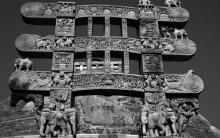
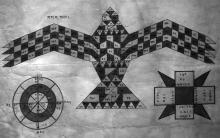
Dr. M. D. Srinivas traces the history of Indian mathematics for the past two millennia. He shows how mathematics in India evolved independently of European mathematics and how it is fundamentally different. When we observe the evolution of Indian math, we find that its fundamentals and its objectives are vastly different from what one might imagine.

यां चिन्तयामि सततं मयि सा विरक्ता
साप्यन्यमिच्छति जनोऽप्ययमन्यसक्तः ।
अस्मत्कृते च परितुष्यति काचिदन्या
धिक्तां च तं च मदनं च इमां च मां च ॥
yam chintayami satatam mayi sa virakta
sapyanyamicchati janopyayamanyasaktah |
asmatkrte ca paritushyati kachidanya
dhik tam cha tam cha madanam cha imam cha mam cha ||

Ananda Coomaraswamy remains one of the most staunch defenders of the Indian tradition in the mold of what David Frawley calls an intellectual kshatriya. Coomaraswamy wrote a series of articles about the state of (the British-imposed) Indian education and alerted Indians about its perils.
Ananda Coomaraswamy mostly wrote for a scholarly audience, so he didn’t quite use the forthright language that Swami Vivekananda did:

We will never tire of repeating that quote of Vidyaranya from his Panchadashi that amply illustrates how he managed affairs of state as well as those of the Spirit:
ज्ञानिना चरितुं शक्यं सम्यग्राज्यादिलौकिकम्
It is indeed possible for the enlightened one to navigate politics and worldly affairs well

A common and genuine fear among conservative Indians (specially the elders) is that the rampant westernization amongst Indians is leading to the gradual decline and eventual ruins of Indian culture and tradition. They suspect that Western goods, clothes, foods, festivals, style, language, and moreover Western thought is spreading across the populace. The purpose of this article is to look at the many reasons that cause such fears and analyze them by comparing with reality. This analysis is mainly from the Hindu perspective since that is where my experience lies.