
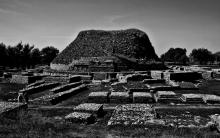
There was a certain amount of misrule and evil during the reign of the Nandas. A powerful force awoke that would destroy all that evil from the past. That was Chandragupta Maurya. What we know from our written history – and commonly agreed upon – is that Chandragupta was a great example for the brilliance of kshaatra. There are many accounts of this in Jaina, Bauddha, and Hindu – Sanatana Dharmic – literature.
Author:Shatavadhani Dr. R. Ganesh
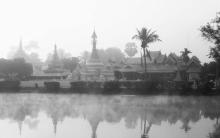
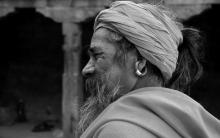
Bhaja Govindam is a popular poem attributed to the scholar-saint Adi Shankara, one of the foremost advocates of the Advaita Vedanta School of philosophy. A short work, of 31 verses, it urges us to pray to Govinda (‘the herder of cows,’ another name for Krishna).
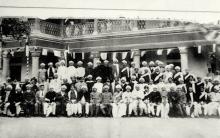
From a young age, Krishnacharya apparently suffered from ill-health. He had several digestion-related ailments for which he tried a variety of treatments, all of which failed. Finally, he decided to create a specific diet and remold his eating habits, and as a result attained good health. He had named that diet ‘ಹವ್ಯಪಾಕ ಪದ್ಧತಿ’ [Anything offered to the fire of yajna is traditionally called ‘havya’ or ‘havis,’ ‘paaka’ refers to cooking, and ‘paddhati’ is custom or practice.

In 1972, Satyajit Ray made a documentary film on Benode Behari Mukherjee, a painter who became blind in his fifties. The documentary features the life and works of the great painter, traversing the journey from his childhood till his affliction and life after his handicap.
Mukherjee famously said, "Blindness is a new feeling, a new experience, a new state of being."

Through the ages, in the writings of great thinkers and social commentators, we find a certain weakness for nostalgia. We often find passages that bemoan the fall in moral values in the present generation (as it applied to them) and how the days of the past were so much better.
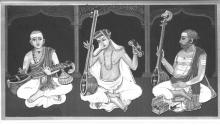
The etymology of the word ‘Raaga’:
The word raaga has many meanings. Raaga means love, color (referring to red in particular), emotion, bliss, comfort, beauty, pathos , passion, attraction etc., In common parlance, however, raaga is understood as the essence of a song/music. Now what does the etymology of the word say? 'रञ्जनाद्रागः'- It means one that entertains.
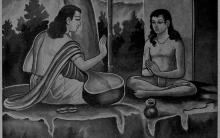
अभिमानदम्भादिकं त्याज्यम् । ६४
64. Abandon pride, hypocrisy, etc.
तदर्पिताखिलाचारः सन् कामक्रोधाभिमानादिकं तस्मिन्नेव करणीयम् । ६५
65. Having offered all activities (to the Supreme) if (still troubled) by lust, anger, pride, etc. then offer them (to the Supreme) as well.
[The Bhagavad-Gita says, “Whatever you do, whatever you eat, whatever you offer in yajna (worship) or give as dana (charity) or give up as tapas (austerity), dedicate that to me.” (BG 9.27)]

IV
इदानीं पाण्डित्यपारम्यमात्रमेदुरं दर्शनध्वनिदूरं प्रदर्शनपर्याप्तवाच्यवैदुष्यं विद्वत्काव्यविषये किञ्चिदालोचयामः। तदिदं बहुधा श्रद्धाजडं, रूपगर्वितं, यातयामञ्च कविकर्म परिणामात् प्रयत्नं, प्रतिभानात् पाण्डित्यं, परिपाकात् प्रावीण्यञ्च बहुमन्यमानानां दुर्विलसितमेव समजनि। अनेनैव हेतुना हि युगेऽस्मिन् कल्पनावतां कवीनां स्थाने वैदुष्यदुर्विदग्धानां प्रत्यादेश आसीत्।
[contextly_sidebar id="gitNMfbHZ2QNMTaRUVhC1ibNRkzznNpN"]
After casting aspersions on the authenticity of the Great War, Kosambi goes on to examine the ethics of the Gita as if the war happened exactly as narrated by the Mahabharata (emphasis is mine):