
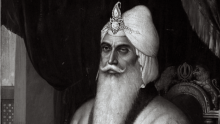
Maharaja Ranjit Singh stands in the forefront of this great Sikh warrior tradition. It was Ranjit Singh who reestablished Sanatana Dharma in the North Western regions (Afghanistan and surroundings) of Bharata after the downfall of the Mughal Empire. He was the nightmare of the British.
Author:prekshaa
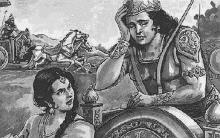
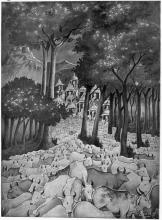
While at one end, Virāṭa was in the process of releasing the cows captured by Suśarma, at the other end of the kingdom, Duryodhana—accompanied by Bhīṣma, Droṇa, Karṇa, Kṛpa, Aśvatthāma, and others—captured the cows of Virāṭa. Looking at that, the chief of the cowherds rushed to the palace and came to Virāṭa’s son Bhūmiñjaya or Uttara and pleaded, “O Prince! Your cows are being captured; rush, go at once, and protect them! When the king isn’t present, you are verily the king.
“आचिनोति च शास्त्रार्थानाचारे स्थापयत्यपि।
स्वयमाचरते यस्मादाचार्यस्तेन चोच्यते॥”
“An Acharya is one who consolidates the essentials of a knowledge system, establishes them in tradition, and himself observes them in practice”
The insights of the sort DVG possessed emanated precisely from this deep understanding of philosophy, or more accurately, his realization of Darshana. In other words, when we grasp the nature of the world characterized by name and form (nAma-rUpa), we develop what is known as the tara-tama vivEka—wisdom to grade worldly events and phenomena. In his own[1] words,
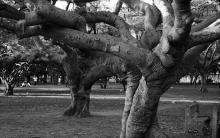
Dharma-dhvaja
I recall an incident when Shivaswami Iyer once poked fun at a group of people, calling them ‘Dharma-dhvajas.’ This was during one of his lectures at the Lions’ Institute in Bangalore. “A person who wants to help others—i.e., who wants to perform acts of dharma—and also wishes to make his humanitarian service known to the public is called a dharma-dhvaja by Manu. Basically, he wants his flag (dhvaja) of ‘dharma’ flying high at all times and that people should notice it.
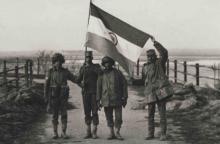
Writing just four years after India attained independence, DVG characterizes[1] our freedom from British rule as a “fruit” endowed with a “sour taste.” But more bluntly,
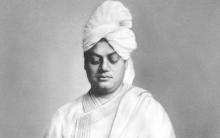
"It's better to wear out than to rust out", Swami Vivekananda used to often say. True to these words, having worked tirelessly for over a decade, his body began to wear out by his late thirties. Diabetes, obesity and related complications made his health most precarious. There was a condition of general dropsy with his feet especially swollen, making it difficult for him to walk. His body became so sensitive that the slightest touch would cause him acute pain. Sleep was hard to come.
Back at Hastināpura, the spies that Duryodhana had set out in search of the Pāṇḍavas returned to the capital and reported to their king. “We thoroughly searched the forests and we were unable to find the Pāṇḍavas there. We don’t know where they are gone. We heard that their chariots were taken to Dvārāvati and we went there to take a look. It appears that the charioteers had brought empty chariots without the heroes in it. There was no trace of the Pāṇḍavas or Draupadī anywhere. It is quite likely that they are dead. On a different note, there is pleasant news.
In the present context, it would not be incorrect to say that the various expositions on sāmānya-dharma in the myriad smṛti texts have its origin in the conception of the eight ātma-guṇas in Gautama-dharma-sūtra, the fundamental kalpa-sūtra text.