
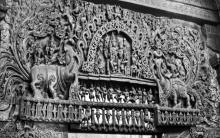
Even today it is believed that if the ‘śrāddha’ rites for ancestors are performed once in Gaya, they need not be performed again every year thereafter. The ancestors would attain ‘Viṣṇu-pāda’ (Viṣṇu's feet) i.e., salvation through this. These rites may be performed here, not only for one’s parents, but for any of the person’s relatives or friends. Even childless people may perform their own śrāddhas here (page-186 ‘Saartha’). This myth regarding the holiness of Gaya is a continuing myth that has been growing through generations.
Author:Prof. L V Shantakumari
अलङ्कारशय्यानिमित्तेन शेषः
पुरारेर्मुरारेर्श्च गात्रानुषङ्गात् ।
त्यजन् सर्पतां भीकरीं सज्जनानां
मनुष्यत्वमानन्ददं संप्रपेदे॥

This is a translation of the article by Dr S. L. Bhyrappa that appeared in a Kannada daily on September 24, 2006.
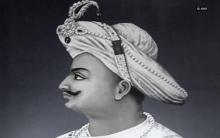
One of the most characteristic features of almost all medieval Muslim invaders and rulers of India is their religion-fueled zeal for destroying Hindu temples. From Muhammad Ghaznavid to Babur to Malik Kafur to Muhammad Bin Tughlaq to Aurangzeb to Nadir Shah, every single Muslim invader and/or ruler made temple destruction his mandatory religious duty. In this, Tipu Sultan stands shoulder-to-shoulder with these temple destroyers extraordinaire.
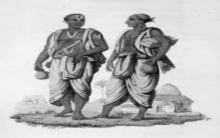
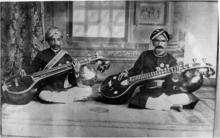
Translator’s Note: This is the second and concluding part of the iconic D.V. Gundappa’s series profiling the life and lifestyles of numerous traditional Vedic scholars. The first part translated and published on Prekshaa Journal is available at this link.
'Nele’ and ‘Saakshi’ unveil the myths, rites, rituals, and customs related to death, funerals, the world after death, against the realistic backdrop the life in this world. These two works explore the roots of existence, ethics and emotions and lay bare the inner psyche of man, by fusing our realistic world, which is comprehensible through the senses, with the incomprehensible, surrealistic world of myths and mythological characters and situations.

For a moment, just visualize the kind of public debates that happen today – on television, in the newspapers, and in person. In the light of these images floating in your mind, read the following lines:

This is a short glossary of some of the technical terms often seen in Hindu literature. A glossary such as this becomes inevitable on most occasions since many of these terms don't have single word equivalents in English or any non-Indic language, since these concepts are often not found in other cultures.
artha • wealth; motive; cause. It refers to the material objectives and accomplishments of a person. One of the four puruṣārthas.
ātman • soul; spirit; the inner, higher Self of an individual.
The foundational works of Hinduism have, for centuries, been transmitted by means of an oral tradition – teachers taught their disciples, who committed every word to memory and then passed it on to their disciples without any variation. Needless to say, many ancient texts have been lost over the years. For ease of understanding, in this article we use the term ‘texts’ instead of ‘works,’ or ‘compositions,’ or ‘treatises,’ but they include both orally composed works and written texts.

This is the second part of the article, Sanatana Dharma from Scratch by Shatavadhani Dr. R Ganesh, discussing about several fundamental aspects of Hinduism.