Chanchal Rao’s Nourishment of Dharma
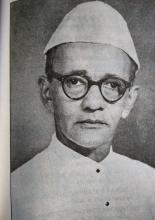
P Chanchal Rao was an Āndhra-brāhmaṇa. He was a great Sanskrit scholar and one who had gained expertise in all modern subjects concerning state administration. In conduct, he was extremely honest and pure.

P Chanchal Rao was an Āndhra-brāhmaṇa. He was a great Sanskrit scholar and one who had gained expertise in all modern subjects concerning state administration. In conduct, he was extremely honest and pure.
“इदमन्धन्तमः कृत्स्नं जायेत भुवनत्रयं यदि शब्दाह्वयं ज्योतिरा संसारान्न दीप्यते” इत्येतद्दण्डिवचनं श्रद्दधानैः किल भारतीयैः भुवनभासिका भारती पुष्कलं समुपासिता समर्धिता च। अस्मत्प्राचीनैः साक्षात्कृतधर्मभिः दैवी वागन्वभावि; लौकिकी च वाक् समस्कारि। यथा हि शाब्दिकाः कृतकेतरां वाचं यथावदन्वाख्याय मानुषीं भाषां बहुधा व्याचक्रुः, तथैव छन्दःशास्त्रज्ञाः श्रुतिं छन्दःसञ्ज्ञां यथावत् समाम्नाय लौकिकानि बहूनि छन्दांसि प्रतिपादयामासुः। वेदपुरुषस्य चरणत्वेन छन्दः स्वीकृत्य तद्वर्णनव्याजेन विश्वविसृत्वरं पदविलासं ते वर्णयामासुः। छन्दःशास्त्रं वेदाङ्गमपि काव्याङ्गमपि। वेदवारि

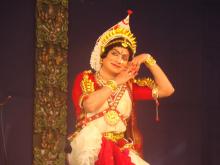
Traditional forms of dance that have their roots in the upa-rūpakas are today called śāstrīya-nṛtya. There are several regional forms of śāstrīya-nṛtya (classical dance) such as Sadir, Tāphā, Keḻikè, Oḍissi, Mohiniyāṭṭam, Kūcipūḍi, Kathak, Maṇipuri, Gauḍīyā and Sattrīya. In fact, several of these dance forms are by-products of the original theatrical traditions.
The prince rode with his army to the borders of Vidiśānagara and sent word through an emissary to king Meghamālin seeking the hand of princess Haṃsāvalī. An elated Meghamālin himself came to meet Kamalākara and said “O prince! You need not have ridden so far for this. You had to but only send a missive expressing this noble wish of yours. I am indeed in favour of this alliance. Let me tell you why. When Haṃsāvalī was only a little girl, I was worried as to who might someday marry her. So much, in fact, that I became bedridden with fever.
It is natural for artistes to try their hand at bringing novelty to their art. It is rather common to see new experiments and novel presentations being tried out in every form of art. Sanātana-dharma considers the world to be the poetry of the divine. Art is, after all, a part of this Deva-kāvya and we have added beauty to our life-poetry - jīva-kāvya - by innovating from time to time. Bhaṭṭa-nāyaka, one of the prominent commentators on the Nāṭyaśāstra writes the following benedictory verse:
“Arjuna, what I am explaining to you now is not something new and contemporary. It is something that I had explained to the sun named Vivasvān at the beginning of creation. He, in turn, taught this to Manu, the progenitor of the human race. Manu then gave the same upadeśa to Ikṣvāku, the foremost among kings. Thus, this knowledge of karma has been passed on through many generations. Earlier, many king-sages like Janaka and others followed the tenets of this knowledge and became accomplished."
Kauśikī’s words of praise upon seeing Mālavikā perform are noteworthy. Her response is in the form of a verse, whose second half provides incredible insights into all major forms of art including poetry. She says: bhāvo bhāvaṃ nudati viṣayād rāgabandhaḥ sa eva (2.8). It roughly means: “One emotion inspires the next, covering the whole range of feelings. This is how a passionate recital looks like!” We can broadly relate this to literary aesthetics in the following manner. Bodily movements in dance can be likened to words that constitute the form of poetry.
Now, I will explain the meaning of the phenomenon you saw in the lake. The incidents there indicate what will befall Mṛgāṅkadatta in the future. He is the lion cub; his ministers are his ten arms. His father, who is like the hunter shooed him away from his kingdom, i.e., the forest, out of anger. He heard of the fame of Śaśāṅkavātī, who is born in avanti; as he rushed towards her, he got stuck in a whirlwind, symbolized by the net and lost his arms which were the ministers. Following this, Vināyaka put them all back in place and he regained his original state.