
Author:sandeep
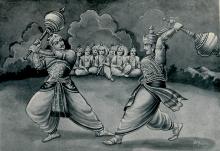

The story of Bhadrabāhu and his intelligent minster
There lived a king named Bhadrabāhu in the Magadha kingdom. He had an intelligent minister named Mantragupta.
Śāṇḍilya who had cried hoarse seeing Vasantasenā body isn’t so sad seeing his preceptor dead, he calls him vācāla - which positively means a great orator but also has a negative connotation signifying that he blabbers a lot! Calls him yogavit - knower of yoga but finally ends his words by stating “even scholars would finally die!” as a matter of fact!
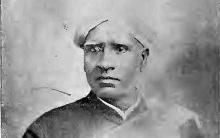
We learn the following from a treatise authored by M Gopalakrishnayya, published by the Mysore Electrical Department in 1932 – apparently, during the last decades of the nineteenth century, the possibility of power generation had been shown to the British engineers and there had also been a few bilateral correspondences regarding this between the Resident and a few business organizations. The details of the proposal, however, had not been examined.
Krishnamoorthy has expounded on an English sonnet composed by Wilfred Owen using Indian literary principles.[1] His analysis of Thomas Gray’s famous poem Elegy Written in a Country Churchyard is fascinating:
Full many a gem of purest ray serene
The dark unfathomed caves of ocean bear;
Full many a flower is born to blush unseen,
And waste its sweetness on the desert air.

अव्याद्वो विघ्नविध्वंसकीर्तिस्तम्भमिवोत्क्षिपन् ।
करं गणपतिः क्रीडालीनभृङ्गाक्षरावलिम् ॥
[Let the deity, Gaṇeśa protect you, he plants his trunk like a victory pillar (Kīrtistambha) with the swarming bees around it looking like the letters on the pillar proclaiming his victory over obstacles]

Why only Svadharma?
"One’s own karma performed diligently, even though it may not be the best thing, is better than others’ karma performed in a most satisfying manner". What then is svadharma?
Certain qualities, powers, propensities, and enthusiasm come to some people naturally. Using such qualities, that mindset and those internal faculties for the benefit of the world is dharma.
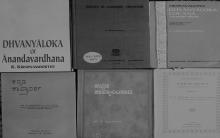
Translations form a major part of Krishnamoorthy’s oeuvre. His English translations of Sanskrit works include Dhvanyāloka, commentary by an anonymous author on the first chapter of Locana, Vakroktijīvita, Yaśodharacarita, Kavikaumudī and a few sections in Ancient Indian Literature (vol. 2) published by Sahitya Akademi.