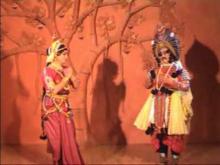
Let us proceed to the sixth act of Abhijñānaśākuntala. Duṣyanta has made a painting of Śakuntalā. The vidūṣaka takes one look at it and exclaims: “Madhurāvasthāna-darśanīyo bhāvānupraveśaḥ,” “You have sketched her posture so charmingly that real emotions seem to enter the painting!” (Loose translation.) These words are of supreme significance to aesthetics. Duṣyanta’s brimming love for Śakuntalā has been reflected in the painting and has made it attractive in every aspect.
Author:shashikiran
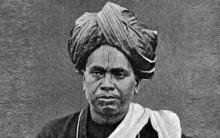
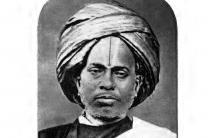
Virūpākṣa-śāstrī
Everyone agreed to that [conditions laid down by Seshadri Iyer’s wife]. Seshadri Iyer himself, very cheerfully, agreed to all of it. According to the agreement, to deliver discourses on the Purāṇas, they appointed Hānagal Virūpākṣa-śāstrī. He had been a student of the Saṃskṛta Pāṭhaśālā during his early days and with the passage of time, rose to prominence as ‘Vidyānidhi’ and ‘Mahāmahopādhyāya.’
Dhairyapāramitā - The pinnacle of courage
Long ago lived a brāhmaṇa boy called Mālādhara. One day, he saw a siddha boy flying in the sky and developed an insatiable desire to fly. He fashioned wings out of foliage and tied them upon his person and tried to jump and leap about. Kumārasvāmin who was passing by in the sky noticed the boy’s futile attempts. Out of compassion, the lord took Mālādhara into his order. Thus it follows that true courage pleases even the deities.
According to one set of friends, the letters “M N” in M N Krishna Rao’s name stand for Maḍi [orthodoxy, purity, conservatism, discipline, ritualism] and Niyama [rule, principle, order, justice]. It hints at Krishna Rao’s nature. In all dealings and in all aspects – rules, estimation, conviction, and principle – this was Krishna Rao’s specialty.
The Two Parties
This controversy raged on quite intensely. Several public meetings were held by the prominent citizens of the State, countless petitions were filed, and innumerable newspaper articles were published. People believed that M Venkatakrishnayya was the leader of the party that wanted the Mahārāṇī—and no one else—to be the regent. Rumours were rife that Ambale Annayya Pandita, who was Seshadri Iyer’s wife’s relative, was the leader of the other faction.
Abhijñānaśākuntala is one of the ripest fruits of Kālidāsa’s mature genius. The poet makes a candid confession in the prologue of this play:
आ परितोषाद्विदुषां
न साधु मन्ये प्रयोगविज्ञानम् ।
बलवदपि शिक्षिताना-
मात्मन्यप्रत्ययं चेतः॥ (१.२)
I cannot be convinced of my skills as a dramatist until discerning spectators are satisfied. Even well-trained people are beset by self-doubt.
ಭಾರತದ ಪ್ರಾಚೀನತೆಯನ್ನು ಸಾರುವ ಪದ್ಯ ಹೀಗಿದೆ:
ಯದಾ ಸರ್ವಂ ಮಾತರ್ಭುವನಮಿದಮಾಸೀಚ್ಛಿಶುನಿಭಂ
ವಚೋಹೀನಂ ದೀನಂ ಪಿಹಿತದೃಗಿವಾಜ್ಞಾನತಮಸಾ |
ತದಾ ಗಂಗಾತೀರೇ ಸ್ಫುರಿತವಿಮಲಪ್ರಾತಿಭದೃಶ-
ಶ್ಚತುರ್ವೇದೋದ್ಗಾನಂ ಜನನಿ ನಿಗಿರಂತಿ ಸ್ಮ ಮುನಯಃ || (೨೨)ತಾಯೇ! ಯಾವಾಗ ಇಡಿಯ ವಿಶ್ವವೇ ಮುಗ್ಧವಾದ ಮಗುವಿನಂತೆ ಮಾತಿಲ್ಲದೆ ಅಜ್ಞಾನದಿಂದ ಕಣ್ಣು ಮುಚ್ಚಿಕೊಂಡಿದ್ದಿತೋ, ಆಗ ದಿವ್ಯದರ್ಶಿಗಳಾದ ಋಷಿ-ಮುನಿಗಳು ಗಂಗೆಯ ತೀರದಲ್ಲಿ ವೇದಗಳನ್ನು ಕಂಡುಕೊಂಡು ಹಾಡುತ್ತಿದ್ದರು!
The Story of the Varāha-jātaka
There lived a boar in a cave in the Vindhya mountains. It was endowed with buddhāṃśa. The boar lived with a monkey in harmony and performed tasks that helped all the animals.
There were quite a few questions and uncertainties that bothered Mantap. Who do we converse with, when there are no puruṣa-veṣas on the stage? There is no other female character either. How is it possible to present certain sequences without the presence of a bench or a chair that can work as ratha[1]? How will an ekavyakti-strī-veṣa be received if it lacks even the prose conversations that are typical to the art form?
Why is Dharma Worthy of Worship?
Dharma is established and nurtured by the divine. Bhagavān who needs to have no thought for anything else thinks of dharma alone and of his own volition. This should bring the greatness of dharma to our minds. Dharma is Īśvara’s own property. Therefore, it is immensely worthy of our worship. We have to always remember that Īśvara is watching us all the time. An American poet says thus: