Author:Hari Ravikumar

There is a beautiful poem ascribed to Vedānta-deśika (born Veṅkaṭanātha) that deals with the topic of vairāgya (detachment from worldly indulgences).

क्षोणी-कोण-शतांश-पालन-कला-दुर्वार-गर्वानल-
क्षुभ्यत्-क्षुद्र-नरेन्द्र-चाटु-रचना-धन्यान्-न मन्यामहे।
देवं सेवितुम्-एव निश्चिनुमहे योऽसौ दयालुः पुरा
धाना-मुष्टिमुचे कुचेल-मुनये दत्ते स्म वित्तेशताम्॥ 1
(Meter: Śārdūlavikrīḍitam)
Among the various methods of reasoning in Vedanta, the neti neti krama is an important one. It helps delineate the nature of the Self by pointing out what it is not. A well-known poem that uses this approach of ‘Not this, not this’ is the Nirvāṇa Ṣaṭkam. While the popular belief is that these six verses were composed by Śaṅkara, scholars like G C Pande and Swami Satchidanandendra Saraswati have opined that it is unlikely because several words used in this stotra have not been used regularly in his commentaries and other writings.

The fourth part of this translation comprises the verses that are not found in the critical edition but are in the Chitrashala edition. Most of them are as elegant as the ones found in the critical edition. This episode appears in chapters 311-12 of the Chitrashala edition. The verses are not numbered so as to avoid confusion.

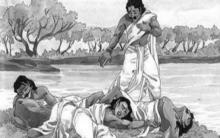
This is the third part of the translation of the Yakshaprashna. With this, all the verses in the critical edition have been translated. In the fourth and concluding part of the translation we will take up all the verses from the Chitrashala edition that have not already been covered in the critical edition.

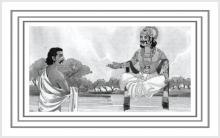
This is the second part of the translation of the Yakshaprashna, a conversation between Yudhishtira and Yama on the banks of the enchanted lake.

Chapter 297
Verses 32-62:
Yaksha
किं क्षत्रियाणां देवत्वं
कश्च धर्मः सतामिव ।
कश्चैषां मानुषो भावः
किमेषामसतामिव ॥ ३२
How does a kshatriya attain divinity?
What is his true dharma?
What is the human trait of kshatriyas?
What is the wrong path for a kshatriya?

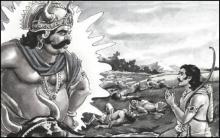
One of the most fascinating tales in the Mahabharata is the dialogue between Yudhishtira and Yama on the banks of the enchanted pool. This episode is popularly known as the ‘Yakshaprashna.’ The characters of the Mahabharata, so richly sketched by Vyasa, find relevance even today among readers. Never one to judge his characters or paint them with a single shade of color, Vyasa highlights the ridiculous and the sublime in the characters at various points in the epic.

There is much discussion, debate, and even controversy about yoga these days. But what is yoga? First of all, it is far more nuanced than the typical image of a young lady sitting cross-legged, eyes closed, deep in meditation with a benign smile on her face.

Yoga is a Sanskrit word that means ‘union.’ It simply means joining two things. For example, Rigveda Samhita 7.67.8 uses the word ‘yoga’ when it refers to the yoking of the horses to the chariot.

Hinduism is one of the major world religions with a following of over a billion people spread across all over the globe but largely concentrated in India. Some people don’t consider Hinduism a religion but rather a way of life or a sanatana dharma (loosely translated as ‘eternal system’). It doesn’t have a single founder nor does it have a standalone scripture; further, it has been constantly developing and evolving over six millennia.

Kosambi finally gives his homemade add-salt-to-taste philosophy of how we should view ancient texts:

In one of my earlier articles – Happiness, Flow, and the Upanishads – I had discussed the meaning of happiness and how the concept of ‘flow’ closely aligns with the Upanishadic view on brahmananda (supreme bliss). The state of ‘flow’ or ‘getting into the zone’ can be defined as a state of temporary moksha.