

The history of the world has been biased towards men but there is ample evidence of the immense contribution of women in various disciplines. Starting from the earliest scriptures of India all through our classical and pre-colonial history, we see how women have played a vital role in shaping our civilization and our country. Compared to the rest of the world, historically India seems to have been far more open-minded and compassionate towards women and their status in society.
Author:Hari Ravikumar

If you ask a Hindu what it means to be one, or what Hinduism is, you will get many answers. Some will say it is a way of life and not a religion. Some will say that it is a conglomeration of various belief systems. Some will say it is a religion. Some will say there is no such thing as Hinduism but it is sanatana dharma. And some will have no clue.
There is no straightforward answer. It is at once utterly simple and extremely complicated. That’s the paradox of defining something so fundamental, so natural.

In the 2015 Crime/Mystery Thriller Detective Byomkesh Bakshy!, after retrieving a corpse from an abandoned factory, Byomkesh says, “Sach ke aas-paas waala jhoot pakadna mushkil hota hai” (It’s difficult to detect a lie that is close to the truth.) At its very core, the work of a detective is to eliminate falsehood and find the truth. This is perhaps the reason why Saradindu Bandhopadhyay doesn’t call his hero a ‘detective.’ In the original stories, Byomkesh calls himself a satyanveshi – a discoverer of truth.

What is happiness? It’s hard to define but we all know what it is. We have all experienced it. In fact, we experience it every day – when we eat our food, when we work on a project that we are passionate about, when we smile at someone on the street, when we spend time with a hobby, or when we sleep.

Chakravarti Rajagopalachari (1878-1972), popularly known as ‘Rajaji’ or ‘CR’ was a renowned advocate, statesman, writer, freedom fighter, journalist, and political leader. He was hailed as M K Gandhi’s conscience-keeper (somebody had to be, for better or for worse). A voracious reader, original thinker, astute politician, and prolific writer, Rajaji was a modern-day renaissance man. He was also a devout Hindu with a firm belief in the almighty and great admiration for saints like Shankara and Ramanuja.

Which is the oldest religion in the world? Nobody knows. Ask the foremost historian or the greatest saint but they will not have an answer. We know so little about the earliest humans who inhabited our planet. But we can take an educated guess about the first god. Keep aside for a moment the view that god created the universe and just consider how humans visualize god. Most probably, the first god that humans recognized and worshiped was the sun.
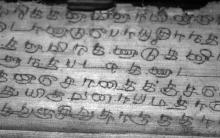
Subhashitas (su = good, bhashita = spoken) are self-contained verses that are witty, romantic, wise, puzzling, devotional, sarcastic, or didactic. While many of the subhashitas are standalone compositions by various poets, some of them are extracts from major works of poetry or drama (like Raghuvamsham).

Do you love your spouse? Do you love your child? Do you love your parents? Do you love your wealth? Do you love wisdom? Do you love power? Do you love god? Most of us would answer with a yes to at least a few of these questions, but according to a famous story in the Brihadaranyaka Upanishad (2.4.1-5) the answer is no.
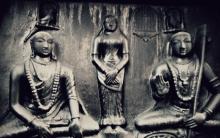
In the tenth episode (The Edge of Forever) of the TV series Cosmos, speaking about Hinduism, Carl Sagan says, “Here, there is a tradition of skeptical questioning and unselfconscious humility before the great cosmic mysteries.” He was most intrigued by the famous creation poem in the Rigveda Samhita known popularly as the ‘Nasadiya Sukta.’ A short poem of only seven verses, it discusses the great mystery of creation.

Bahinabai, the renowned folk poetess, lived in a small village in Maharashtra. She was illiterate and unschooled but was a prolific composer of poetry (mostly set to the folk poetic meter called ovi). While she composed all these poems orally, her son Sopandev wrote them down and got them published with the help of the Marathi polymath P. K. Atre.