Author:sandeep
The Case
The government filed a case against Sitarama Shastri and Ashvatthanarayana Rao, accusing the article published in Navajīvana to be treasonous.
Shastri had severely criticized the government’s callous attitude towards its own people in the January 1929 issue of Vīrakesari. The issue published on 15th January had an article titled Will Tyranny Win? The contents were as follows –
निर्विघ्नविश्वनिर्माणसिद्धये यदनुग्रहम्।
मन्ये स वव्रे धातापि तस्मै विघ्नजिते नमः॥[Salutation to that deity, the killer of obstacles, (Gaṇeśa), from whom even the creator (Brahmā) seeks blessings so that the creation can happen without hindrances.]
आश्लिष्यमाणः प्रियया शन्करोऽपि यदाज्ञया।
उत्कम्पते स भुवनं जयत्यसमसायकः॥
Journalist
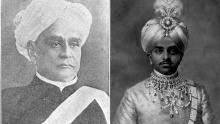
Right from his childhood days, Sitarama Shastri was interested in writing. Observing this, Krishna Shastri sent him to M Venkatakrishnayya in Mysore. Sitarama Shastri started by writing articles to his newspaper and then contributed articles to other newspapers too. During those days he also got acquainted with ‘Tāyināḍu’ P R Ramayya, ‘Sādhvi’ Agaram Rangayya, and others who were trained under M Venkatakrishnayya. In a way it can be said that journalism was in his blood. Combined with that was his erudition.
Let us first look at the theme of the work and the qualification to study it. Each of these decides the other. The story of puṇyakoṭi befits a six year old. A study of the Raghu-vaṁśa, however, is for a student aged sixteen or more.
Thus each one decides the other. The one who is capable of dealing with the viṣaya—subject of the work—is the adhikārī. The instruction has to be tailored to the education and capacity of the seeker. Both of these are thus relative to each other.
Mahmud returned again in 1020–21 CE, to punish Chandella legend Vidyadhara. On the way, Shahi Trilochanapala opposed him on the banks of the Yamuna. He was defeated again and was on his way to join Vidyadhara when he is known to have been killed. Thus, the great Shahi Trilochanapala died in 1021 CE.[1] Although Mahmud advanced to meet Vidyadhara, neither Mahmud nor Vidyadhara seem to have taken the initiative to fight and instead returned to their capitals after a show of strength.
V Si.'s Skill at Teaching and Affection for Students
Irrespective of the weather conditions and his own state of health, V Si. never missed a class. He always said – ‘When young children are coming to school, how can I sit at home and relax?’ This kind of sincerity and commitment is a rare quality and is worth emulating.
Let me narrate a couple of incidents that reflect the kind of affection V Si. had towards his students –