
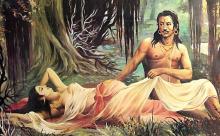
One of the days following this, Vatsarāja had a lavish party where he enjoyed drinking with Vāsavadattā and Padmāvatī. Later he called for Gopālaka, Rumaṇvanta, Vasantaka, and Yaugandharāyaṇa at a place that was not very crowded. During the course of his conversation with them, when the topic turned to his days of separation [from Vāsavadattā], he narrated this tale:
Author:hari
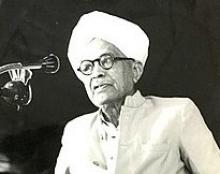
The Vampire of Doubts
V Si. had doubts at every step. “If I put it this way, this question crops up. If I say it that way, another question arises!” – This kind of uncertainty crept into his writings as well.
To this, DVG had said, “Questions keep popping up, but answers too must come up, right?”
I happen to recollect one such incident.
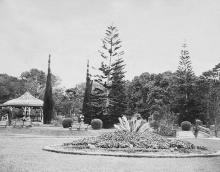
After V. P. Madhava Rao, Thanjavur Ananda Rao came to power as the Diwan. He was rich by birth and also possessed all the great attributes that a wealthy person should have. His father, Raja Sir. T. Madhava Rao, had been the Diwan of Baroda (Vadodara) and Travancore; He was well known as a person of remarkable intellect and competence. ‘Raja’ and ‘Sir’ were the titles conferred on him by the British Government. Sir. T. Madhava Rao served as the president of the Reception Committee at the first ever Congress session held in Madras.
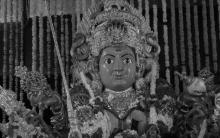
I have previously described the vaidikas[1], scholars, and connoisseurs of Mulbagal, in bits and pieces, in many series of articles. In the present essay I shall describe the typical lifestyle of Mulbagal’s people. I have not selected the topic for this article from the town of Mulbagal because the place is special in any way. Scholars and common people alike resided there in those days as they did in all other places. Since I know this town from close quarters, I have set out to describe its social milieu.
The debate took place in Sanskrit.
Shastri’s argument was as follows – In the Vedic tradition, marriage is an instrument for dharma not enjoyment; so to facilitate refinement of the individual the child marriage is emphasized, and that is considered right.
Back in the royal palace of Magadha, Vāsavadattā tried to contain her sorrow. She sought solace in gazing upon the paintings depicting Sītā’s woes in the period where she was separated from Rāma. Looking at her beauty and conduct, Padmāvatī was convinced that Avantikā was a high-born lady and treated her accordingly. The princess felt Avantikā’s looks betrayed her noble origins and she had disguised herself, just as Draupadī had in Virāṭa’s palace!
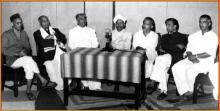
V Si.’s World of Riches
H V R Iyengar, the Governor of the Reserve Bank of India had immense respect for V Si. ‘Fate has not dealt too kindly with V Sitaramaiah’ – was the sum and substance of the worldly life of V Si.
It is indicated above that the buddhi is a power that works with the manas. The buddhi is under the influence of the manas. Therefore, to purify the buddhi, it is imperative to purify the manas. Buddhi is an implement that enables reflection. Manas experiences the product of the buddhi. In Vedānta, jñāna (wisdom) is the same as anubhava (experience). Knowledge of Brahman is the experience of Brahman. Mind is the arena of experience.
ಹಣಹಿಡುಕರ ವಿಡಂಬನೆ
‘ಹಣವಿಲ್ಲದೆ ಹೆಣ ಸುಡುವುದೂ ಕಷ್ಟ’ ಎಂದು ನಮಗೆ ಹರಿಶ್ಚಂದ್ರನ ಕಾಲದಿಂದ ತಿಳಿದಿದೆ. ಈಗಂತೂ ನಮ್ಮ ಸಮಾಜ ನಿಂತಿರುವುದೇ ಹಣದ ಮೇಲೆ. ಹೀಗಿರಲು ಜೀವನದ ಎಲ್ಲ ಆಯಾಮಗಳಲ್ಲಿಯೂ ಹಣದ ಪ್ರಭಾವ ಕಂಡುಬರುವುದು ಅಚ್ಚರಿಯಲ್ಲ. ಮುಂದಿನ ಪದ್ಯದಲ್ಲಿ ಇಂಥ ಒಂದು ಸಂಗತಿಯತ್ತ ಕವಿ ನಮ್ಮ ಗಮನವನ್ನು ಸೆಳೆಯುತ್ತಾರೆ:
ಅಕ್ಷ್ಣೈಕೇನ ವಿಲೋಕನೇ ದಶ ತಥಾ ದ್ವಾಭ್ಯಾಂ ಕೃತೇ ವಿಂಶತಿಃ
ಷಷ್ಟಿರ್ಗಂಧವಿಮರ್ದನೇ ಸ್ರಜ ಉರಸ್ಯಾಧಾಪನೇ ದ್ವೇ ಶತೇ |
ಶುಲ್ಕಂ ರೂಪ್ಯಸಹಸ್ರಮರ್ಧಘಟಿಕಾಭೋಗಾರ್ಥಮಿತ್ಯಾದಿಭಿ-
ರ್ಧೂರ್ತೈಃ ಸಂಪ್ರತಿ ಕುಟ್ಟನೀವ್ಯವಸಿತೈರ್ದೇವೋऽಪಿ ವೇಶ್ಯೀಕೃತಃ ||