
The summary is this. Daiva is hidden, a secret. It comes suddenly and unexpectedly, and cannot be grasped by the logic of causality. The word in Saṃskṛta is “ākasmika” — kasmāt means from where — “akasmāt” means that one doesn’t know from where it came. It is not possible to determine the causes and effects of such an occurrence. Since daiva is not directly perceptible, we forget it. The blow of despondency, if it hits us, becomes tolerable if we keep daiva in our minds while performing karma.
Author:hari
Yaśovarmā, Bhavabhūti’s contemporary, is the author of the now-unavailable play, Rāmābhyudaya. Eminent aestheticians such as Ānandavardhana have held this work in high regard and have quoted from it. This tells us that the play was indeed wonderful. Let us examine a verse that probably was a part of its prologue:
औचित्यं वचसां प्रकृत्यनुगतं सर्वत्र पात्रोचिता
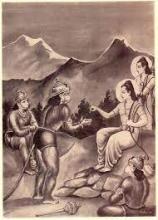
Once the sky was free of clouds, Rāma, who had waited patiently the entire rainy season, was overcome with intense desire to regain the company of Sītā. He looked at the clear skies of the autumn night and the shining orb of the moon. Realising that Sugrīva was given over to lust and that the right time for action had passed, Rāma lamented deeply. He cried, “My beloved, whose voice was as sweet as the sārasas, found delight in their calls; how will she find enjoyment now? The beautiful lady used to wake up to the calls of the divine swans in the past.


Since saṃsāris are thus different from saṃnyāsis, the interest and regard of saṃsāris towards karma is different from that of saṃnyāsis. However,the meaning that we derive from the above śloka from the point of view of saṃsāra is not conflicting with or incongruous with that derived from the point of view of saṃnyāsa. This new path will set a context for people in the present age and time.
Let us see the individual words of the above verse, one by one.
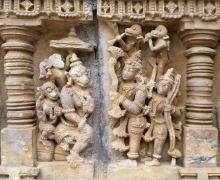
Vālī’s wife Tārā heard that her husband had been struck down by an arrow shot by Rāma. She rushed out with her son from her cave-residence. At the sight of Rāma with his bow, many timid vānaras started fleeing. They warned Tārā not to go to the vicinity of Rāma and said, “Let our warriors protect the city and Aṅgada assumes kingship. We will all serve him!” Nevertheless, Tārā went to her mortally wounded husband and lamented, “O peerless warrior in battles! Why do you now not speak to this wretched woman, who has done no wrong! Rise up, tiger among vānaras!
Upakosala (Chāndogya) continued
After three agnis instructed Upakosala, one amongst them, Gārhapatyāgni said, “Upakosala, I’ve four bodies, Pṛthvī, Agni, Anna and Āditya. Amongst these, the puruṣa who resides in the Āditya maṇḍala, I’m that. Whoever realizes this and does upāsanā, they will rid themselves from all the pāpa and will find prosperity.”

Managing the family is a vrata. Marriage is a dharmic ritual. The transactions with the world that is done for these are opportunities for performing dharma. Household chores that are performed with this feeling are akin to tapas. It can also be thought of as yajña. We have already seen that the Vedas extol the entire life and all the worldly transactions of a jñāni as a great yajña.
tasyaivaṃ viduṣo yajñasyātmā yajamānaḥ ।
In the plays written by the great poet Bhavabhūti we find passages that not only reveal his personality and learning, but also his insights into literary aesthetics. Let us examine a few such passages. The poet presents the superior qualities of his creation in a verse that appears in Mālatīmādhava:
भूम्ना रसानां गहनप्रयोगाः
सौहार्दहृद्यानि विचेष्टितानि।
औद्धत्यमायोजितकामसूत्रं