

While bringing up a baby, is one who feeds milk superior and one who cleans the cradle is inferior? Is the person who rocks the cradle superior to the one who takes the baby to the toilet? Due to the love a mother has for the baby, she is equi-poised towards all activities that have to be done to keep him healthy and happy. There is no evaluation of the work as superior or inferior. Even in the service of Bhagavān, it is similar; there is no superior or inferior.
Author:hari

Hanūmān grew in size and set forth from there. But as he left, he thought, I have found her, but there is one thing that remains. Among the four upāyas, sāma in case of rākṣasas will be fruitless; dāna is not required as they have amassed a lot of wealth; bheda doesn’t work as they are proud of their strength; I will take to the fourth, the daṇḍopāya. If I kill a few rākṣasas now, it will weaken them. The best person achieves things over and above what is assigned to him.
युद्दभूमि में बडे बडे योद्दाओं द्वारा प्राण त्यागने वाले वीरों को प्राप्त ‘स्वर्गलोक’ की अवधारणा में सनातनधर्म और सेमेटिक धर्मो के मध्य मूलभूत अन्तर है। उदाहरणार्थ इस्लाम में शहीद को जन्नत मे विलासिता का सुखभोग जैसे बहत्तर हूरों के साथ शारिरिक भोग का आश्वासन दिया गया है। इसके विपरीत भारतीय परम्परानुसार हमें असंख्य ऐसे ‘वीरागल’, अर्थात् बलिदानी की स्मृति में खड़े किये गये प्रस्तर स्तंभ मिलते है जिनके तीन भाग होते है। आधारभाग में रणभूमि में योद्दा के शौर्य प्रदर्शन और उसके प्राण-त्याग का चित्रण उत्कीर्ण होता है, मध्य भाग में देवतागण उसे अपने स्वर्गिक वीमान में बैठ

In our times, the question of why is a brāhmaṇa given more importance has become more and more vociferous. The answer to that is in the description of the above qualities. A brāhmaṇa is devout and truthful; he regards that knowledge is of paramount importance and is always peaceful. All people of all countries respect such a person. Respect for those qualities are not out of drum-beating or force or even encouragement. It is born by itself from within the breast.

{ದ್ರುತವಿಲಂಬಿತ} ದ್ರುತವಿಲಂಬಿತವನ್ನು ಸಂತುಲಿತಮಧ್ಯಾವರ್ತಗತಿಯ ಹಂದರದ ಮೇಲೆ ಹಬ್ಬಿದ ವೃತ್ತವಲ್ಲಿಗಳ ಜೊತೆಗೆ ಸೇರಿಸಿಕೊಳ್ಳುವುದು ಸ್ವಲ್ಪ ಚಿಂತ್ಯವೆನಿಸಬಹುದು. ಆದರೆ ಈ ಬಂಧದ ಹಾಸು-ಹೊಕ್ಕನ್ನು ಬಿಡಿಸಿ ನೋಡಿದರೆ ಈ ಸೇರ್ಪಡೆಯ ಔಚಿತ್ಯ ಸ್ಪಷ್ಟವಾಗುತ್ತದೆ.
ಮೊದಲಿಗೆ ದ್ರುತವಿಲಂಬಿತದ ಪ್ರಸ್ತಾರವನ್ನು ಪರಿಕಿಸೋಣ:
u u u – u u – u u – u –

Nāṭaka has a special place in the world of Sanskrit literature. Indian aestheticians have always held that nāṭaka occupies the highest rung in the hierarchy of different genres of creative literature. Their view is, indeed, justified. Several forms of fine arts and performing arts undergo an aesthetic blend to give birth to a nāṭaka. The product is marvellous and transcends the sum of its components. From a historical perspective, we can say that nāṭaka is the final and the largest flower that blossomed in the floral bunch of Sanskrit literature.
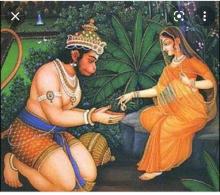
Hanūmān, who was hiding behind the branches of the tree, had thus seen and heard everything that had taken place there. He thought, ‘I have found Sītā, but I must not go back without reassuring her. If I don’t do so, she will not survive the night. I must also take her message to Rāma. Let me wait until the rākṣasīs slacken their vigilance. I probably must speak to her employing Saṃskṛta – the cultured language familiar to the humans. But then, she might take me for Rāvaṇa if I speak to her in Saṃskṛta and get frightened.

Impurities comprise impressions carried over from many lives, or natural temperaments — different tastes, wavering wants and infatuations, etc. Thus, the unconscious tastes and impressions from past lives are the impurities. Some of them are to be suppressed and purged. Others are to be experienced fully and then only can they be done away with. Purifying the sattva means eradicating the past impressions. This happens when they are indulged and used up in dealings with the world.