Author:hari

Let us now conclude this topic. The jīva has come in contact with the saṃsāra-tree. The root of that tree is in the supreme position (“parame vyoman”). In its lower part are branches and twigs in the form of the world. The higher the jīva goes - towards the root - the farther he gets from the bitterness, all the bothersome pests and filthy odours of the tree. That is mokṣa. The upward journey towards the origin is fueled by the effort of discernment. How, though, can that be done?

Nature

ಶ್ಲೋಕದ ಬಳಿಕ ಉಪಜಾತಿ, ವಂಶಸ್ಥ, ರಥೋದ್ಧತಾ, ವಸಂತತಿಲಕಾ ಮೊದಲಾದ ಹಲವು ಛಂದಸ್ಸುಗಳು ಸಂಸ್ಕೃತಸಾಹಿತ್ಯದಲ್ಲಿ ಪ್ರಸಿದ್ಧಿ-ಪ್ರಾಚುರ್ಯಗಳನ್ನು ಗಳಿಸಿವೆ. ಇವುಗಳ ಸಂಖ್ಯೆ ಇಪ್ಪತ್ತು-ಮೂವತ್ತಕ್ಕಿಂತ ಹೆಚ್ಚಿನದಲ್ಲ. ಇವುಗಳ ಪೈಕಿ ಲಯರಹಿತ ವೃತ್ತಗಳೇ ಅಧಿಕ. ಇಂಥ ವೃತ್ತಗಳ ಗತಿಗಳಲ್ಲಿ ಸಾಕಷ್ಟು ಸಾಮ್ಯವುಂಟು. ಆದುದರಿಂದ ಪ್ರಸ್ಫುಟವಾದ ಗತಿವೈವಿಧ್ಯವುಳ್ಳ ಲಯರಹಿತ ವೃತ್ತಗಳ ಸಂಖ್ಯೆ ಮತ್ತೂ ಕಡಮೆ. ಆದರೆ ಈ ಸಂಖ್ಯೆ ಲಯಾನ್ವಿತವಾದ ವಿಶಿಷ್ಟ ವೃತ್ತ-ಜಾತಿಗಳ ವೈವಿಧ್ಯಕ್ಕೆ ಹೋಲಿಸಿದರೆ ಹೆಚ್ಚು. ಇದು ನಿಜಕ್ಕೂ ವಿಸ್ಮಯಾವಹ.

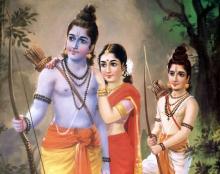
The next morning, Rāma awoke Lakṣmaṇa and they set out into the forest. Rāma enjoyed the beauty of nature and pointed it out to Sītā as well. Spellbound with the flora and fauna in and around the Citrakūṭa Mountain, Rāma decided that they should reside there. Upon Rāma’s instruction, Lakṣmaṇa built a parṇa-śālā – leaf-hut and then killed a black antelope to perform bali as a part of the housewarming ritual. Enjoying the beauty of the mountain and the pleasant river Mālyavatī, Rāma overcame the sorrow of having left his beloved city.

~

230. Vṛddhakumārīvākya-nyāya

We saw in the previous Bhāgavata śloka a mention of two birds in the primordial tree - dvikhago hyādivṛkṣaḥ. When there is a tree, there is usually a bird in it. The metaphor of the two birds comes to us again from the Veda. The Muṇḍakopaniṣad describes the two birds of the saṃsāra tree thus.

dvā suparṇā sayujā sakhāyā samānaṃ vṛkṣaṃ pariṣasvajāte ||

Muṇḍakopaniṣad 3.1.1

Raama-meets-Guha

As long as the dust raised by Rāma’s chariot was visible, Daśaratha’s height appeared to be increasing, as he strained to catch a last glimpse of his son. He collapsed on the ground when Rāma was no longer visible. The queens Kausalyā and Kaikeyī escorted him to the palace. Daśaratha admonished Kaikeyī, “Don’t touch me! You are neither my queen nor my kin. You are only after wealth! I will soon renounce my life. If Bharata is happy to procure this kingdom, may the tarpaṇa he offered not reach me!” As he entered his house, he wailed, “Alas Rāma!

217. Rāsabharaṭita-nyāya

Rāsabharaṭita means the braying of the donkey.  The donkey starts on a high decibel. But it keeps diminishing. On the surface if something looks profound but upon a careful second viewing looks trivial, to describe such a thing, this nyāya is used. 

Nature

What is the reason behind the name aśvattha for a tree thus extolled in the Veda? Śvaḥ in Saṃskṛt means tomorrow. Śvastha is something that will exist tomorrow just as it exists today. Aśvattha then refers to something that will not be the same tomorrow as it is today. It is something that changes every instant - something constantly changing or fickle.