

मर्त्यानां वियद्विहारवाञ्छा चिरनिरूढैव। विहायसि विहरन्तं विहङ्गवृन्दं वारं वारं पश्यत्सु मानवेषु डिडयिषा समुत्पन्नेति जीवविकासवादिनो विद्वांसो मन्वते। प्रायेण गतेषूपशतेषु वर्षेषु लिप्सेयं शक्यसाध्या समभूदिति तन्त्रज्ञानेतिहासाद्विज्ञायते। परं भौतशिल्पवैचित्र्याणां प्रागेव कल्पनाजगति विहरद्भिः सुकविभिः काङ्क्षेयं वागर्थमाध्यमेन साधितेति साहितीविदामपरोक्षम्। काव्यमार्गमनुसरन्त्यो नृत्यचित्रशिल्पाद्याः कलाश्च मानवस्य गगनगमनतर्षं स्वेन स्वेन माध्यमेन यथाकामं तर्पयामासुरित्यस्य वर्तन्त एव साक्ष्यभूताः परःशताः कौशलचमत्काराः। भौतादिशास्त्रानुरोधेन वसुवर्त्मविहृतिर्महतीं साधनसामग्रीमपेक्षते। किन्तु
Author:shashikiran
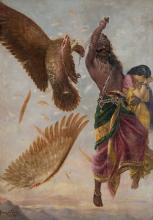
As she was being carried away by Rāvaṇa, Sītā was stricken with misery. With her eyes red with anger, she said, “You don’t appear to feel ashamed for performing this ignoble deed. I’m sure it was you, a vicious coward, who contrived to get my husband away by resorting to the illusion of a deer, so that you can carry me off. You even struck down the brave creature that tried to save me. You have displayed wonderful prowess, O vilest of rākṣasas! You did not win me in a battle! People around the world will forever speak of this despicable deed of yours.
Arjuna now asks
ye śāstravidhimutsṛjya yajante śraddhāyānvitāh ।
teṣāṃ niṣṭhā tu kā kṛṣṇa sattvamāho rājastamah ॥BG 17.1
Some people in the world possess śraddhā, but not in the rules of the śāstra but in something else imagined by themselves. What happens to them?
Bāṇabhaṭṭa
Among the works written by the great poet Bāṇabhaṭṭa, it is only in Harṣacarita that we come across thoughts on literary aesthetics. Although the introductory verses in Kādambarī contain a couple of statements on the art of poetry, they are not directly linked to poetic theory. Besides, they are not very illuminating. Therefore, Harṣacarita is our only source. And it does not disappoint us.
The poet has this to say about pilferers of poetry at the beginning of the work:
Back in the āśrama, Sītā heard the cry of distress, which sounded just like her husband and with great anxiety she instructed Lakṣmaṇa, “Go and find out what has happened to Rāghava, for my very life is perturbed by the sound of his cry of anguish. Rush to your brother’s rescue, Lakṣmaṇa! He has fallen into the hands of rākṣasas, like a bull fallen prey to lions.” Recalling his brother’s instruction, Lakṣmaṇa did not go. Angered by this, Sītā said, “Saumitri! You are your brother’s enemy, masquerading as a friend. You refuse to aid him when he is in danger.

There are four kinds of activities of the buddhi. The first is analysis which means separating the object of inquiry into its constituent elements. The second is classification which is grouping the various components and properties of the object of inquiry. The third is causality which is identifying the cause-effect relationship as well as the estimation of the amount of a certain substance needed to achieve a specific effect.

Harṣavardhana has made a mark in the annals of Sanskrit literature with his three plays: Priyadarśikā, Ratnāvalī and Nāgānanda. Interestingly, the prologues of these plays are largely similar. Although there is no discussion here significant to literary aesthetics, we do find a verse that lays down certain fundamental tenets:
श्रीहर्षो निपुणः कविः परिषदप्येषा गुणग्राहिणी
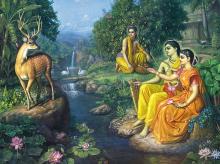
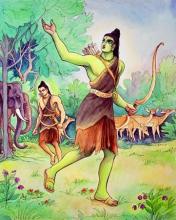
Rāvaṇa said to the rākṣasa Mārīca, “My dear friend, hear me. I am in immense distress and you are my sole means of solace. You know Janasthāna, where once dwelt my powerful brothers Khara, Dūṣaṇa, and Triśiras as well as my sister Śūrpaṇakhā. As per my orders, they lived there with several other rākṣasas and constantly troubled the dhārmic munis. The brothers along with fourteen thousand rākṣasas have been slain by Rāma, who, although in rage, did not utter a single harsh word.

Whatever comes next is the crux of the kaṭhopaniṣat. This is where Naciketas asked Yama to answer his question. His question surprised Yama. Not willing to answer that, he tried to convince Naciketas to ask something else as vara. He tries to entice him with different gifts. Naciketas doesn’t budge, he adamantly states that if he wants to give a vara he should answer his question. He ties up Yama with his own words and makes him give away the answer. The conversation between them is intriguing.