
Upon the behest of the king of Kekaya, his maternal grandfather, Bharata went with his uncle Yudhājit to his kingdom. Śatrughna went along with Bharata and King Aśvapati took care of them like his own sons. Back in Ayodhyā, Daśaratha constantly thought about his sons who were away.
Author:hari
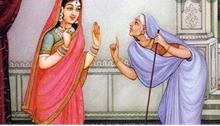
178. Bhakṣite'pi laśune na śānto vyādhiḥ
‘Even after eating garlic the disease remained.’ Garlic is forbidden as per the śāstras. Notwithstanding that, it also has a foul odor. A patient somehow, with great difficulty, ate it assuming that when using it as a medicine it is pardonable. The disease wasn’t cured. But the foul odor stayed. When you do something which you don’t like but do it just for the sake of the result, and it turns out futile, this nyāya is used.
Introduction
vaṃśī-vibhūṣita-karān-navanīradābhāt
pītāmbarādaruṇa-bimba-phalādharoṣṭhāt |
mugdhendu-sundara-mukhādaravinda-netrāt
kṛṣṇāt-paraṃ kim-api tattvam-ahaṃ na jāne ॥ (śrī madhusūdana-sarasvatī)
He whose hand is adorned by the flute, with the hue of a new dark cloud,
He who’s dressed in a yellow garment, with ruddy lips resembling the bimba fruit,
With an innocent moon-like handsome face, the lotus-eyed,
Kṛṣṇa – beyond him, I do not know of any other reality.
Bhāravi further refers to speech in the conversation between Indra and Arjuna:
प्रसादरम्यमोजस्वि गरीयो लाघवान्वितम्।
साकाङ्क्षमनुपस्कारं विष्वग्गति निराकुलम्॥
न्यायनिर्णीतसारत्वान्निरपेक्षमिवागमे।
अप्रकम्प्यतयान्येषामाम्नायवचनोपमम्॥
अलङ्घ्यत्वाज्जनैरन्यैः क्षुभितोदन्वदूर्जितम्।
169. Bakabandhana-nyāya
Capturing the crane. Someone asked the strategy to capture a crane. The strategist suggests the following: “Keep a lump of butter on the crane’s head. The butter would melt due to the sun, flowing over the eyes, making its eyes useless. Then it would stay in the same place immobile. Then one can easily catch it!”
How would you place the lump of butter on its head without catching it?
This nyāya illustrates the futility of such convoluted and stupid schemes.
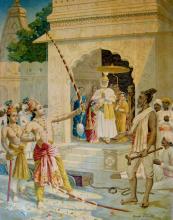
The next morning, Janaka invited Viśvāmitra and the boys to his court. Viśvāmitra requested the king to show the Mighty Bow that he possessed. Janaka then narrated the following – “During the destruction of Dakṣa’s yajña, Rudra bent this bow, declaring that he would chop off the heads of the devas, for they did not offer him a share in the yajña. The distressed devas begged for pardon. Pleased, Śiva gifted them the bow and the devas placed it as a trust with our ancestor, Devarāta.
157. Piśācanāṃ piśācabhāṣayaivottaraṃ deyam
To make the piśācas understand, we should converse in their own language (piśācabhāṣā). They wouldn’t understand Kannada or Sanskrit! “For the wicked, punishment is the ultimate cure, there is no use in trying to pacify them” Other nyāyas like ‘yakṣānurūpo baliḥ’ or ‘śaṭhaṃ prati śāṭhyam’ also have similar import.
The object that is water, is H2O for a chemist, and ambrosia for a thirsty man. The satiating and refreshing potential imperceptible in hydrogen and oxygen was perceived by the mind of a thirsty man when they together touched his tongue.
विशेषणात्येतानि कर्तृकर्मादिकारकसापेक्षमपि विवेक्तुं शक्यन्ते। यद्यपि षट्स्वपि कारकेषु विवेचनस्य साध्यतास्ति, तथापि प्रयोगबाहुल्यात् कर्तृकर्मगतानि विशेषणानि प्रामुख्यं भजन्ते। क्वचित् करणाधिकरणगतान्यपि विशेषणानि दृश्यन्ते। सम्प्रदानापादानकारकगतानि विशेषणानि प्रायो न सन्तीत्येव वक्तव्यम्। अतः कर्तृकर्मकरणाधिकरणसम्बद्धान्येव विशेषणान्यत्र सनिदर्शनं प्रस्तूयन्ते॥
After listening to the story of the city of Viśālā, the brothers along with Sage Viśvāmitra received Sumati’s hospitality and spent the night there. The next morning, they arrived at the outskirts of the magnificent city of Mithilā. Looking at a desolated but resplendent āśrama, Rāma sought to know who it belonged to. Viśvāmitra started narrating –