
Modern literary theory usually insists that a poet should not come in the way of the natural development of events and characters. If he gets personally involved, the work runs the risk of turning into a pamphlet meant only to air the author’s pet views. It would then become an artificial construct, straying away from its primary purpose of leading the readers to rasa.
Author:shashikiran
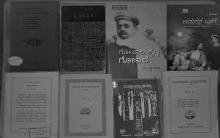
Here is an example of a critique written by Sastri and what is noteworthy is that instead of it becoming merely reactionary, it offers a wonderful commentary on Indian culture.
In Pāṭalīputra lived two brāhmaṇas - Yajñasoma and Kīrtisoma. Among the two, the younger one, Kīrtisoma, flourished through the business he set up with the wealth he inherited. Yajñasoma, however, ate and drank and gave away generously whatever he had and eventually became a pauper. He couldn’t bear to be thus among his relatives and decided to migrate to a different kingdom. However, he couldn’t even muster money for the journey, even from his younger brother. Kīrtisoma did want to help his elder brother with some money out of affection, but his wife wouldn’t let him.
Though instantly smitten, Śāṇḍilya realises he needs to be rich once he comes to know that she is a courtesan! Meanwhile the Yamapuruṣa, invisible to everyone, arrives and waits for the right time to do his master’s bidding. When Vasantasenā wants to pluck some of the shoots of the Aśoka tree, the Yamapuruṣa disguises himself as a snake and bites her. She loses consciousness. Parabhṛtikā laments her loss and is about to venture out to bring Vasantasenā’s mother. Meanwhile Śāṇḍilya too is sad and implores Parivrājaka to share his sorrow.
Who are devas? Various pictures of divine beings holding a trident, staff, rope, or discus might arise in our minds. These pictures are useful elsewhere; they can assist in meditation. When we are studying philosophy, devas are the powers of creation and nature – great powers of various kinds. The relationship between humans and these superhuman deities may not be directly observable to us. But it cannot be said that they do not exist just because they are not seen. For most of us living in Bangalore, China is unseen. But does China not exist?
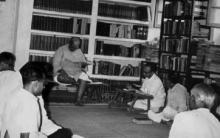
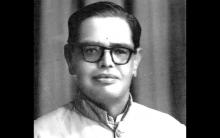
I will now outline the qualities of DVG’s personality and works that can guide us in the pursuit of knowledge.
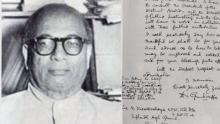
DVG has analyzed the major characters of the Mahābhārata in a long essay. His sublime analysis includes discussions on kāla, ṛta and conflicts that arise in the transition from one age to another. This is an exposition that befits the epic dimension of the Mahābhārata.