
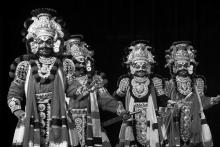
Most people are under the impression that the term Yakṣagāna is only a reference to the particular form of theatre art that is found in the Karāvaḻi-Malènāḍu region—i.e., the coastal regions—of Karnataka. This kind of colloquial attribution of the term to the particular art is also justified to some extent because the majority of the artistes and connoisseurs hail from these above-mentioned regions of Karnataka.
Author:hari

A poor man once found a bag of gold coins. While he could have gone elsewhere, he foolishly sat down at the same place and started counting the coins. In the meantime, the person who had lost the money came looking for it. He found this man and snatched his belonging back.
Thus, anything that a fool finds will come of no use to him.
~
A person wanted to show the full moon to a foolish guy. He stretched his hand out and pointed a finger at the moon. The fool kept staring at the tip of his finger and never saw the moon!
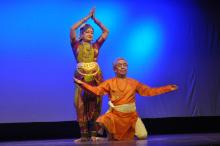
Another dimension that dance research can explore is to understand and analyse the correlation between music and dance. Music is essential for the successful staging of a dance piece. The two go hand in hand and are both subservient to Rasa. We must understand how the three octaves and the three speeds present in music – an auditory medium, translate into movement into the visual medium of dance.[1]

There is another thing to consider. Illustrious people such as Janaka, who are greater than you have all performed karma much before you.
karmaṇaiva hi saṃsiddhim āsthitā janakādayaḥ।
loka-saṅgraham-evāpi saṃpaśyan kartum-arhasi ॥ BG 3.20“Janaka and others attained fulfilment by karma only; You should also perform your duty keeping the welfare of the world in mind”.

Aśvaghoṣa clearly states that his work is principally a scripture. It is structured as a poem, yes, but that is only a veneer, a convenient pretence. Nevertheless, his work is appealing because of two reasons: one, he was a gifted poet; two, he chose the lofty story of the Buddha’s life as his subject. From this we understand that at times even purpose-driven compositions get the glitter of pure poetry. We should be wary of the fact that not all purpose-driven compositions are good.
While Parivrājaka seems to be miffed, he is also compassionate enough to reconcile that Śāṇḍilya being in this ephemeral world is bound to be behave that way! The verse which describes his rationale while not being as brilliant as Bhartṛhari can well be a part of an extrapolated vairagya collection.
देहो रोगनिधिर्जरावशगतो लीनान्तकाधिष्ठितो
यो नित्यप्रतिघातरुद्धविषयस्तीरे यथा पादपः।
तं लब्ध्वा सुकृतैरनेकगुणितैर्देहात्मना विस्मितो
मत्तो यो बलरूपयौवनगुणैर्देीषान्न तान् पश्यति ॥३॥
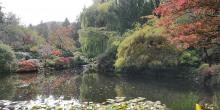
A fool went to a lake to drink water; he saw the reflection of a bird called svarṇa-cūḍa and thought that there was gold fallen in the waters. He jumped into the lake to fetch the gold. He, however, did not procure anything. His father saw him taking a dip in the water again and again, shooed away the bird and explained to him that it was not real gold. People like him are comical, cause humour, but are in pain within themselves.
~
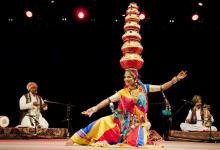
Today, physiology has developed as an independent branch of study. We must take its help in our analysis of movement vocabulary. Physiology can help us understand what joints can take what kind of movements and the limitations of the different parts of our body. We can also get an idea about the extent to which each individual can contribute based on his bodily limitations. It is all the more important to analyse every movement from the point of view of aesthetics while keeping physiology as the backdrop. It is only beauty that matters in art – everything else is peripheral to it.
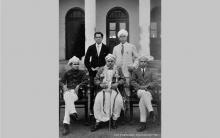
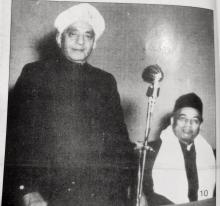
During a conversation with S R Ramaswamy, he mentioned to me that in the 1940s, K M Munshi had asked Sastri to write about the Aryans in the first volume of The History and Culture of the Indian People. Sastri asked, “I can definitely write it but do you have the courage to publish it?” It turns out that a great nationalist of the stature of Munshi too didn’t have the guts to publish the entire essay and printed a paltry two-page summary of Sastri’s writing in the first volume.