By the beginning of the tenth Century CE and more so in the later years, Sanskrit literature had turned into a barren land. The history of Sanskrit drama that follows is the tale of its gradual decline. We saw in the previous section how it had started losing its lustre. Hereafter, it becomes even more evident. It appears that in these plays, the authors have been more eager to showcase their scholarly skills and have resorted to blind imitation; at times, drama has been merely employed as a medium for cheap gimmicks without profound content; in some cases, it is even distasteful. The era of imagination that produced literary works evoking rich rasa through simple expressions is long gone. In this sense, the classical era had come to an end, and only an artificial attempt at creativity remained; even today, newer literary works are being created. In many an instance, such works lack original charm and elevating content.
Keith has provided a few possible reasons for this decline, and they can be summarised as follows: the poets in the period after the tenth Century CE were all scholars patronised by the royal court, and they wrote only to win the appreciation of other scholars. Thus, their works grew into pedantic compositions and were too complex in their structure for the common reader. With the Muslims invading the country, the number of kings who respected and upheld the Hindu traditions also gradually declined. As the deśa-bhāṣās took predominance, the gap between such vernacular languages and saṃskṛta and prākṛta started increasing. As dry scholarship grew, blind adherence to rules and engaging with conventional (and conservative) motifs also increased; independent thought, originality, and vivid depiction of life decreased.
Hundreds of plays took birth after this era, but it is unnecessary to engage in their detailed examination. Nevertheless, to help the reader get a sense of their structure and content, we have provided a brief summary below –
A few words about the playwrights who lived before the tenth century. They were not very popular, and we have not been able to lay our hands on their works either; they are only a few in number as well. Among them, a playwright called Candra or Candragomi appears to be the earliest. He might belong to the sixth century CE. He supposedly authored a Buddhist play called Lokānanda; we hear that it was a play connected with a brāhmaṇa named Maṇicūḍa, who was a dāna-vīra; he had even parted away with his wife and children by offering them as dāna. Mahendra Vikrama-varmā was a contemporary of Harṣa. A satirical play Mattavilāsaprahasana, that is available to us today, is amongst the oldest prahasanas. From a verse that is attributed to Rājaśekhara, we learn that Kaliñjarapati Bhīmaṭa had authored a set of five plays, one of which was Svapna-daśānana. From the examples quoted by Ānanda-vardhana, we understand that Bhavabhūti’s royal patron, King Yaśovarmā had penned a play called Rāmābhyudaya, and Anaṅgaharṣamātra (around 8th Century CE) had composed Tāpasa-vatsarāja-carita; similarly, Māyurāja (about 9th century CE) had written a play called Udātta-rāghava – we learn this from the author of Avaloka on the treatise Daśarūpaka.
Though the Sanskrit treatises delineate many kinds of dṛśya-kāvyas, nāṭaka has taken predominance. Among the various works we have examined so far, nāṭakas have taken the largest share, and they are of the greatest proportion in those that we will analyse in the next segments as well. Nāṭaka is also the first of the daśa-rūpakas, and we have thus analysed the genre first and classified them according to their theme.
Nāṭakas based on the Rāmāyaṇa
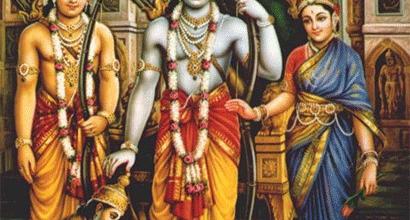
Innumerable plays have been composed based on the Rāmāyaṇa. Among them, only a few are aesthetically appealing and reflect profound human values. Among those available to us today, the Pratimā-nāṭaka is the oldest and amongst the best; barring that, the Kundamālā is of good quality. The playwrights after Bhavabhūti, who wrote based on the Rāmāyaṇa theme, blindly followed the model put forth by him. They abound in scholarship but lack creative prowess.
Though there are many plays based on the Rāmāyaṇa, we know of them only by their names; we haven’t been able to place our hands on the complete plays. In fact, the names, in many cases, indicate the theme and content of the plays as well. Many others have not been published yet. It is also because of their poor appeal. Therefore, we will examine only a few plays that are popular and have been published. We have just listed the others.
To be continued ...
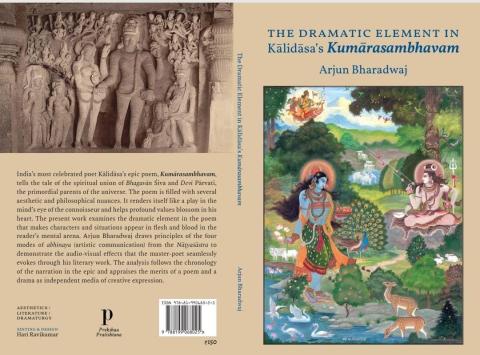
The current series of articles is an enlarged adaption of Prof. A. R. Krishnasastri's Kannada treatise Saṃskṛta-nāṭaka. They are presented along with additional information and footnotes by Arjun Bharadwaj.