

Vyāsa is said to have presented to Brahmā the topics discussed in the Mahābhārata thus – “In this work there are several secrets of the Vedas; my definitive siddhāntas on them; several details and descriptions of the Vedas compiled from the ṣaḍaṅgas and the Upaniṣads; matters pertaining to the three time periods – past, present, and future; unambiguous descriptions about the nature of the origin and destruction of birth, death, fear, and disease; the characteristics of the various varṇāśrama-dharmas; the vidhānas (metho
Author:hari
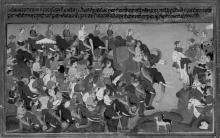
গীতার মূল উদ্দেশ্য ছিল অর্জুনকে যুদ্ধে সম্মত করিয়ে শত্রুনিধন। কৃষ্ণ তাঁর বাক্যে কোনরকম জড়তা না রেখে অর্জুনকে অগ্রসর হয়ে প্রতিপক্ষের সম্মুখীন হওয়ার কথা বলেন। অর্জুনের মনে এই প্রত্যয় আনয়নের পথে তিনি নানাবিধ যুক্তিজাল বিস্তার করেছেন (ভ. গী. ২.৩১-৩৩, ১১.৩৪)। কিন্তু এগুলি কোনও শূন্যগর্ভ উপদেশাবলী নয়। কৃষ্ণ নিজেও প্রচুর প্রাণনাশ করেছেন। তিনি নিজেও নিজেরই আত্মীয়স্বজনকে হত্যা করেছেন। তিনি নিজের মাতুল কংসকে বধ করেছেন কারণ কংস একজন ধর্মভ্রষ্ট অত্যাচারী শাসকে পরিণত হয়েছিলেন। তিনি পূতনা (ভ.পু. ১০.৬), শকটাসুর (ভ.পু. ১০.৭), অঘাসুর (ভ.পু. ১০.১২), ধেনুকাসুর (ভ.পু. ১০.১৫), প্রলম্বাসুর (ভ.পু.
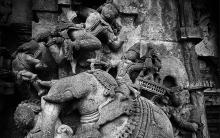
DROṆA-PARVA
नारायणं नमस्कृत्य
नरञ्चैव नरोत्तमम् ।
देवीं सरस्वतीं व्यासं
ततो जयमुदीरयेत् ॥Having saluted Nārāyaṇa,
the human and the divine;
Sarasvatī; and Vyāsa –
May Jaya be hailed!
भोगे रोगभयं कुले च्युतिभयं वित्ते नृपालाद्भयं
माने दैन्यभयं बले रिपुभयं रूपे जराया भयम्।
शास्त्रे वादभयं गुणे खलभयं काये कृतान्ताद्भयं
सर्वं वस्तु भयान्वितं भुवि नृणां वैराग्यमेवाभयम्॥

It will be appropriate to explain the purpose behind reminiscing several musicians and rasikas.[1] The purpose is simply the lament that connoisseurship has decreased in today’s world. Everywhere and in all walks of life, the business mindset reflected by the materialistic nature of people has increased. The number of people asking the question “What do you get by listening to music?” is increasing. High-rise buildings have value. Silk clothes have value. Motor cars have value.
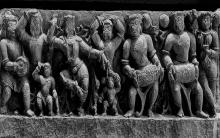
The mind and the intellect (manas and buddhi) are the two-primary means by which a man perceives the world and lets himself be perceived.
The eyes, the ears and other senses, and the parts of the body that shelter them become the instruments for the above two.
Training in arts strengthens the mind through refinement and the intellect acquires a refined strengthening through the knowledge of śāstras (roughly translated as ‘sciences’).
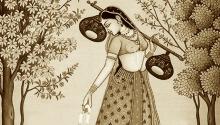
From one perspective, Ramkumari’s character is fundamentally tragic. She is the only character in Mandra who keeps “losing” throughout her life. Her loss isn’t merely her abandonment by Mohanlal or much later, by her own grown-up children who choose their long-estranged father’s fame and wealth over their mother’s lifelong sacrifice in nurturing them.
Just because the Mahābhārata was narrated in the period of King Janamejaya it doesn’t make it an ancient tale; it is fresh even today and it will forever be new because when will there not be disputes between cousins? Although it is a story of the kṣatriyas, such disputes exist in all communities around the world. The problem is described with great imagery and we feel as though the events are happening right before our eyes. Who doesn’t like a story?

நமது பாரம்பரிய இலக்கியங்களான ஸ்ருதி (śruti), ஸ்மிருதி (smṛti) இவற்றைத் தெரிந்து கொள்வதற்குமுன்னும், ஒரு குறிப்பிட்ட நூலின் காலக்ரமம் மற்றும் வெவ்வேறு நூல்களுக்கு இடையேயான காலக்ரமங்கள் போன்றவற்றை உள்ளடக்கிய நவீன வரலாற்று கோட்பாடுகளை கருத்தில் கொள்வதற்கு முன்னும், இந்திய வரலாற்று பாரம்பரியத்தை பற்றின தெளிவான புரிதல் நமக்கு இங்கே அவசியமாகிறது.
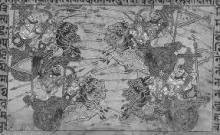
The next morning, i.e. on the tenth day of battle, the Pāṇḍavas had created a battle formation with Śikhaṇḍi leading it. To his left and right stood Bhīma and Arjuna. Behind him, stood the Upa-pāṇḍavas (sons of the five brothers) and Abhimanyu (son of Arjuna). And behind them came Dhṛṣṭadyumna and other warriors along with the army. On the side of the Kauravas, as usual, Bhīṣma was at the forefront. Duśśāsana and other Kauravas stood to his left and right; behind him stood Droṇa, Aśvatthāma, Bhagadatta, and others.