
Author:prekshaa
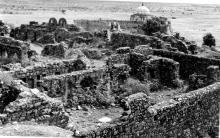
Our 'leaders' and 'intellectuals' have turned a blind eye to the rampant whitewashing of the atrocities committed [by the Muslims]. And so, we can observe a few more aspects:
Just as Timur himself records, when he pillaged the town by name Dipalapura, he gave the order to kill ten thousand people within an hour and ensured that it was executed thus. He looted all the grains in every house and then set them all on fire.
Sometime after this episode[1], Duryodhana felt that he too should perform a grand yajña like Dharmarāja. Upon learning of this, Karṇa said, “Indeed! This can take place. Now, all kings have been brought under your control; we shall call the ṛtviks and start the preparations for conducting the yajña! Nothing else remains.” When the purohita was called, he said, “Mahārāja! Yudhiṣṭhira is still alive; your father is aged.

The word ‘Śāstra’ refers to a well-structured presentation with novel insights (Śaṃsana Śāsana-prajñā). Anything that has these characteristics can be said to be ‘Śāstrīya’. A Śāstra usually is in the form of a written set of rules as well as unwritten but traditional practises that come along with the community conciousness. Although folk forms of art might not conform to a set of written rules, they are the products of the tastes of people belonging to the particular community and have come down with time.

The word ‘saṃskāra’ has no single-word equivalent in English; it has many meanings including ‘refinement,’ ‘cultivation,’ ‘perfection,’ ‘embellishment,’ ‘consecration,’ ‘education,’ ‘positive transformation,’ ‘effect of past deeds,’ etc. In general, it refers to ‘doing something well’ or ‘improving upon something while removing what is undesirable.’

तदयं सङ्क्षेपः—निर्विशिष्टक्लैब्यसन्त्रस्ते सति समाजे, तेन विशिष्टो व्यक्तिगुणः सुतरां नावगम्यते[1]। तादृशस्तु भित्तीतिवृत्तवियुक्तो वाग्व्यापारः सरस्वतीविडम्बनाय रसविध्वंसनाय च कल्पते। अनुलक्षिते सत्यस्मिन्, साम्प्रतिकसमाजे कथानायकार्हता न कस्मिन्नपि मनुजे विद्यत इत्युत्प्रेक्षितुमलम्[2]। भारतीयकाव्यमीमांसादृशा रसः सदैव नायकाश्रितः। अन्यच्च “नायकस्य कवेः श्रोतुः समानोऽनुभवः स्मृतः” इत्यमुं तौतीयमभिप्रायमनुरुध्य पश्यामश्चेत्, साम्प्रतिकं साहित्यं रसशून्यमेवेति सहृदयाय प्रतीयते। यतो हि नायकसत्त्वरहितं यं कमपि नायकीकृत्
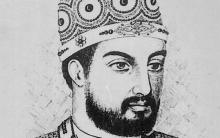
A Muslim could silence a Hindu as per whim and hurl abuses on him without any repercussions. And as for a Hindu, he had to quietly swallow all humiliation without showing the slightest resentment. Ibn Batuta writes, "After defeating and destroying a king, one has to get the queen and the princesses to sing and dance in a filled assembly; and whoever desires them, they must be given away." He says that it was a common feature of Islamic imperialism to torture the common women and children and also share them with all the Muslim men publicly.
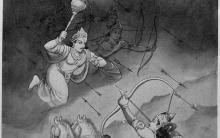
The entourage[1] that left from Hastināpura to Dvaitavana camped at a place near the villages of the cowherds. They set their tents up making sure that there was ample supply of water and shade, choosing land that was smooth and flat. They took a count of the cattle. Men and women of the village wore different costumes and entertained the guests with music and dance. Duryodhana rewarded them with a bounty of food and money. The entourage then headed out for hunting.
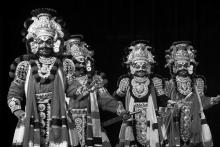
The terms ‘mārga’ and ‘deśī’ which have been in use for thousands of years in our tradition are today translated as ‘Classical’ and ‘Folk’ respectively, terms which hardly capture the original sense of the Sanskrit words. This equivalence was drawn by some western scholars and it is hard to say when exactly these were thought to be equivalents of the original Sanskrit words. The downfall and corruption of traditional knowledge systems of India has taken place because we have been taught to look at ourselves through the lens given by the West.
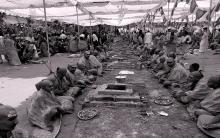
Every society will have its own view of what is a significant event in the life of a person living in that geographical region and in that period in time. What remains true for all time and for all people is the fact that our life spreads from before our physical birth all the way to the future after our physical death.