

It is interesting to note that the Indian writers on the Kāma-śāstra classified the heroines as Padminī, Cittinī, Hastinī and Śaṅkinī, primarily based on their physical and sociological attributes. They were also categorised into svīyā, parakīyā and sādhāraṇā based on the same parameters. On the other hand, aestheticians who are well versed with the Nāṭya tradition of India classify the heroines based on their emotional states, which is subtler and more meaningful than the former. An actor, who is going to put on the role of a śṛṅgāra-nāyikā should keep these categories in mind.
Author:hari
ಅಭಿನವಭಾರತಿಯಲ್ಲಿ ಉಲ್ಲೇಖಗೊಂಡ ಲೇಖಕರು ಮತ್ತು ಕೃತಿಗಳು
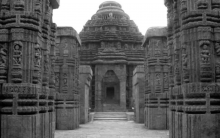
After the demise of Prataparudra, it was the Reddy Kings who faced Muslim invasions in Andhra. Prominent among are Vema Reddy and his younger brother, Malla Reddy. Their role in protecting the Andhra country from Islamic onslaught in the 14th century is truly laudable.
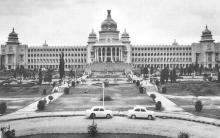
There were two major social conventions that took place within eight years spanning between 1920–28: (i) Prajamitra Mandali or the unrest in favour of non-brahmin sections, Miller Committee, etc. belong to this group and (ii) Progressive Party.
I’ve said everything that I could about the first group. The second one, was specifically a result of Krishna Rao’s efforts. Commemoration of the Late Hosakoppa Krishna Rao is bound to be a part of the history of Mysore’s public life.
I’ve mentioned elsewhere about a couple of other incidents under the tenure of V P Madhava Rao[1] that stirred up people’s minds. The government bringing down the compound wall of Bangalore’s Janopakari Doddanna Shettaru convention hall was one such similar incident. There arose a lot of opposition to this event too. People felt that the government had targeted Doddanna Shetty charitable trust because D Venkataramayya was its trustee and a patron. Overall, V P Madhava Rao’s tenure was unnecessarily an era of commotion.
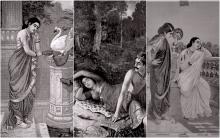
Keśinī met Bāhuka and asked him when they had started for Vidarbha, how long they had travelled and what the purpose of their visit was. He told her that they had started their journey the previous evening and come to attend the second svayamvara of Damayantī.
Keśinī – Who is the other person who has accompanied you on the trip? How do you know him and what is he here for? What is your occupation?
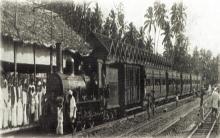
K T Appanna encouraged us and supported us in many ways. After he set up his Hindu Restaurant at Ahmed Building, there was a vacant space available in Chikpet where he once ran the Hindu Coffee Club. In that place, we instituted the Sri Ramakrishna Seva Sangha and set up a reading room and library. That was around the time of Navaratri. I vividly remember the day when Krishna Iyer and I toiled to move the tables and benches. The reading room ran for about a year.
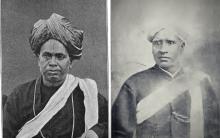
I haven’t found the means to determine the period that marks the commencement of efforts towards giving an integrated structure to public life in the State of Mysore. Such efforts had already taken place in the State of Madras by 1852-53. Even before the Sepoy Mutiny (also known as The First War of Indian Independence) of 1857, an organization called the Madras Native Association had been formed. Gajalu Lakshminarasu Chetty, G Purushotthama Naidu, and a few other public luminaries were its leaders.
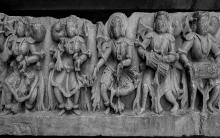
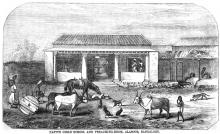
Translator’s Note: In this essay, Sri D.V. Gundappa recalls the lives and times of some renowned Vidwans in the Chamarajapet locality in Bangalore. The Vidwans described in this essay were his elder contemporaries with whom he had regular interactions.