DVG through Letters - 3

The letters also contain valuable discussions on grammar, stylistics and poetics. DVG the natural poet has occasionally composed entire letters in verse (K V Puttappa: 18.2.1944, V K Gokak: 4.9.1941). We learn of DVG’s respect for his predecessors and his honest efforts at republishing their works (T N Padmanabhan: 3.9.1968), as also his lively sense of humour that sometimes bordered on the risqué (T N Sreekantaiya: 30.3.1947). Included here is a unique letter that became the foreword to a modern Kannada classic, Maisūru Malligè (K S Narasimhaswamy: 31.12.1941).

The ‘Notes’ section includes DVG’s observations on the novels of Thomas Hardy. Based on these we surmise that he had intended to write a full-fledged book on Hardy. Here is his summary assessment:

“Hardy imparts – not ‘pessimism,’ but a certain sense of mystery and awe in regard to life. He illustrates the complexity of the forces which go to form life: the inevitability of what society would call ‘evil’; the tremendous consequence of ‘chance’ or ‘accident’ and its non-rarity; the juxtaposition of weakness and temptation, of susceptibility and incitement in the world; how the ‘hidden hand’ upsets our most carefully laid plans; how, human nature being what it is, certain situations can be such as could drive men and women into certain courses of action, despite convention; how therefore there is need for a certain (1) attitude of humility and diffidence as regards our own moral worth, and (2) sympathy and forgiveness as regards what we consider lapses in others.”

DVG’s was a creative mind that zestfully responded to all happenings. In it the sublime and ridiculous, ephemeral and everlasting, minute and mighty met and mingled in a manner difficult to define. Because DVG firmly believed that no opportunity to experience and spread joy should be wasted, even the most ‘trivial’ of occasions elicited inspired utterances from him. These utterances typically took the form of verses in Kannada, Sanskrit or Telugu and made a mundane moment memorable. The ‘Notes’ section contains a few samples of such ‘unsung poetry.’

*           *           *

DVG was closely associated with several social, political, literary and educational institutions. He discharged his duty with distinction and brought prestige to the position he held. He was the Vice-President of Kannaḍa Sāhitya Pariṣat (originally Karṇāṭaka Sāhitya Pariṣat) and the Founder-Secretary of the Gokhale Institute of Public Affairs. We learn from these letters that he tried to enlist the help of competent people and put together various outreach programmes with a view to bringing these organizations close to the public (V Sitaramiah: 20.5.1937, 10.1.1949, 29.3.1951, 25.11.1963, 8.3.1975). He was grateful for the help he received in running these institutions but did not want his young associates spending money on them unnecessarily:

“You must tell me frankly and fully how much your friends have spent. I cannot be happy when I know that I am fattening at your expense. You are small little fellows needing for your own living all the money you could get. How could I forgive myself when I see you spending money on me? You must take me into your confidence. You must tell me without waiting for my asking you again.” (D R Venkataramanan: 16.2.1966)

At the same time, he expected a high degree of professionalism from his colleagues. Once he observed that the idol of Sri Rama at the Gokhale Institute of Public Affairs was not attended to properly. (Sri Rama is the President of the Institute.) He immediately wrote to his associates and ensured that the mistake was not repeated (T N Padmanabhan: 20.10.1968).

DVG’s innate liberal outlook coalesced with the experience of working with public bodies to develop concrete ideas about progress and reform. He was of the opinion that a public organization should clearly define its aims and objectives and carry out only such work as falls under its ambit. If in the course of time it strays from these the stakeholders should come together to redefine its purpose. These thoughts are crystallized in the letter to P Kodanda Rao in connection with the Servants of India Society (28.4.1940).

As a conscientious citizen with a self-prescribed mission to safeguard the health of society, DVG pointed out errors of omission or commission in various journals and newspapers. We see examples of this in his letters to V Sitaramiah (26.2.1955) and T T Sharman (29.3.1937).

When the Mahā-svāmī of Kanchi Kamakoti Peetham issued a directive to accept proselytized people back into the Hindu fold, DVG wrote to the authorities of the Mutt expressing his solidarity:

“The rescript is, if I may say so, in the great tradition of Sri Vidyaranya Swamigal of six hundred years ago. It represents the authentic voice of the Sanatana Dharma of the Rishis and it is the revival of that spirit that can once again build up the disintegrating Hindu society and endow it with vitality and vigour so necessary for it in order that it can be of service to the rest of the world in these troubled times.” (Kanchi Kamakoti Peetham: 10.10.1946)

*           *           *

A sound understanding of philosophy was the sheet-anchor to DVG’s works. His worldview enabled him to accept life with all its ups and downs. One should examine oneself to determine the nature of work he is best cut out for, doing which brings joy to himself and does not harm others. He should do such work and not over-obsess with the end-result. In the memorable words of Prof. M Hiriyanna, it is renunciation in action and not renunciation of action. DVG guided people on this time-tested road to abiding happiness. His words of advice do not smack of sanctimoniousness but glow with the warmth of maturity and compassion. Here are some samples from his letters to D R Venkataramanan:  

“Every ಜೀವ [jīva] comes into the world with certain potencies or ವಾಸನs [vāsanas] and the potencies work themselves out in their time and by a law of their own. We have no power over them, even as others have no power over the working of our potencies. Life is thus often a clash between two streams of potencies or ವಾಸನs. The best we can do is to be patient, to forbear and to keep a watch for an opportunity of reconciliation.

We miss the opportunity in our dogmatic self-correctitude. No man has the right to think that there is no fault on his side. In any case, we are all apt to make up our minds too soon in such matters. That is because of our attachment to some things in life. Certain things are specially dear, and on their account we become immersed in the stream. No. We must learn to float on the surface of the waters.

ಪದ್ಮಪತ್ರಮಿವಾಂಭಸಾ [Padma-patram-ivāmbhasā] is a wholesome precept. Don’t become too much attached to anything that involves yourself – your name, your prestige, your opinion and so on. It is not merely selfishness or material self-interest that causes imbalance. Even attachment to a view on an impersonal question of art or literature may cause imbalance.

But absolute detachment is not required either. You cannot desert life. Therefore skip on the surface. Take things as they come. If they are bad, try to improve them. But there are limits. Don’t be heartbroken if they refuse to be improved. You have done your duty. Do your duty and leave the rest in the hands of God.” (D R Venkataramanan)

*

“You ask for no boons or favours in your prayer. You pray because prayer is a joy in itself. Prayer is contemplation of the source of life and of the forces which shape life. The reward for it is of the same kind as the reward for the contemplation of sunrise or moonrise or for the fondling of a small pretty child. It is nothing more than the joy of contact with something of rare power or rare beauty. It is to you what a flower is to a head of hair. It is self-discipline and self-strengthening. The little time given to prayer or meditation is to your life what a good picture is to a room in a house. You do it quietly, even silently and without publicity.” (D R Venkataramanan: 29.11.1959)

DVG’s reflections on life and observations on the social condition of his time are of inestimable value. In a couple of letters written to his daughter Meenakshi (Thanga), he explains the way of life expected of a Brahmin and reflects on the role of God and religion in human life:

“… Today, the Brahmin must be a cleaner man, live a purer life, be more devoted to learning and science and the higher things of the mind and the spirit. It is only then he can win respect and remove the suspicion and blame now cast on him by others. We must be really pure and good and noble in our attitude. You say you have been showing due respect to others. That is quite right. … Be gentle, polite and respectful, but don’t expect anything in return.” (Smt. Meenakshi: 1.12.1948)

*

“The more I learn about life’s conditions in Europe and America and their problems and about the progress of science, the deeper is becoming my conviction that our ancestors were not such fools or gawks as we sometimes took them for. Europe has begun to look back and ask herself whether she did not make a mistake in making light of religion. Very recently I read a lecture on Eddington’s Principle by Sir Edmund Whittaker (in the American Scientist). It is a clear argument for ‘civilised’ mankind’s return to God. Europe and America are profoundly dissatisfied with their social conditions and their life’s philosophy. While we Brahmins must reform, let us not be in a hurry to give up our old traditions and beliefs. Let us first try to understand the inner meaning and purpose of our traditions and customs.” (Smt. Meenakshi: 10.7.1952)

In another letter to her, he speaks of the ‘preparatory’ and ‘consummatory’ parts of life. Thought out and expressed in typical DVG fashion, these observations can hold us all in good stead:

“Life for everybody is made up of two parts: the preparatory and the consummatory. The first is struggling, the second is enjoying the fruit of the struggle. You plough and cultivate the field, then reap a crop. You work in a factory or office, then get your pay or the equivalent of your work. You cook your food, then eat it. Work and satisfaction are the two parts of living. The justification for work is satisfaction. The fulfilment of the struggle is the sense of the enjoyment of the fruit. For this consummatory part of life, we in this country do not prepare ourselves intelligently. We all strive for money; but when we get it (you know I haven’t) we don’t know (but I do) how to enjoy it. There is a wise way of enjoying – an intelligent and cultured way of enjoying. That needs study.” (Smt. Meenakshi: 29.7.1952)

*           *           *

DVG was inspired by Vālmīki, Vyāsa and Kālidāsa to compose a set of four verses embodying the ideals he cherished in life: Karma-yoga exemplified by Bharata, the primacy of dharma advocated by Vyāsa and the spirit of selfless service demonstrated by Kaṇva-ṛṣi. He asserts that the principles of truth, justice and fraternity are the life-breath of a nation. DVG recirculated this metrical quartet among his friends towards the end of this life, and so we can take it to be his ultimate message. With this dvg through letters comes to a close.

*           *           *

We hope these letters will pave the way for a better understanding of DVG and his works. It is a matter of immense gratification for the Gokhale Institute of Public Affairs to have been able to bring out this volume during the fiftieth death anniversary of its founder.

To order a copy, contact: +91 74836 81708 (Sahitya Bharati).

Concluded.


Author(s)

About:

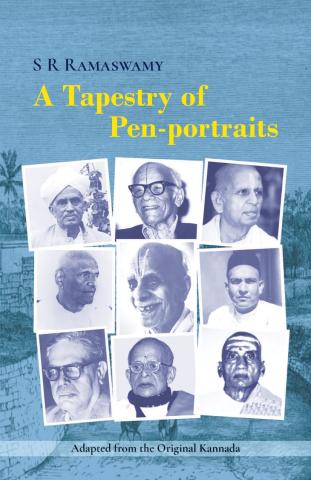
Nadoja Dr. S R Ramaswamy is a renowned journalist, writer, art critic, environmentalist, and social activist. He has authored over fifty books and thousands of articles. He was a close associate of stalwarts like D. V. Gundappa, Rallapalli Anantakrishna Sharma, V Sitaramaiah, and others. He is currently the honorary Editor-in-Chief of Utthana and served as the Honorary Secretary of the Gokhale Institute of Public Affairs for many years.

About:

Shashi Kiran B N holds a bachelor’s degree in Mechanical Engineering and a master's degree in Sanskrit. His interests include Indian aesthetics, Hindu scriptures, Sanskrit and Kannada literature and philosophy.

Prekshaa Publications

Karnataka’s celebrated polymath, D V Gundappa brings together in the eighth volume of reminiscences character sketches of his ancestors teachers, friends, etc. and portrayal of rural life. These remarkable individuals hailing from different parts of South India are from the early part of the twentieth century. Written in Kannada in the 1970s, these memoirs go beyond personal memories and offer...

Karnataka’s celebrated polymath, D V Gundappa brings together in the seventh volume of reminiscences character sketches of prominent scholars, businessmen, hoteliers, as well as of the laity. These remarkable individuals hailing from different parts of South India are from the early part of the twentieth century. Written in Kannada in the 1970s, these memoirs go beyond personal memories and...

Poets on Poetics: Literary Aesthetics Envisioned by Sanskrit Poets uncovers the tenets of literary theory conceptualized by masters from Bharata to Jagannātha that are embedded in the works of poets from Vālmīki to Nīlakaṇṭha-dīkṣita. Poets typically present their insights in the form of suggestive verses and rarely as an organized body of facts. Their exposition, inchoate though it might seem...

India is a land of stories. It is a fountainhead of various story-telling traditions of Greater India, Asia, and Europe. The now lost Bṛhat-kathā of Guṇāḍhya was an inexhaustible treasure-trove of stories that influenced generations of listeners. Somadeva’s Kathā-sarit-sāgara is a twelfth century Sanskrit retelling of this grand compendium. To read this work is to understand the heart of the...

Among the many contributions of ancient Indians to world thought, perhaps the most insightful is the realisation that ānanda (Bliss) is the ultimate goal of human existence. Since time immemorial, India has been a land steeped in contemplation about the nature of humans and the universe. The great ṛṣis (seers) and ṛṣikās (seeresses) embarked on critical analysis of subjective experience and...

One of the two great epics of India and arguably the most popular epic in the world, the Ramayana has enchanted generations of people not just in Greater India but the world over. In less than three hundred pages The Essential Ramayana captures all the poetic subtleties and noble values of the original and offers the great epic in an eminently readable form that will appeal to the learned and...

The Bhagavad-gītā isn’t merely a treatise on ultimate liberation. It is also a treatise on good living. Even the laity, which does not have its eye on mokṣa, can immensely benefit from the Gītā. It has the power to grant an attitude of reverence in worldly life, infuse enthusiasm in the execution of duty, impart fortitude in times of adversity, and offer solace to the heart when riddled by...

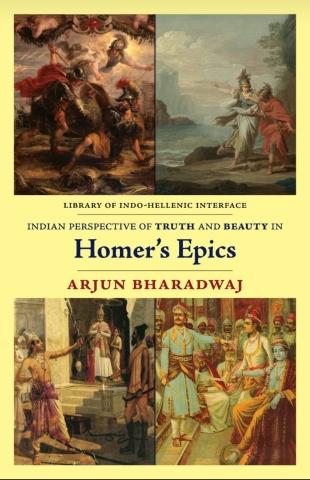
Indian Perspective of Truth and Beauty in Homer’s Epics is a unique work on the comparative study of the Greek Epics Iliad and Odyssey with the Indian Epics – Rāmāyaṇa and Mahābhārata. Homer, who laid the foundations for the classical tradition of the West, occupies a stature similar to that occupied by the seer-poets Vālmīki and Vyāsa, who are synonymous with the Indian culture. The author...

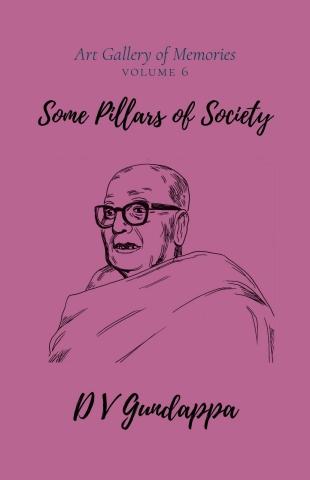
Karnataka’s celebrated polymath, D V Gundappa brings together in the sixth volume of reminiscences character sketches of prominent public figures, liberals, and social workers. These remarkable personages hailing from different corners of South India are from a period that spans from the late nineteenth century to the mid-twentieth century. Written in Kannada in the 1970s, these memoirs go...

An Introduction to Hinduism based on Primary Sources

Authors: Śatāvadhānī Dr. R Ganesh, Hari Ravikumar

What is the philosophical basis for Sanātana-dharma, the ancient Indian way of life? What makes it the most inclusive and natural of all religio-philosophical systems in the world?

The Essential Sanātana-dharma serves as a handbook for anyone who wishes to grasp the...

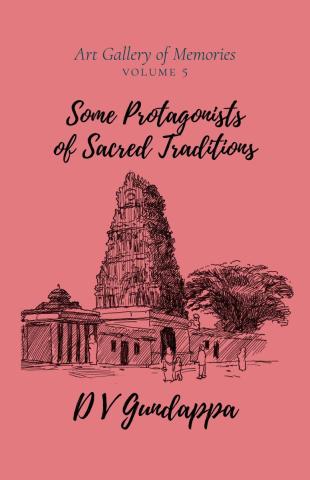
Karnataka’s celebrated polymath, D V Gundappa brings together in the fifth volume, episodes from the lives of traditional savants responsible for upholding the Vedic culture. These memorable characters lived a life of opulence amidst poverty— theirs  was the wealth of the soul, far beyond money and gold. These vidvāns hailed from different corners of the erstwhile Mysore Kingdom and lived in...
Padma Bhushan Dr. Padma Subrahmanyam represents the quintessence of Sage Bharata’s art and Bhārata, the country that gave birth to the peerless seer of the Nāṭya-veda. Padma’s erudition in various streams of Indic knowledge, mastery over many classical arts, deep understanding of the nuances of Indian culture, creative genius, and sublime vision bolstered by the vedāntic and nationalistic...

Bhārata has been a land of plenty in many ways. We have had a timeless tradition of the twofold principle of Brāhma (spirit of wisdom) and Kṣāttra (spirit of valour) nourishing and protecting this sacred land. The Hindu civilisation, rooted in Sanātana-dharma, has constantly been enriched by brāhma and safeguarded by kṣāttra.
The renowned Sanskrit poet and scholar, Śatāvadhānī Dr. R...

ಛಂದೋವಿವೇಕವು ವರ್ಣವೃತ್ತ, ಮಾತ್ರಾಜಾತಿ ಮತ್ತು ಕರ್ಷಣಜಾತಿ ಎಂದು ವಿಭಕ್ತವಾದ ಎಲ್ಲ ಬಗೆಯ ಛಂದಸ್ಸುಗಳನ್ನೂ ವಿವೇಚಿಸುವ ಪ್ರಬಂಧಗಳ ಸಂಕಲನ. ಲೇಖಕರ ದೀರ್ಘಕಾಲಿಕ ಆಲೋಚನೆಯ ಸಾರವನ್ನು ಒಳಗೊಂಡ ಈ ಹೊತ್ತಗೆ ಪ್ರಧಾನವಾಗಿ ಛಂದಸ್ಸಿನ ಸೌಂದರ್ಯವನ್ನು ಲಕ್ಷಿಸುತ್ತದೆ. ತೌಲನಿಕ ವಿಶ್ಲೇಷಣೆ ಮತ್ತು ಅಂತಃಶಾಸ್ತ್ರೀಯ ಅಧ್ಯಯನಗಳ ತೆಕ್ಕೆಗೆ ಬರುವ ಬರೆಹಗಳೂ ಇಲ್ಲಿವೆ. ಶಾಸ್ತ್ರಕಾರನಿಗಲ್ಲದೆ ಸಿದ್ಧಹಸ್ತನಾದ ಕವಿಗೆ ಮಾತ್ರ ಸ್ಫುರಿಸಬಲ್ಲ ಎಷ್ಟೋ ಹೊಳಹುಗಳು ಕೃತಿಯ ಮೌಲಿಕತೆಯನ್ನು ಹೆಚ್ಚಿಸಿವೆ. ಈ ಗ್...

Karnataka’s celebrated polymath, D V Gundappa brings together in the fourth volume, some character sketches of the Dewans of Mysore preceded by an account of the political framework of the State before Independence and followed by a review of the political conditions of the State after 1940. These remarkable leaders of Mysore lived in a period that spans from the mid-nineteenth century to the...

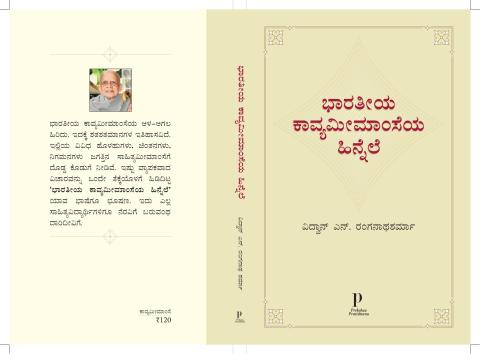
Bharatiya Kavya-mimamseya Hinnele is a monograph on Indian Aesthetics by Mahamahopadhyaya N. Ranganatha Sharma. The book discusses the history and significance of concepts pivotal to Indian literary theory. It is equally useful to the learned and the laity.

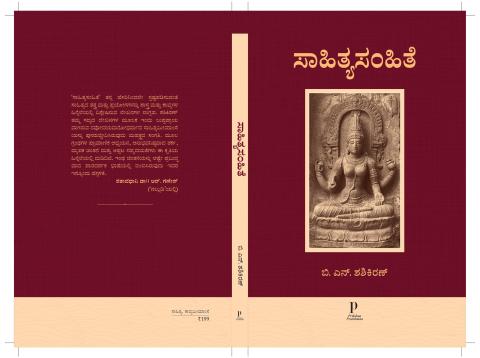
Sahitya-samhite is a collection of literary essays in Kannada. The book discusses aestheticians such as Ananda-vardhana and Rajashekhara; Sanskrit scholars such as Mena Ramakrishna Bhat, Sridhar Bhaskar Varnekar and K S Arjunwadkar; and Kannada litterateurs such as DVG, S L Bhyrappa and S R Ramaswamy. It has a foreword by Shatavadhani Dr. R Ganesh.

The Mahābhārata is the greatest epic in the world both in magnitude and profundity. A veritable cultural compendium of Bhārata-varṣa, it is a product of the creative genius of Maharṣi Kṛṣṇa-dvaipāyana Vyāsa. The epic captures the experiential wisdom of our civilization and all subsequent literary, artistic, and philosophical creations are indebted to it. To read the Mahābhārata is to...

Shiva Rama Krishna

சிவன். ராமன். கிருஷ்ணன்.
இந்திய பாரம்பரியத்தின் முப்பெரும் கதாநாயகர்கள்.
உயர் இந்தியாவில் தலைமுறைகள் பல கடந்தும் கடவுளர்களாக போற்றப்பட்டு வழிகாட்டிகளாக விளங்குபவர்கள்.
மனித ஒற்றுமை நூற்றாண்டுகால பரிணாம வளர்ச்சியின் பரிமாணம்.
தனிநபர்களாகவும், குடும்ப உறுப்பினர்களாகவும், சமுதாய பிரஜைகளாகவும் நாம் அனைவரும் பரிமளிக்கிறோம்.
சிவன் தனிமனித அடையாளமாக அமைகிறான்....

ऋतुभिः सह कवयः सदैव सम्बद्धाः। विशिष्य संस्कृतकवयः। यथा हि ऋतवः प्रतिसंवत्सरं प्रतिनवतामावहन्ति मानवेषु तथैव ऋतुवर्णनान्यपि काव्यरसिकेषु कामपि विच्छित्तिमातन्वते। ऋतुकल्याणं हि सत्यमिदमेव हृदि कृत्वा प्रवृत्तम्। नगरजीवनस्य यान्त्रिकतां मान्त्रिकतां च ध्वनदिदं चम्पूकाव्यं गद्यपद्यमिश्रितमिति सुव्यक्तमेव। ऐदम्पूर्वतया प्रायः पुरीपरिसरप्रसृतानाम् ऋतूनां विलासोऽत्र प्रपञ्चितः। बेङ्गलूरुनामके महा...

The Art and Science of Avadhānam in Sanskrit is a definitive work on Sāhityāvadhānam, a form of Indian classical art based on multitasking, lateral thinking, and extempore versification. Dotted throughout with tasteful examples, it expounds in great detail on the theory and practice of this unique performing art. It is as much a handbook of performance as it is an anthology of well-turned...

This anthology is a revised edition of the author's 1978 classic. This series of essays, containing his original research in various fields, throws light on the socio-cultural landscape of Tamil Nadu spanning several centuries. These compelling episodes will appeal to scholars and laymen alike.
“When superstitious mediaevalists mislead the country about its judicial past, we have to...

The cultural history of a nation, unlike the customary mainstream history, has a larger time-frame and encompasses the timeless ethos of a society undergirding the course of events and vicissitudes. A major key to the understanding of a society’s unique character is an appreciation of the far-reaching contributions by outstanding personalities of certain periods – especially in the realms of...

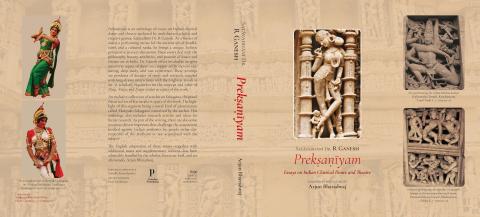
Prekṣaṇīyam is an anthology of essays on Indian classical dance and theatre authored by multifaceted scholar and creative genius, Śatāvadhānī Dr. R Ganesh. As a master of śāstra, a performing artiste (of the ancient art of Avadhānam), and a cultured rasika, he brings a unique, holistic perspective to every discussion. These essays deal with the philosophy, history, aesthetics, and practice of...

Yaugandharam

इदं किञ्चिद्यामलं काव्यं द्वयोः खण्डकाव्ययोः सङ्कलनरूपम्। रामानुरागानलं हि सीतापरित्यागाल्लक्ष्मणवियोगाच्च श्रीरामेणानुभूतं हृदयसङ्क्षोभं वर्णयति । वात्सल्यगोपालकं तु कदाचिद्भानूपरागसमये घटितं यशोदाश्रीकृष्णयोर्मेलनं वर्णयति । इदम्प्रथमतया संस्कृतसाहित्ये सम्पूर्णं काव्यं चम्पकमालोत...

Vanitakavitotsavah

इदं खण्डकाव्यमान्तं मालिनीछन्दसोपनिबद्धं विलसति। मेनकाविश्वामित्रयोः समागमः, तत्फलतया शकुन्तलाया जननम्, मातापितृभ्यां त्यक्तस्य शिशोः कण्वमहर्षिणा परिपालनं चेति काव्यस्यास्येतिवृत्तसङ्क्षेपः।

Vaiphalyaphalam

इदं खण्डकाव्यमान्तं मालिनीछन्दसोपनिबद्धं विलसति। मेनकाविश्वामित्रयोः समागमः, तत्फलतया शकुन्तलाया जननम्, मातापितृभ्यां त्यक्तस्य शिशोः कण्वमहर्षिणा परिपालनं चेति काव्यस्यास्येतिवृत्तसङ्क्षेपः।

Nipunapraghunakam

इयं रचना दशसु रूपकेष्वन्यतमस्य भाणस्य निदर्शनतामुपैति। एकाङ्करूपकेऽस्मिन् शेखरकनामा चित्रोद्यमलेखकः केनापि हेतुना वियोगम् अनुभवतोश्चित्रलेखामिलिन्दकयोः समागमं सिसाधयिषुः कथामाकाशभाषणरूपेण निर्वहति।

Bharavatarastavah

अस्मिन् स्तोत्रकाव्ये भगवन्तं शिवं कविरभिष्टौति। वसन्ततिलकयोपनिबद्धस्य काव्यस्यास्य कविकृतम् उल्लाघनाभिधं व्याख्यानं च वर्तते।

Karnataka’s celebrated polymath, D V Gundappa brings together in the third volume, some character sketches of great literary savants responsible for Kannada renaissance during the first half of the twentieth century. These remarkable...

Karnataka’s celebrated polymath, D V Gundappa brings together in the second volume, episodes from the lives of remarkable exponents of classical music and dance, traditional storytellers, thespians, and connoisseurs; as well as his...

Karnataka’s celebrated polymath, D V Gundappa brings together in the first volume, episodes from the lives of great writers, poets, literary aficionados, exemplars of public life, literary scholars, noble-hearted common folk, advocates...

Evolution of Mahabharata and Other Writings on the Epic is the English translation of S R Ramaswamy's 1972 Kannada classic 'Mahabharatada Belavanige' along with seven of his essays on the great epic. It tells the riveting...

Shiva-Rama-Krishna is an English adaptation of Śatāvadhāni Dr. R Ganesh's popular lecture series on the three great...

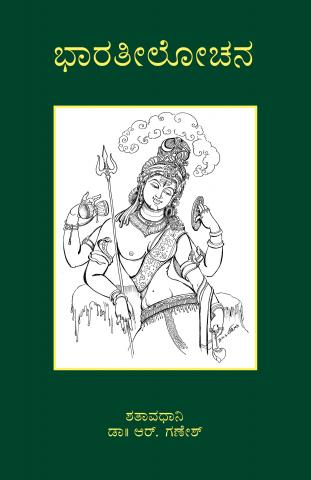
Bharatilochana

ಮಹಾಮಾಹೇಶ್ವರ ಅಭಿನವಗುಪ್ತ ಜಗತ್ತಿನ ವಿದ್ಯಾವಲಯದಲ್ಲಿ ಮರೆಯಲಾಗದ ಹೆಸರು. ಮುಖ್ಯವಾಗಿ ಶೈವದರ್ಶನ ಮತ್ತು ಸೌಂದರ್ಯಮೀಮಾಂಸೆಗಳ ಪರಮಾಚಾರ್ಯನಾಗಿ  ಸಾವಿರ ವರ್ಷಗಳಿಂದ ಇವನು ಜ್ಞಾನಪ್ರಪಂಚವನ್ನು ಪ್ರಭಾವಿಸುತ್ತಲೇ ಇದ್ದಾನೆ. ಭರತಮುನಿಯ ನಾಟ್ಯಶಾಸ್ತ್ರವನ್ನು ಅರ್ಥಮಾಡಿಕೊಳ್ಳಲು ಇವನೊಬ್ಬನೇ ನಮಗಿರುವ ಆಲಂಬನ. ಇದೇ ರೀತಿ ರಸಧ್ವನಿಸಿದ್ಧಾಂತವನ್ನು...

Vagarthavismayasvadah

“वागर्थविस्मयास्वादः” प्रमुखतया साहित्यशास्त्रतत्त्वानि विमृशति । अत्र सौन्दर्यर्यशास्त्रीयमूलतत्त्वानि यथा रस-ध्वनि-वक्रता-औचित्यादीनि सुनिपुणं परामृष्टानि प्रतिनवे चिकित्सकप्रज्ञाप्रकाशे। तदन्तर एव संस्कृतवाङ्मयस्य सामर्थ्यसमाविष्कारोऽपि विहितः। क्वचिदिव च्छन्दोमीमांसा च प्रकल्पित...

The Best of Hiriyanna

The Best of Hiriyanna is a collection of forty-eight essays by Prof. M. Hiriyanna that sheds new light on Sanskrit Literature, Indian...

Stories Behind Verses

Stories Behind Verses is a remarkable collection of over a hundred anecdotes, each of which captures a story behind the composition of a Sanskrit verse. Collected over several years from...