The Essential Sanātana-dharma - Nature of the Self

Nature of the Self

Everyone, without exception, wants to be happy – at all times and at all places. Happiness is our highest goal. All our suffering, struggle, and effort invariably are exercises towards the attainment of happiness. Happiness is the one point where all our diverging natures converge.

The means by which one attains happiness varies from person to person. What people perceive as joy also varies. The source of happiness is generally considered to be one or more of the following: health, food, beauty, materials, money, fame, power, love, social status, family, art, travel, knowledge, etc. Needless to say, what brings happiness to one might bring misery to another. However, the very nature of Bliss, the value, does not diverge. We know from our experience that Bliss is a state of completeness where no inadequacy is felt. This state of fulfilment, even if it lasts for a fleeting moment, is essentially the same for everyone.

Two people who are both happy will be alike in their mental state but the same cannot be said about two people who are both unhappy![1]

Joy has an absolute form but pleasure and sorrow have a multitude of forms, and at a deeper level, they are all illusions.[2]

This absolute state of Joy is similar to the blissful experience of sound sleep. As we discussed earlier, all demands, desires, and differences disappear in sound sleep. Even the maladies of the body cease to exist then. It is a state of absolute fulfilment, so we don’t feel the need of a second object. Doesn’t this suggest that joy is innate but sorrow is externally thrust upon us? Over-indulgence in the external world brings sorrow in the end—as many of us would have experienced after over-eating, binge-watching a web series, or being in the shower for a long time. It follows the law of diminishing returns.

There is no doubt that happiness can also arise from external influences. But the joy we gain from external sources is short-lived and eventually leads to sorrow because it operates in the material world. However, the Bliss we realize internally does not lead to sorrow. And sorrow cannot be generated within, for our true state is Bliss, not agony.

Light, like happiness, is a positive entity whereas darkness is a negative one. Darkness doesn’t exist as an independent entity but rather, it is the absence of light. Sorrow, just like darkness, does not have an independent existence. It is just the absence of joy.

When we ask someone How are you? to enquire after their well-being, if the answer we receive is I am doing fine or I’m great, we don’t see the need to ask any more questions. We will not ask them Why are you happy? But if the answer we get is I am not doing well or I’m feeling sad, we tend to question them further—Why? What happened? Why are you sad? and so on.

If someone has learnt a skill or an art that we are immensely interested in, we ask him How do you know that? or How did you learn that? It is unlikely that we will ask him Why do you know that?

Don’t these instances reveal that existence, awareness, and happiness are natural states of every living being? Even in the physical world, concepts such as equilibrium and valency point to a similar truth.

Irrespective of our physical or mental condition, we wish to live on forever, learn everything, possess everything, and become fulfilled. Even the man on his deathbed seeks the elixir of life, the weakling desires the gold medal, and the ignoramus desires the top prize. These are not merely desires driven by external forces but our inner nature that motivates us to seek wisdom and joy through these means.[3]

Even in the extreme case of someone who wishes to end his life, it is only a result of being unable to find joy and the helplessness of not being able to fulfil desires. Will a truly happy man commit suicide?

In sum, our ultimate ambition is eternal existence, eternal awareness, and eternal happiness.

Further, nobody truly wants to be a subordinate to another; in fact, most people wish to dominate over the others. This desire for absolute freedom and absolute authority accelerates one’s zeal for eternity. This is a quest after perfection.[4]

Hinduism identifies this desire in a sublime way, considering it to be in-built as the very nature of our own selves. Absolute Existence (sat), Absolute Awareness (cit), and Absolute Bliss (ānanda) that are independent of external factors comprise the nature of the Self (ātman).

The fundamental nature of ātman (or Brahman) is sat-cit-ānanda.

When we realize the true Self, nothing remains other than our own absolute existence and absolute awareness; sat-cit-ānanda is a non-dual state that goes beyond me and other, freedom and bondage, winner and loser, authority and submission. There is only Bliss, nothing else.[5] This is mokṣa.

Trying to achieve sat-cit-ānanda by materialistic means often leads to corruption and ruin. Those who seek existence, awareness, and bliss from outwardly sources try to establish authority over others. They assert their own freedom at the cost of another’s and invariably become tyrants, blemishing humankind. Sat-cit-ānanda is not something to ‘attain’ but it is something to ‘realize,’ for it is always within.

Of the two paths in attaining self-supremacy, Sanātana-dharma advocates the spiritual path, which is essentially inward and exhibits reasoned disregard towards the path of materialism, which is outward. After all, materialism can never be successful in the absolute sense.

We must never forget, however, that Sanātana-dharma is brutally practical and never takes refuge in a utopia. It recognizes the material world, giving it its due, but primarily encourages one to elevate to the spiritualistic realm.[6]

Artha is an instrumental value—it is only a means and never an end in itself. This is why in the conception of the four-fold objectives of human life, the fundamental idea is to manage demand (kāma) and supply (artha) by the global compromise (dharma) in order to attain Bliss (mokṣa).

Materials are inevitable for life but when they are pursued for their own sake without adherence to dharma and without the larger goal of mokṣa, what invariably follows is the destruction of the self and the surroundings.

In fact, the world is conceived as an instrument to go beyond the dualities of the world—like a raft that floats on the water in a bid to cross the ocean and is then left behind as we proceed to the destination.[7]

Mokṣa is the ultimate value and Ānanda, which is the very nature of mokṣa, is the fundamental value. All others are secondary and instrumental values.[8]


[1] The Russian author Leo Tolstoy canonized this idea in the opening lines of his novel Anna Karenina – “All happy homes are alike. But every unhappy home is unhappy in its own way.”

[2] Both sukha (comfortable, well, pleasant, agreeable) and duḥkha (uncomfortable, miserable, unpleasant, disagreeable) can be treated as illusory because they come and go; whereas ānanda (Bliss) is our very nature and is eternal.

[3] See the ānanda-vallī (which is Section 2) of Taittirīyopaniṣad.

[4] This phrase has been immortalized in the title of the Miller Lectures given by M Hiriyanna in 1940 (Published in Journal of the Madras University, Vol. 13, Part 2)

[5] …raso vai saḥrasaṃ hy-evāyaṃ labdhvānandī bhavatiko hy-evānyāt-kaḥ prāṇyātyad-eṣa ākāśa ānando na syāteṣa hy-evānandayāti॥ —Taittirīyopaniṣad 2.7

[6] The evolution from the material to the spiritual has been put forth in the framework of the pañca-kośa (‘five realms’) of the body-mind unit (Taittirīyopaniṣad 2.1–9) – Annamaya-kośa (realm of matter), Prāṇamaya-kośa (realm of vitality), Manomaya-kośa (realm of mind), Vijñānamaya-kośa (realm of experiential wisdom), and ānandamaya-kośa (realm of Bliss).

Anna (food) builds the cells of the human body; annamayakośa works at the level of the body.

Prāṇa (breath) represents the energy drawn from the food; prāṇamaya-kośa works at the level of the senses.

Manas (mind) uses energy to produce thoughts; manomaya-kośa works at the level of the mind.

Vijñāna (experiential wisdom) further builds on the thoughts in a systematic manner and internalizes it as wisdom; vijñānamaya-kośa works at the level of wisdom.

ānanda (bliss) is the result of applying the wisdom to refine emotions; ānandamaya-kośa works at the level of the Self.

[7] tyaja dharmam-adharmaṃ ca ubhe satyānṛte tyaja

ubhe satyānṛte tyaktvā yena tyajasi tat-tyaja॥ —Saṃnyāsopaniṣad 2.12

[8] See Bhagavad-gītā 5.25; 18.53, 54 as well as Īśāvāsyopaniṣad 7, Kaṭhopaniṣad 2.3.14, Muṇḍakopaniṣad 3.2.9, Śvetāśvataropaniṣad 1.7, Bṛhadāraṇyakopaniṣad 4.4.6

To be continued.


Author(s)

About:

Dr. Ganesh is a 'shatavadhani' and one of India’s foremost Sanskrit poets and scholars. He writes and lectures extensively on various subjects pertaining to India and Indian cultural heritage. He is a master of the ancient art of avadhana and is credited with reviving the art in Kannada. He is a recipient of the Badarayana-Vyasa Puraskar from the President of India for his contribution to the Sanskrit language.

About:

Hari is an author, translator, editor, designer, and violinist with a deep interest in philosophy, education pedagogy, literature, and films. He has (co-)written/translated and (co-)edited some forty books, mostly related to Indian culture.

Prekshaa Publications

Karnataka’s celebrated polymath, D V Gundappa brings together in the eighth volume of reminiscences character sketches of his ancestors teachers, friends, etc. and portrayal of rural life. These remarkable individuals hailing from different parts of South India are from the early part of the twentieth century. Written in Kannada in the 1970s, these memoirs go beyond personal memories and offer...

Karnataka’s celebrated polymath, D V Gundappa brings together in the seventh volume of reminiscences character sketches of prominent scholars, businessmen, hoteliers, as well as of the laity. These remarkable individuals hailing from different parts of South India are from the early part of the twentieth century. Written in Kannada in the 1970s, these memoirs go beyond personal memories and...

Poets on Poetics: Literary Aesthetics Envisioned by Sanskrit Poets uncovers the tenets of literary theory conceptualized by masters from Bharata to Jagannātha that are embedded in the works of poets from Vālmīki to Nīlakaṇṭha-dīkṣita. Poets typically present their insights in the form of suggestive verses and rarely as an organized body of facts. Their exposition, inchoate though it might seem...

India is a land of stories. It is a fountainhead of various story-telling traditions of Greater India, Asia, and Europe. The now lost Bṛhat-kathā of Guṇāḍhya was an inexhaustible treasure-trove of stories that influenced generations of listeners. Somadeva’s Kathā-sarit-sāgara is a twelfth century Sanskrit retelling of this grand compendium. To read this work is to understand the heart of the...

Among the many contributions of ancient Indians to world thought, perhaps the most insightful is the realisation that ānanda (Bliss) is the ultimate goal of human existence. Since time immemorial, India has been a land steeped in contemplation about the nature of humans and the universe. The great ṛṣis (seers) and ṛṣikās (seeresses) embarked on critical analysis of subjective experience and...

One of the two great epics of India and arguably the most popular epic in the world, the Ramayana has enchanted generations of people not just in Greater India but the world over. In less than three hundred pages The Essential Ramayana captures all the poetic subtleties and noble values of the original and offers the great epic in an eminently readable form that will appeal to the learned and...

The Bhagavad-gītā isn’t merely a treatise on ultimate liberation. It is also a treatise on good living. Even the laity, which does not have its eye on mokṣa, can immensely benefit from the Gītā. It has the power to grant an attitude of reverence in worldly life, infuse enthusiasm in the execution of duty, impart fortitude in times of adversity, and offer solace to the heart when riddled by...

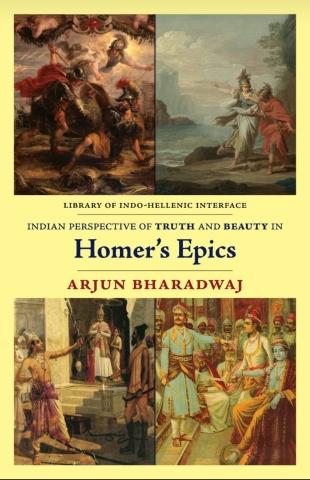
Indian Perspective of Truth and Beauty in Homer’s Epics is a unique work on the comparative study of the Greek Epics Iliad and Odyssey with the Indian Epics – Rāmāyaṇa and Mahābhārata. Homer, who laid the foundations for the classical tradition of the West, occupies a stature similar to that occupied by the seer-poets Vālmīki and Vyāsa, who are synonymous with the Indian culture. The author...

Karnataka’s celebrated polymath, D V Gundappa brings together in the sixth volume of reminiscences character sketches of prominent public figures, liberals, and social workers. These remarkable personages hailing from different corners of South India are from a period that spans from the late nineteenth century to the mid-twentieth century. Written in Kannada in the 1970s, these memoirs go...

An Introduction to Hinduism based on Primary Sources

Authors: Śatāvadhānī Dr. R Ganesh, Hari Ravikumar

What is the philosophical basis for Sanātana-dharma, the ancient Indian way of life? What makes it the most inclusive and natural of all religio-philosophical systems in the world?

The Essential Sanātana-dharma serves as a handbook for anyone who wishes to grasp the...

Karnataka’s celebrated polymath, D V Gundappa brings together in the fifth volume, episodes from the lives of traditional savants responsible for upholding the Vedic culture. These memorable characters lived a life of opulence amidst poverty— theirs  was the wealth of the soul, far beyond money and gold. These vidvāns hailed from different corners of the erstwhile Mysore Kingdom and lived...
Padma Bhushan Dr. Padma Subrahmanyam represents the quintessence of Sage Bharata’s art and Bhārata, the country that gave birth to the peerless seer of the Nāṭya-veda. Padma’s erudition in various streams of Indic knowledge, mastery over many classical arts, deep understanding of the nuances of Indian culture, creative genius, and sublime vision bolstered by the vedāntic and nationalistic...

Bhārata has been a land of plenty in many ways. We have had a timeless tradition of the twofold principle of Brāhma (spirit of wisdom) and Kṣāttra (spirit of valour) nourishing and protecting this sacred land. The Hindu civilisation, rooted in Sanātana-dharma, has constantly been enriched by brāhma and safeguarded by kṣāttra.
The renowned Sanskrit poet and scholar, Śatāvadhānī Dr. R...

ಛಂದೋವಿವೇಕವು ವರ್ಣವೃತ್ತ, ಮಾತ್ರಾಜಾತಿ ಮತ್ತು ಕರ್ಷಣಜಾತಿ ಎಂದು ವಿಭಕ್ತವಾದ ಎಲ್ಲ ಬಗೆಯ ಛಂದಸ್ಸುಗಳನ್ನೂ ವಿವೇಚಿಸುವ ಪ್ರಬಂಧಗಳ ಸಂಕಲನ. ಲೇಖಕರ ದೀರ್ಘಕಾಲಿಕ ಆಲೋಚನೆಯ ಸಾರವನ್ನು ಒಳಗೊಂಡ ಈ ಹೊತ್ತಗೆ ಪ್ರಧಾನವಾಗಿ ಛಂದಸ್ಸಿನ ಸೌಂದರ್ಯವನ್ನು ಲಕ್ಷಿಸುತ್ತದೆ. ತೌಲನಿಕ ವಿಶ್ಲೇಷಣೆ ಮತ್ತು ಅಂತಃಶಾಸ್ತ್ರೀಯ ಅಧ್ಯಯನಗಳ ತೆಕ್ಕೆಗೆ ಬರುವ ಬರೆಹಗಳೂ ಇಲ್ಲಿವೆ. ಶಾಸ್ತ್ರಕಾರನಿಗಲ್ಲದೆ ಸಿದ್ಧಹಸ್ತನಾದ ಕವಿಗೆ ಮಾತ್ರ ಸ್ಫುರಿಸಬಲ್ಲ ಎಷ್ಟೋ ಹೊಳಹುಗಳು ಕೃತಿಯ ಮೌಲಿಕತೆಯನ್ನು ಹೆಚ್ಚಿಸಿವೆ. ಈ...

Karnataka’s celebrated polymath, D V Gundappa brings together in the fourth volume, some character sketches of the Dewans of Mysore preceded by an account of the political framework of the State before Independence and followed by a review of the political conditions of the State after 1940. These remarkable leaders of Mysore lived in a period that spans from the mid-nineteenth century to the...

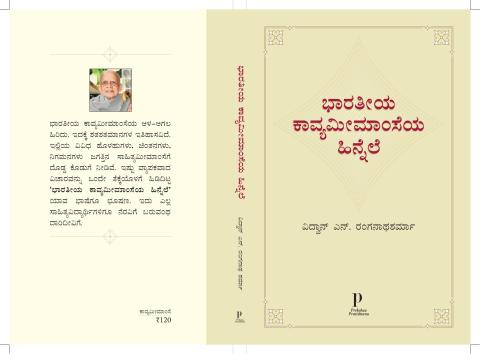
Bharatiya Kavya-mimamseya Hinnele is a monograph on Indian Aesthetics by Mahamahopadhyaya N. Ranganatha Sharma. The book discusses the history and significance of concepts pivotal to Indian literary theory. It is equally useful to the learned and the laity.

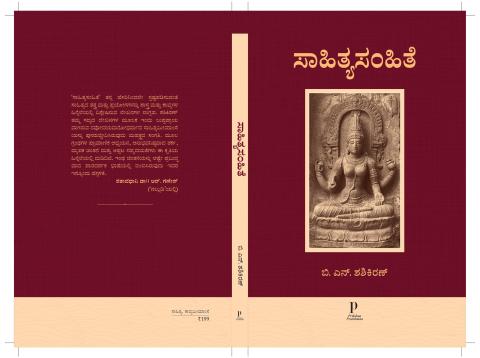
Sahitya-samhite is a collection of literary essays in Kannada. The book discusses aestheticians such as Ananda-vardhana and Rajashekhara; Sanskrit scholars such as Mena Ramakrishna Bhat, Sridhar Bhaskar Varnekar and K S Arjunwadkar; and Kannada litterateurs such as DVG, S L Bhyrappa and S R Ramaswamy. It has a foreword by Shatavadhani Dr. R Ganesh.

The Mahābhārata is the greatest epic in the world both in magnitude and profundity. A veritable cultural compendium of Bhārata-varṣa, it is a product of the creative genius of Maharṣi Kṛṣṇa-dvaipāyana Vyāsa. The epic captures the experiential wisdom of our civilization and all subsequent literary, artistic, and philosophical creations are indebted to it. To read the Mahābhārata is to...

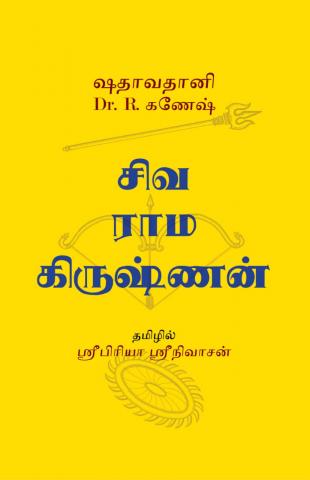
Shiva Rama Krishna

சிவன். ராமன். கிருஷ்ணன்.
இந்திய பாரம்பரியத்தின் முப்பெரும் கதாநாயகர்கள்.
உயர் இந்தியாவில் தலைமுறைகள் பல கடந்தும் கடவுளர்களாக போற்றப்பட்டு வழிகாட்டிகளாக விளங்குபவர்கள்.
மனித ஒற்றுமை நூற்றாண்டுகால பரிணாம வளர்ச்சியின் பரிமாணம்.
தனிநபர்களாகவும், குடும்ப உறுப்பினர்களாகவும், சமுதாய பிரஜைகளாகவும் நாம் அனைவரும் பரிமளிக்கிறோம்.
சிவன் தனிமனித அடையாளமாக அமைகிறான்.
ராமன்...

ऋतुभिः सह कवयः सदैव सम्बद्धाः। विशिष्य संस्कृतकवयः। यथा हि ऋतवः प्रतिसंवत्सरं प्रतिनवतामावहन्ति मानवेषु तथैव ऋतुवर्णनान्यपि काव्यरसिकेषु कामपि विच्छित्तिमातन्वते। ऋतुकल्याणं हि सत्यमिदमेव हृदि कृत्वा प्रवृत्तम्। नगरजीवनस्य यान्त्रिकतां मान्त्रिकतां च ध्वनदिदं चम्पूकाव्यं गद्यपद्यमिश्रितमिति सुव्यक्तमेव। ऐदम्पूर्वतया प्रायः पुरीपरिसरप्रसृतानाम् ऋतूनां विलासोऽत्र प्रपञ्चितः। बेङ्गलूरुनामके...

The Art and Science of Avadhānam in Sanskrit is a definitive work on Sāhityāvadhānam, a form of Indian classical art based on multitasking, lateral thinking, and extempore versification. Dotted throughout with tasteful examples, it expounds in great detail on the theory and practice of this unique performing art. It is as much a handbook of performance as it is an anthology of well-turned...

This anthology is a revised edition of the author's 1978 classic. This series of essays, containing his original research in various fields, throws light on the socio-cultural landscape of Tamil Nadu spanning several centuries. These compelling episodes will appeal to scholars and laymen alike.
“When superstitious mediaevalists mislead the country about its judicial past, we have to...

The cultural history of a nation, unlike the customary mainstream history, has a larger time-frame and encompasses the timeless ethos of a society undergirding the course of events and vicissitudes. A major key to the understanding of a society’s unique character is an appreciation of the far-reaching contributions by outstanding personalities of certain periods – especially in the realms of...

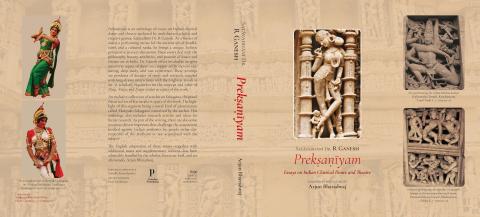
Prekṣaṇīyam is an anthology of essays on Indian classical dance and theatre authored by multifaceted scholar and creative genius, Śatāvadhānī Dr. R Ganesh. As a master of śāstra, a performing artiste (of the ancient art of Avadhānam), and a cultured rasika, he brings a unique, holistic perspective to every discussion. These essays deal with the philosophy, history, aesthetics, and practice of...

Yaugandharam

इदं किञ्चिद्यामलं काव्यं द्वयोः खण्डकाव्ययोः सङ्कलनरूपम्। रामानुरागानलं हि सीतापरित्यागाल्लक्ष्मणवियोगाच्च श्रीरामेणानुभूतं हृदयसङ्क्षोभं वर्णयति । वात्सल्यगोपालकं तु कदाचिद्भानूपरागसमये घटितं यशोदाश्रीकृष्णयोर्मेलनं वर्णयति । इदम्प्रथमतया संस्कृतसाहित्ये सम्पूर्णं काव्यं...

Vanitakavitotsavah

इदं खण्डकाव्यमान्तं मालिनीछन्दसोपनिबद्धं विलसति। मेनकाविश्वामित्रयोः समागमः, तत्फलतया शकुन्तलाया जननम्, मातापितृभ्यां त्यक्तस्य शिशोः कण्वमहर्षिणा परिपालनं चेति काव्यस्यास्येतिवृत्तसङ्क्षेपः।

Vaiphalyaphalam

इदं खण्डकाव्यमान्तं मालिनीछन्दसोपनिबद्धं विलसति। मेनकाविश्वामित्रयोः समागमः, तत्फलतया शकुन्तलाया जननम्, मातापितृभ्यां त्यक्तस्य शिशोः कण्वमहर्षिणा परिपालनं चेति काव्यस्यास्येतिवृत्तसङ्क्षेपः।

Nipunapraghunakam

इयं रचना दशसु रूपकेष्वन्यतमस्य भाणस्य निदर्शनतामुपैति। एकाङ्करूपकेऽस्मिन् शेखरकनामा चित्रोद्यमलेखकः केनापि हेतुना वियोगम् अनुभवतोश्चित्रलेखामिलिन्दकयोः समागमं सिसाधयिषुः कथामाकाशभाषणरूपेण निर्वहति।

Bharavatarastavah

अस्मिन् स्तोत्रकाव्ये भगवन्तं शिवं कविरभिष्टौति। वसन्ततिलकयोपनिबद्धस्य काव्यस्यास्य कविकृतम् उल्लाघनाभिधं व्याख्यानं च वर्तते।

Karnataka’s celebrated polymath, D V Gundappa brings together in the third volume, some character sketches of great literary savants responsible for Kannada renaissance during the first half of the twentieth century. These remarkable...

Karnataka’s celebrated polymath, D V Gundappa brings together in the second volume, episodes from the lives of remarkable exponents of classical music and dance, traditional storytellers, thespians, and connoisseurs; as well as his...

Karnataka’s celebrated polymath, D V Gundappa brings together in the first volume, episodes from the lives of great writers, poets, literary aficionados, exemplars of public life, literary scholars, noble-hearted common folk, advocates...

Evolution of Mahabharata and Other Writings on the Epic is the English translation of S R Ramaswamy's 1972 Kannada classic 'Mahabharatada Belavanige' along with seven of his essays on the great epic. It tells the riveting...

Shiva-Rama-Krishna is an English adaptation of Śatāvadhāni Dr. R Ganesh's popular lecture series on the three great...

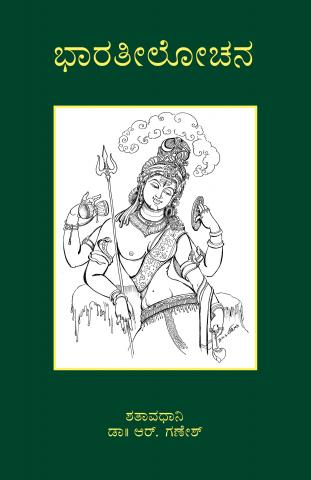
Bharatilochana

ಮಹಾಮಾಹೇಶ್ವರ ಅಭಿನವಗುಪ್ತ ಜಗತ್ತಿನ ವಿದ್ಯಾವಲಯದಲ್ಲಿ ಮರೆಯಲಾಗದ ಹೆಸರು. ಮುಖ್ಯವಾಗಿ ಶೈವದರ್ಶನ ಮತ್ತು ಸೌಂದರ್ಯಮೀಮಾಂಸೆಗಳ ಪರಮಾಚಾರ್ಯನಾಗಿ  ಸಾವಿರ ವರ್ಷಗಳಿಂದ ಇವನು ಜ್ಞಾನಪ್ರಪಂಚವನ್ನು ಪ್ರಭಾವಿಸುತ್ತಲೇ ಇದ್ದಾನೆ. ಭರತಮುನಿಯ ನಾಟ್ಯಶಾಸ್ತ್ರವನ್ನು ಅರ್ಥಮಾಡಿಕೊಳ್ಳಲು ಇವನೊಬ್ಬನೇ ನಮಗಿರುವ ಆಲಂಬನ. ಇದೇ ರೀತಿ ರಸಧ್ವನಿಸಿದ್ಧಾಂತವನ್ನು...

Vagarthavismayasvadah

“वागर्थविस्मयास्वादः” प्रमुखतया साहित्यशास्त्रतत्त्वानि विमृशति । अत्र सौन्दर्यर्यशास्त्रीयमूलतत्त्वानि यथा रस-ध्वनि-वक्रता-औचित्यादीनि सुनिपुणं परामृष्टानि प्रतिनवे चिकित्सकप्रज्ञाप्रकाशे। तदन्तर एव संस्कृतवाङ्मयस्य सामर्थ्यसमाविष्कारोऽपि विहितः। क्वचिदिव च्छन्दोमीमांसा च...

The Best of Hiriyanna

The Best of Hiriyanna is a collection of forty-eight essays by Prof. M. Hiriyanna that sheds new light on Sanskrit Literature, Indian...

Stories Behind Verses

Stories Behind Verses is a remarkable collection of over a hundred anecdotes, each of which captures a story behind the composition of a Sanskrit verse. Collected over several years from...