क्व धर्मविग्रहो रामः क्व चाल्पविषया मतिः। तितीर्षुर्दुस्तरं मोहादुडुपेनास्मि सागरम् ॥
'Where is Śrī Rāma, that embodiment of Dharma? And where is my piffle-seeking mind, desirous out of delusion as I am of crossing the formidable ocean with a coracle?”
At the outset, I must admit that my predicament is worse than that of Kālidāsa whose modified verse I have quoted above. I am neither a scholar nor a visionary or a poet.
However, when offered a chance to write about Śrī Rāma, I jumped at it with moha, deluded as I was and still am. And even there, the audacity to claim to summarise his infinite excellences in a few pages! What a foolhardy venture! However, I beg the indulgence of the readers who are also Śrī-Rāma-swarūpas.
Introduction
Who is Śrī Rāma from whom we are trying to derive life lessons?
The Vālmīki Rāmāyaṇa - the Ādi-kāvya and the definitive source about Śrī Rāma - starts off with Mahaṛṣi Vālmīki addressing a loaded query in three pointed verses to Devaṛṣi Nārada to satisfy his own curiosity.
को न्वस्मिन्साम्प्रतं लोके गुणवान्कश्च वीर्यवान् । धर्मज्ञश्च कृतज्ञश्च सत्यवाक्यो दृढव्रतः ॥1.1.2
Who in the present world is endowed with excellent qualities? Who is powerful, understands righteous conduct, is grateful, always speaks the truth, and of firm resolve?
चारित्रेण च को युक्तस्सर्वभूतेषु को हितः । विद्वान्क: कस्समर्थश्च कश्चैकप्रियदर्शनः ॥1.1.3
Who has good conduct? Who has the well-being of all beings at heart? Who is not only learned but also capable of getting things done? Who is lovely to look at?
आत्मवान्को जितक्रोधो द्युतिमान्कोऽनसूयक: । कस्य बिभ्यति देवाश्च जातरोषस्य संयुगे ॥1.1.4
Who is self-restrained and has conquered anger? Who is resplendent and does not envy others? Who is it that when furious in the battlefield frightens even the Devas?
If we look at the questions once again, we see that Maharṣi Vālmīki has asked for a paradox.
Someone who has conquered anger but once angered terrifies even the Devas? Someone who is handsome but not vain and envious? Someone who is learned (and thus understands all the issues associated with an action) and yet can act ably without paralysis from analysis? Who is all-powerful but is grateful and righteous in conduct?
Nārada, however, is overjoyed at this question. Though each aforementioned quality is rare by itself, finding them all in a single personality is the rarest of the rare things, nay, impossible. Nārada, though, does not talk about Īśvara or something miraculous. He talks about a human being - mune vakṣyāmy.ahaṃ buddhvā tair-yuktaś-śrūyatān-nara: O Sage, I will tell you about that man that has these qualities. Śrī Rāma himself called out his human nature - ātmānaṃ mānuṣaṃ manye Rāmaṃ daśarathātmajam - I, Rāma, the son of Daśaratha, consider myself human.
Tempting as it is to talk about how Śrī Rāma is the avatāra of Mahāviṣṇu and it is all his Līlā, it is the human Śrī Rāma we will discuss in the short compass of this essay - Śrī Rāma as the acme of human excellence. Just as a number line segment mathematically contains infinitely many real numbers, the long but time-limited human life account of Śrī Rāma contains infinite excellences that can inundate libraries! It is for us to look at them and learn from them.
Nārada now lists several qualities of Śrī Rāma - niyatātmā (of steady nature), mahāvīrya (of great prowess), dyutimān (effulgent), dhṛtimān (firm) and many more. A person would be considered accomplished with just one of these qualities.
Why was this 'laundry list' of qualities enumerated by Nārada? Yes - we get to understand and appreciate Śrī Rāma's greatness which helps deepen our devotion to him. Or is there more to it?
Why Contemplate on the Qualities of Śrī Rāma? How?
In the Bhagavadgītā, Arjuna asks Śrī Kṛṣṇa -
स्थितप्रज्ञस्य का भाषा। (Gītā 2.54)
to which Śrī Kṛṣṇa recites the characteristics of a person of steady wisdom. What would parroting the characteristics of a realised person bring to us?
Śrī Śaṅkarācārya in his profound Gītā Bhashya clarifies -
सर्वत्रैव हि अध्यात्मशास्त्रे कृतार्थलक्षणानि यानि तान्येव साधनानि उपदिश्यन्ते, यत्नसाध्यत्वात्। यानि यत्नसाध्यानि साधनानि लक्षणानि च भवन्ति तानि।
In all of adhyātma-śāstra (corpus of spiritual literature), the characteristics of a realised personage are taught as a means of attainment to the seeker, as it is possible to attain them with effort. Those which are attainable with effort by the seeker are but innate characteristics of the realised person.
We must not forget that the Rāmāyaṇa too is an adhyātma-śāstra. The marks of Śrī Rāma therefore are exhortations to seekers to expend effort to realise those great qualities in themselves.
'Fake it till you make it' goes the modern adage. It is upon us to at least practise those qualities till they become second nature to us even if it takes our entire life. This is also taught in the śāstra using the maxim of the caterpillar and the moth - the bhramarakīṭanyāya. The caterpillar looks at the moth intently with so much feeling (fear etc.,) till it becomes the moth.
A question might arise. Given that Śrī Rāma is of infinite excellences, trying to emulate all of them might be simultaneously tragicomical. What should be done?
Śrī Rāmanujacharya’s commentary on Bhagavadgītā 2.46 gives us a valuable approach -
- “एवं सर्वेषु वेदेषु ब्राह्मणस्य विजानतः वैदिकस्य मुमुक्षोः यदेव मोक्षसाधनं तद् एव उपादेयम् न अन्यत्।”
“Thus a seeker should take from all the Vedas only what is required to attain his mokṣa. Not anything else.”
The same principle applies to us. Śrī Rāma’s life is a veritable ocean of excellences - just like the Veda. We should choose what is applicable to us.
Introspection is thus imperative. Where are we in the journey of our lives? Based then upon a dispassionate analysis of our own condition, we must study those excellences of Śrī Rāma to incorporate in our own lives. It will not be possible to gain even one of those qualities in an instant. We will falter; we will fail. But if we keep these examples of Śrī Rāma in our minds as our North Star and remember them through our thoughts and actions, we will have a splendid compass to orient our own life voyage. It is also instructive to contrast Śrī Rāma‘s guṇas with that of Rāvaṇa as a warning - that Rāvaṇa who, despite his great strength, fell because he chose to violate Dharma.
We will focus on those aspects of these excellences that are humanly achievable - not ones like rakṣitā jīvalokasya (the protector of all beings) that state obviously divine qualities.
Rāmo Vigrahavān Dharmaḥ
The first thing marking Śrī Rāma (& the most important thing we can learn from him) is his adherence to both the spirit and letter of Dharma, the first of the puruṣārthas. While Rāvaṇa exclusively pursued artha (material wealth) and kāma (desire) with a vehemence that would ultimately result in his destruction, Śrī Rāma - his perfect anti-thesis - while not abandoning artha and kāma - enjoyed pleasures in perfect harmony with Dharma - arthadharmau ca saṅgṛhya sukhatantro na cālasaḥ. Śrī Rāma’s conduct echoes the gītā ideal of pleasure that does not transgress Dharma. (dharmāviruddhaḥ kāmaḥ).
The modern world is devoted to the relentless chasing of wealth and pleasure at the cost of sustainability - almost like Rāvaṇa. Śrī Rāma shows us how to lead life - while there is no need to shun material pleasures and the pursuit of wealth, we only need ensure that our enjoyment is in accordance with Dharma, the universal principle of sustainability.
He, realising the essence of the first three puruṣārthas - dharma-kāmā-rtha-tattva-jñaḥ - tells his mother Kaikeyī - “I don't consider artha supreme, Devi” - nāhamarthaparo devi,, “Know me to be established in Dharma” - viddhi māṃ dharmam-āsthitam declaring to her the supremacy of Dharma. He castigates the especial seeking of artha and kāma without Dharma - “the one pursuing only wealth is to be abhorred” - dveṣyo bhavati arthaparo hi loke - and “Being full of desire is indeed not commendable“ - kāmātmatā khalvapi no praśastā.
Śrī Rāma‘s ekapatnīvrata (being devoted to only one wife) stands in stark contrast to the unbridled indulgence in kāma of Vālī and Rāvaṇa. Through his conduct, he seems to instruct his own father, Daśaratha who had many wives. Daśaratha in turn is happy to be bettered by his son - mattaśca guṇavattaraḥ Moderation, thy name is Rāma!
The Svadharma of and Self-control of Śrī Rāma
Śrī Rāma‘s worship of his svadharma is worth emulation. He honours his own svadharma of being a kṣattriya - kṣātraṃ dharmaṃ svaṃ bahumanyate. As a kṣattriya whose svadharma is protecting those who take refuge in him - svajanasya ca rakṣitā, Śrī Rāma, even when he was not a king, takes it upon himself to protect even the denizens of Daṇḍakāraṇya from the depredations of the Dānavas despite Sītā‘s fervent entreaties to the contrary. In his gentle but firm way, he rebuts Sītā‘s arguments - “The bow is borne by the Kṣattriyas so that there is no sound of distress” -kṣatriyair-dhāryate cāpo nārtaśabdo bhavediti . Śrī Rāma verily exemplifies the immortal line of the Gītā - even death following one‘s duty is better (than to follow another’s duty) - svadharme nidhanaṃ śreyaḥ.
About following even the letter of Dharma, attention must be drawn to Śrī Rāma’s rigorous practice of family customs and traditions - be it the chanting of the naukārohaṇa mantra when climbing on to Guha’s boat or performing the gṛhapraveśa and vastoṣpati homa when Lakṣmaṇa built a cottage in the forest. Śrī Rāma’s performance of his father’s śrāddha in the forest with available ingredients (balls made from the pulp of the iṅgudi fruit - iṅgudipiṇyākam) is yet another example. He also performed the antyeṣṭi (final rites) for Jaṭāyus. In these days of - ‘I am spiritual but not ritualistic’ - this conduct of Śrī Rāma - even in a forest - should set us to think.
While Rāvaṇa was brought down by his own indulgent senses, Śrī Rāma was the opposite - pragrahavān (restrained). The playground for our senses has exploded today. It behooves us to remember Śrī Rāma‘s ideal.
Amoghavāk Śrī Rāmaḥ
Speech can make or break families and careers. There is much for us to inculcate from the mode of Śrī Rāma‘s speech. His speech is soft. Without any ego, he initiates conversations - mṛdu pūrvaṃ ca bhāṣate. His sweet speech - madhurābhāṣī - is to the liking of those around him - priyaṃvadaḥ. Even when spoken to harshly, he does not reply in the same token ucyamāno.api paruṣaṃ nottaraṃ pratipadyate. He never utters a false word - na anṛtakathaḥ. He is satyavākyaḥ - one of true speech. Śrī Rāma does not like to speak ill of anybody -na viruddhakathāruciḥ. We have seen people open their mouths with no regard to time and circumstances - but Śrī Rāma is a deśa-kālavit - he truly understands time and place from a human perspective. And while there are learned people who equivocate, Śrī Rāma himself is ऋजुः - straight as an arrow and uncomplicated. Though he exceeds Brhaspati himself in speech, and is capable of countering arguments in debate (as he did with Ṛṣi Jābāli and even Vasiṣṭha in the Ayodhyā Kāṇḍa), Śrī Rāma walks the fine line of vāchikaṃ tapaḥ (penance in speech) outlined in the Gītā - anudvegakaraṃ vākyaṃ satyaṃ priyahitaṃ ca tat - with his talk.
Knowing when to and what to talk is a special quality of Śrī Rāma. Śrī Rāma had killed Sugrīva‘s brother Vālī at the former‘s request. However, when Vibhīṣaṇa fled from Rāvaṇa and took refuge in Śrī Rāma, it was Sugrīva who objected - calling Vibhīṣaṇa a betrayer of his brother! Śrī Rāma just smiled and talked of things other than Sugrīva getting Vālī killed, delicately driving home a message without destroying their friendship or being needlessly critical.
And Śrī Rāma’s word is his word. Once spoken, it is as good as set in stone. ‘Rāma does not speak two (different) things’ - Rāmo dvirnābhibhāṣate he declared to Kaikeyī.
Praśāntāmurtih Śrī Rāmaḥ
While we live and work in the world interacting with those around us - the spark of matsara (envy) often fires up resulting in asūyā (finding fault with others). Śrī Rāma was anasūyakaḥ (not one to detract) as well as without envy - na ca matsarī. Neither was he arrogant - na dṛptaḥ - despite his strength, valour, and learning. Never did he snub or insult another being - na cāvamantā bhūtānām. Can we remember him when the ugly beast of envy rears up? Anasūyakāya namaḥ!
With a mind ever serene - nityaṃ praśāntātmā, he had won over anger - jita-krodhaḥ. While sympathetic to the well-being of others - sānukrośaḥ - he is satisfied with even a single act of help from others - kṛtenaikena upakāreṇa tuṣyati. However, he never remembers even hundreds of offences - na smaratyapakārāṇām śatamapi - owing to his self-restraint -ātmavattayā. He is ever krtajña - one who is grateful. When bidding farewell to Hanumān from Ayodhyā, Śrī Rāma, the latter hugs him happily, and despite his usual rule of not accumulating the debt of obligations, he decides to be forever indebted to Hanumān - bhavāma ṛṇino vayam - rather than Hanumān encountering a need for help! Such is the large-heartedness of Śrī Rāma. Śrī Rāma also persuades the unwilling Vibhīṣaṇa to perform the obsequies of Rāvaṇa calling death as marking the end of all enmities - maraṇāntāni vairāṇi.
Even when the crisis of exile hit him, Śrī Rāma‘s worry was about his father and not about his own future.
Akliṣtakarmā Śrī Rāmaḥ
Did Śrī Rāma’s skills manifest without hard work? Maharṣi Vālmīki suggests that he practiced his astras constantly - nityam astrayogyāntareṣu. Even in the gaps between practice, he associated with the good, who were rich in virtue, knowledge and maturity. śīlavṛddhair-jñānavṛddhair-vayovṛddhaiśca sajjanaiḥ - drinking from the fount of experience. Even through his exile, he sought after ṛṣis to serve them - vṛddhānāṃ pratipūjakaḥ - and learn from them. He was never indolent - nistandriḥ, while being ever vigilant - apramattaḥ.
The tussle between the good (hita) and the pleasant (sukha) is another way of showing the conflict between śreyas (long term well-being) and preyas (instant gratification) - something that society has forever dealt with. Śrī Rāma knows this well and always chooses śreyas over preyas - nā''śreyasi rataḥ. He is never one to associate with evil - na asadgrāhī.
The way Śrī Rāma works is edifying in itself. He is nibhṛtaḥ - modest and never one to brag. He is also saṃvṛtākāra and guptamantraḥ - ensuring that his body language does not give away his thoughts and keeping his counsel concealed. Kālidāsa too uses the word samvṛt itself to describe Śrī Rāma’s predecessor Dilīpa - Saṃvṛtamantraḥ (Raghuvaṃśa 1.20). Two other aspects of the way to work can be learnt from the Raghuvamśa. Kālidāsa says that the Raghus - the finest of whom was Śrī Rāma himself - were āphalodayakarmā - ones to toil till results became available. They were also quite guarded about their work - much like a startup in stealth mode - phalānumeyāḥ prārambhāḥ (Raghuvamsha 1.20) - one could know that the work was done only after seeing its result. Contrast that with our politicians who with much pomp and show inaugurate so many projects that then languish with no progress. Śrī Rāma is also described on many an occasion as akliṣtakarmā - someone who works without huff and puff and makes it look easy. Such a state comes only to a karmayogī that Śrī Rāma truly is.
Śrī Rāma’s Approach to Leadership
Surely, Śrī Rāma with all his great qualities could not be a shrewd administrator? But he is. While knowing not just about himself, he knows the inner qualities of the others - puruṣāntara-kovidaḥ - something much needed in a leader. He knows his own faults as well as that of the others - svadoṣa-paradoṣavit. An adept in the art of acquiring friends and cultivating them - pragrahānugrahayoryathānyāyaṃ vicakṣaṇaḥ , Śrī Rāma knows whom to cultivate and whom to curb - satsaṅgrahapragrahaṇe sthānavit nigrahasya ca - again a much needed leadership skill. His memory is excellent - smṛtimān. Śrī Rāma is well-versed in worldly conventions - like samayācāre kṛtakalpo viśāradaḥ endowed as he is with a formidable intellect - pratibhānamān (ibid). His expertise in devising different means to collect revenue - āyakarmaṇyupāyajñaḥ - comes with the acumen to spend it wisely- dṛṣṭa-vyaya-karmavit on his subjects where needed. The example Kālidāsa gives is of the sun who takes in the waters from the earth to give it back a thousand-fold - sahasraguṇamutsraṣṭum ādatte hi rasaṃ raviḥ (Raghuvaṃśa 1.18) And most importantly, he loves his subjects who loved him back - anuraktaḥ prajābhiśca prajāścāpyanurañjate. In the kacchit-sarga (Ayodhyā Kāṇḍa Sarga 100) Śrī Rāma asks Bharata about his rule of Ayodhyā. The questions show Śrī Rāma‘s administrative prowess as well as his concern for his subjects and family and are worth studying. Rare indeed are such leaders.
Śrī Rāma and Sītā - The Model Couple
Śrī Rāma and Sītādevī are the model couple. While Sītā follows her husband through thick and thin, Śrī Rāma too showers his love upon her. Sītā herself calls her husband sthirānurāgah - one with firm love and mātṛvat-pitṛvat-priyaḥ - as dear to her as her parents for he lovingly takes care of her. How lovingly does he describe Chitrakūṭa to her, even feeding her a variety of barbequed food! (2.96). When they disagreed, they handled it through dialogue, acknowledging each other’s points. Neither could bear mutual separation. Śrī Rāma and Sītā pining for each other gave Kālidāsa the idea for the Meghadūta! Was it not for Sītā that Śrī Rāma roamed all across Bhārata, amassed an army in Kiṣkindhā, built a bridge across the ocean, and destroyed Rāvaṇa in his own stronghold? How many husbands are willing to do that for their wives? The agni-parikṣā and the abandonment episodes only show how Śrī Rāma had to follow his greater Dharma of a kṣattriya and a king; they do not show a rift between Śrī Rāma and Sītā. Interested readers may read [7] for further elucidation.
Śrī Rāma the Family Man
Śrī Rāma is the perfect family man. His love towards his father knows no bounds. He accepts Sītā only because his father had approved! He adores his mothers who adore him in turn - including Kaikeyī who had a temporary but unfortunate aberration in her behaviour on that fateful day. For him there was no brother and war-minister equal to Lakṣmaṇa - na lakṣmaṇasamo bhrātā sachivaḥ sāmparāyikaḥ . He wants any pleasure that he partakes without his brothers to become ash - yadvinā bharataṃ tvāṃ ca śatrughnaṃ cāpi mānada,
bhavenmama sukhaṃ kiñcidbhasma tatkurutāṃ śikhī. Why else would Śrī Rāma be upheld as the model elder brother? A contrast with Rāvaṇa who recklessly put his own sons, brothers, and kingdom in peril to serve his own base ends further drives home Śrī Rāma’s greatness!
Conclusion
We have - in a whirlwind tour - tried to touch upon instructive aspects in Śrī Rāma’s life as they occurred to this author of limited exposure. While we can never exhaust his supreme qualities, we have to pause here and take stock of what we have seen so far. Let us ponder upon each of these as it applies to our lives. A daily end-of-the-day assessment about what Śrī Rāma would have done in our place will yield much value.
If we were to capture the message of the Rāmāyaṇa in a nutshell -
“श्लोकार्धेन प्रवक्ष्यामि रामायणविनिर्णयम् । रामादर्श उपादेयो हेयं रावणचेष्टितम् ।” (The author‘s composition)
‘In half a shloka, I will tell you the settled conclusion of the Rāmāyaṇa. Rāma’s model conduct is to be emulated. Rāvaṇa’s acts are to be abandoned’.
Let us conclude with a well-known prayer to Śrī Rāma.
आपदामपहर्तारं दातारं सर्वसम्पदाम् । लोकाभिरामं श्रीरामं भूयो भूयो नमाम्यहम् ॥
I bow again and again to the world-delighting Śrī Rāma who is the destroyer of dangers and the bestower of all kinds of wealth.
How does Śrī Rāma destroy dangers and bring wealth? By making us remember him. And when we do remember and try to internalize even one of his qualities, we can consider Śrī Rāma to be with us; guiding us at all times.
|| Śrī Rāmārpaṇamastu ||
References
-
Valmiki. Srimad Valmiki Rāmayaṇa: Translated by Vidwan N. Ranganatha Sharma. Bengaluru: Rāmayaṇa Prakashana Samithi, 2007
-
Valmiki, Srimad Valmiki Ramayana, Online Edition maintained by IIT Kanpur at https://www.valmiki.iitk.ac.in/
-
Valmiki, Srimad Valmiki Ramayana with Sanskrit Text and English Translation, Gita Press Gorakhpur, 1992
-
Raghavan, V. Dr. “The Infinite Excellences of Sri Rama.” In Studies on Rāmayaṇa, Chennai: Dr. V. Raghavan Centre for Performing Arts, 2009.
-
The Rt. Hon VS Srinivasa Sastri, Lectures on the Rāmayaṇa, Chennai: S Vishwanathan (Printers & Publishers Pvt. Ltd) on behalf of the Madras Sanskrit Academy, 1994.
-
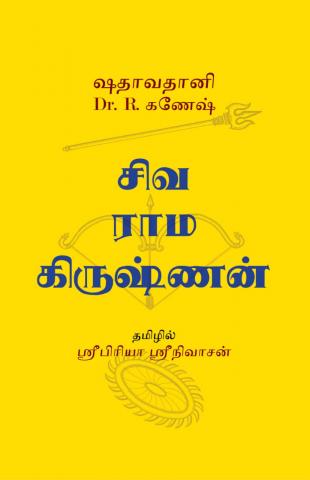
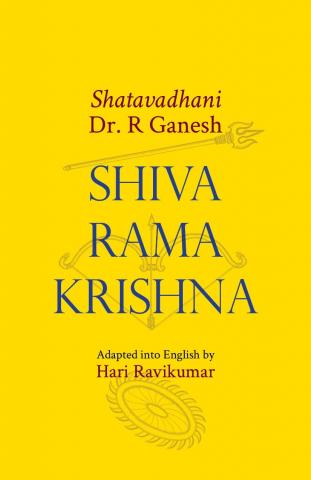
Ganesh, Shatavadhani Dr R. Shiva Rama Krishna: Adapted into English by Hari Ravikumar, Bengaluru, Prekshaa Pratisthana, 2019
-
Ramachandra, KBS, The Abandoning of Sītā, online, https://www.prekshaa.in/abandoning-Sītā