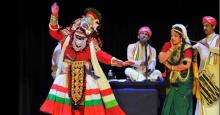
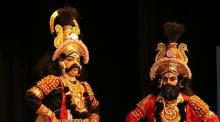
Yakṣagāna artistes should bring in newer maṭṭus and saṅgatis that can cater to all different emotions[1]; to do so, they must take refuge in the classical rāgas. The maṭṭus of Yakṣagāna are usually designed to begin from the pañcama and go higher. Their movement is largely in the higher octaves. This was necessary in the past because music had to be heard by a large number of people in the audience in the absence of microphones.
Author:hari

Māyā
Why does this discernment of thought not exist normally in people? Bhagavān answers:
māyāyā’pahṛtajñānāḥ
Māyā has taken away the discerning ability of people.

ಛಂದೋಗತಿ-ಅನುಪ್ರಾಸ
ನಾವು ಈಗಾಗಲೇ ಅನುಪ್ರಾಸದ ಹಲವಾರು ಉದಾಹರಣೆಗಳನ್ನು ಕಂಡಿರುವ ಕಾರಣ ಈಗ ಮತ್ತೂ ಕೆಲವೊಂದು ಮಾದರಿಗಳ ಮೂಲಕ ಇದರ ಸೊಗಸನ್ನು ಮನದಟ್ಟು ಮಾಡಿಕೊಳ್ಳುವುದಷ್ಟೇ ಉಳಿಯುತ್ತದೆ.
ಲಯರಹಿತವಾದ ವರ್ಣವೃತ್ತಗಳಲ್ಲಿ ಅನುಪ್ರಾಸವು ತಾಳಾನುಸಾರವಾಗಿ ಬರಲು ಸಾಧ್ಯವೇ ಇಲ್ಲ. ಆದರೂ ಪದ್ಯದ ಆದ್ಯಂತ ಕಾಣಸಿಗುವಾಗ, ಪದಗಳು ಮುಗಿದಂತೆಲ್ಲ ಬರುವಾಗ, ಯತಿಸ್ಥಾನದಲ್ಲಿ ತಲೆದೋರುವಾಗ ಹೆಚ್ಚಿನ ಆಕರ್ಷಣೆ ಉಂಟಾಗುತ್ತದೆ. ಉದಾಹರಣೆಗೆ ಕೆಲವೊಂದು ಪದ್ಯಗಳನ್ನು ಗಮನಿಸಬಹುದು. ವಿಶೇಷತಃ ಈ ಬಗೆಯ ಅನುಪ್ರಾಸಗಳು ಹಲವೊಮ್ಮೆ ಛೇಕಾನುಪ್ರಾಸ ಮತ್ತು ಯಮಕಗಳತ್ತ ಕೂಡ ವಾಲುವ ಪರಿ ಗಮನಾರ್ಹ. ಪ್ರಸ್ತುತ ಉದಾಹರಣೆಗಳಲ್ಲಿಯೂ ಅಂಥವಿರುವುದು ದೃಷ್ಟಚರ.
The music scene in India has undergone quite some changes since the introduction of microphones and loudspeakers. In the pre-technological era, it was natural for the singer to train himself for singing in different octaves, especially to be audible to everyone. Nevertheless, the kind of emotive content that a singer can deliver when he sings in his natural voice and at an octave that suits him best, cannot be brought about otherwise. Gentle oscillations of the notes, gradual transitions, and subtle embellishments are extremely important for classical music.

Once a brāhmaṇa came to him. His hair stood on their ends. The king asked him, ‘Why such hair?’ The brāhmaṇa then started narrating his story–
He had a reasonable awareness of astrology; he had belief too in it; so he examined his horoscope and used to say that the time was a cruel phase for him. But nobody believed it was this cruel.

The State of Īśvara
From the perspective of the visible world, the invisible and divisionless part of the universe, Supreme Brahman is known as Īśvara or Parameśvara. When the pure, formless, and actionless Brahman assumes the position of the universal controller, it is known as Parameśvara. There are no differences such as the ruler and ruled in the transcendental state of Brahman. When that consciousness exists as part of the world and is seen as the ruler of the universe, it is known as Īśvara.

The novel ‘Mandra’ by S. L. Bhyrappa which appeared in 2002 is unique in several respects. It is woven around music and musicians. It is not only a tour de force as novel-writing goes; it is in a class by itself because of the high degree of its sensitivity, multi-layered structure, richness of insight and extra-ordinary narrative skill. The work is a great deal more than mere story-telling; its portrayal of characters and its thematic intensity are of epic dimensions. The dialogues have a lyrical quality one seldom expects in a work of fiction. (More about this later).