Dr. Padma Subrahmanyam's Rāmāya Tubhyaṃ Namaḥ (Part 3)

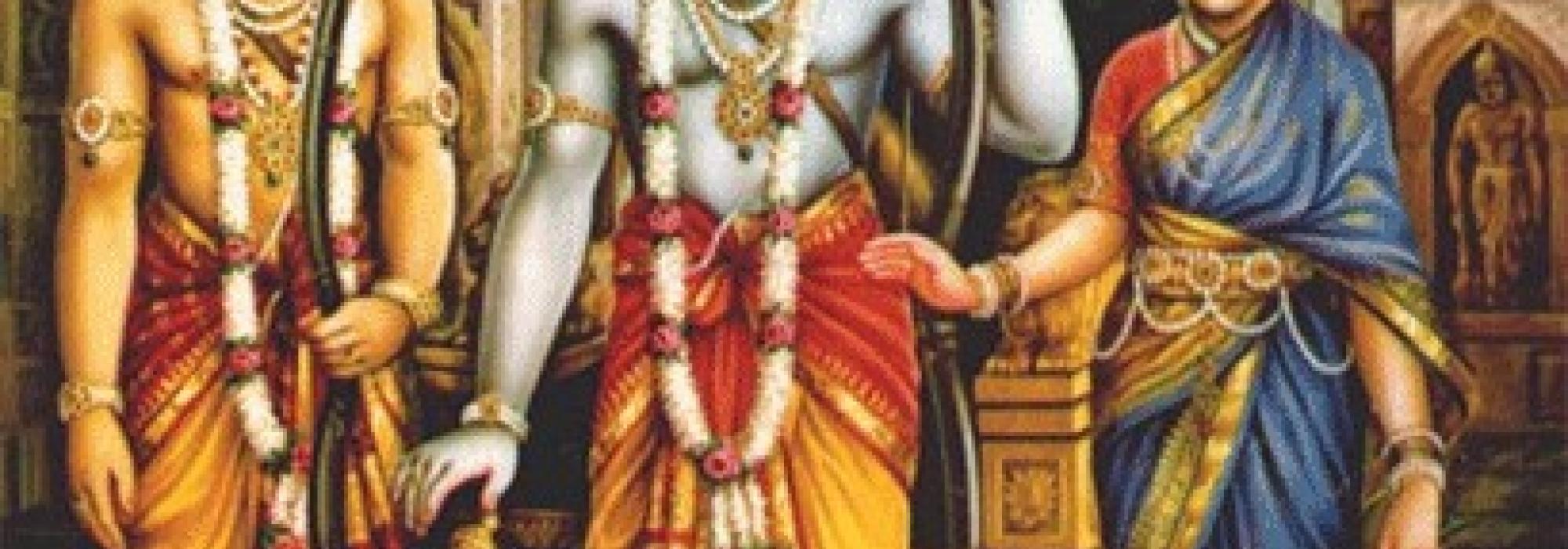
Padma then goes on to the line tau pituḥ vācā pañcavaṭi-vane viharataḥ to continue the story and in the process, she indicates how Rāma, Sītā, and Lakṣmaṇa were ferried across the River Gaṅgā – she uses a special movement of the feet while she rows (the invisible boat) with her hands; it gives the viewer the illusion of a real boat moving across the stage. The movement is also along the diagonal of the stage, giving us the three-dimensional feel. She even depicts the boat stopping with a mild jerk at the banks of the river and each getting off with different mannerisms. Padma distinctly characterises Rāma, Sītā, and Lakṣmaṇa (while on the boat and also as they walk in the forest). Rāma walks ahead into the forest – firm, serene and gentle; Sītā, naïve, innocent, happy, and curious, walks behind him looking all around and feeling pleasantly surprised and awestruck at every aspect of the forest. Lakṣmaṇa is ever alert, vigilant, and watchful and follows the couple watching out for danger. Just by going around on the stage once[1], she quickly changes into the three characters one after the other, three times; as she walks, Sītā once looks at Rāma, then at the surroundings, and then at Lakṣmaṇa – her innocence and excitement come out effectively on her face. Rāma and Sītā then enter their hut (while Lakṣmaṇa stands guard!). Connoisseurs can recognise the character merely by looking at Padma’s face – the sattva is so immense that even without looking at the gesture in the hands, one can recognise if she is presenting Rāma, Sītā, or Lakṣmaṇa.

Once, as Sītā is plucking flowers, she notices a golden object at a distance and then, as it comes closer, realises that it is a deer – Padma establishes that only its golden colour is visible for a while and its form becomes clear only when it comes closer. In fact, through this, she also suggests the distance traversed by the deer. We see only the colour of an object when it is far away and we see its actual form only when it comes closer. Out of her curiosity and excitement, she follows the deer with a bunch of grass in her hand. As the deer vanishes, Sītā is upset and asks Rāma to fetch the golden deer for her. Padma spontaneously improvises and her Rāma tells Sītā that the deer’s eye is no match for hers; within a couple of seconds Sītā, whose face radiates naivety, has tears in her eyes; Rāma finally agrees to bring her the deer and chases after it with a bait in his hand. The deer, which is indicated by Padma through Hariṇa-pluta karaṇa is shot by Rāma, turns into a rākṣasa, and screams – Padma even shows that the scream traces the same path as the route traversed by the deer (by going in a circle on the stage, but in the reverse direction) and falls on Sītā’s ears; Sītā upon hearing the illusionary cry of Rāma (rākṣasa’s cry), pleads to Lakṣmaṇa to go to Rāma’s help. When Lakṣmaṇa brushes it aside as deception, the vyabhicāri-bhāvas of Sītā are innumerable and revolve around the sthāyi-bhāvas of śoka and bhaya – she has shades of anxiety and irritation which finally turn into anger; she admonishes Lakṣmaṇa. (In fact, it needs to be noted that the lasting sthāyi-bhāvas of Sītā is love, i.e., rati towards Rāma, which manifests as śoka and bhaya out of her concern for him). Helpless, Lakṣmaṇa finally agrees to leave to search for Rāma and draws the lakṣmaṇa-rekhā as per the popular version of the epic. As he hurries into the forest, Padma depicts Lakṣmaṇa as though looking back every moment, anxious about Sītā’s safety.

At this juncture, the musical rendition of the verse goes on to the next phrase – tām-āharad-rāvaṇaḥ.  Padma depicts the ten heads, twenty eyes, and twenty arms of Rāvaṇa; as he walks around the stage, she shows how each of his twenty arms moves in various directions; his gait is filled with arrogance and superiority complex. The music also works as vyañjaka-sāmagri to enhance the demonic nature of Rāvaṇa. Padma then depicts Rāvaṇa pulling in his twenty arms and ten heads and assuming the form of a saṃnyāsī – the expression on Padma’s face reveals that he is not a real saṃnyāsī but has come there with an ulterior motive.  She depicts him as having a long beard, with a rudrākṣa-mālā around his neck and arms, carrying a kamaṇḍalu. Padma helps us imagine the āhārya of the kapaṭa-saṃnyāsī superimposed upon her dance costume. She also shows that while the external appearance of Rāvaṇa has changed, his gait has remained unchanged; thereby, she suggests that even if a person’s external appearance is masked, his innate character invariably gets reflected through his mannerisms and speech. He walks with his demonic gait and encounters lakṣmaṇa-rekhā – the fiery line. In a moment’s time, his ego seems to be hurt because he was unable to cross a mere line. Padma’s Rāvaṇa, in the disguise, of saṃnyāsī demands for alms (and does not beg!) and instructs Sītā to cross over the line and offer it to him. As she heads towards him, Rāvaṇa momentarily forgets that he is in disguise and starts admiring her beauty with his eyes and mouth wide open – he almost undergoes the sāttvika-bhāva of stambhana; Padma thereby suggests that even the vilest of beings, when they see untainted Beauty, they overcome the limitations of their personality at least momentarily; in other words, ego dissolves and the opaque personality makes way for the experience of Bliss, which is akin to Rasānanda. However, once he comes out of that state, pride and lust overpower him. He looks at Sītā from her feet up until her head and his lustful desire (dṛṣṭi-maithuna) becomes evident on his face. After a few seconds, with a jerk, he becomes aware of himself and gets back to the kapaṭa-saṃnyāsī’s mental state. Through this sequence, Padma indicates Rāvaṇa’s personality at three levels; first, he can relish Beauty and experience Bliss – his Self transcends his external attributes; second, he is a proud, arrogant, lustful, crooked, and possessive rākṣasa; third, he is in the disguise of a saṃnyāsī. Padma portrays each of these layers of his character!

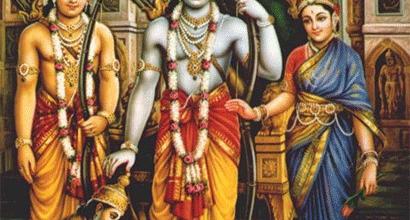
Sītā who has mixed emotions of respect, fear, and inhibition crosses over the line with her head bent down and offers bhikṣā; even as her head is bent down, the evil rākṣasa catches her tresses and flies into the air in no time! Padma, as the narrator Yaśodā, shows through her eyes the heights to which Rāvaṇa took her away, at great speeds. The next moment the baby Kṛṣṇa (who is, in reality, no different from Rāma) gets up alarmed, anxiously asking – saumitre! kva dhanur-dhanur-dhanuḥ; the musician repeats the word dhanur-dhanur many times to give the effect of anxiety. And moreover, the child would not have uttered it only thrice as  captured in the poem; in reality, the child would have demanded its bow multiple times. The poet and Padma suggest that the vipralabha-śṛṅgāra experienced by Śrī-rāma was so intense that it gets carried forward to the next avatāra as well.

With a prayer seeking the blessings of such dhārmically rageful words of Kṛṣṇa, Padma (and the poet Līlāśuka) establishes the non-difference between Śrī-rāma and Śrī-kṛṣṇa. The primordial child Kṛṣṇa himself got mesmerised and carried away by his own story in the form of Śrī-rāma – when such is the case, it is needless to say how humans will get enraptured by the story of Rāma (and the presentation of Padma!).

To be continued
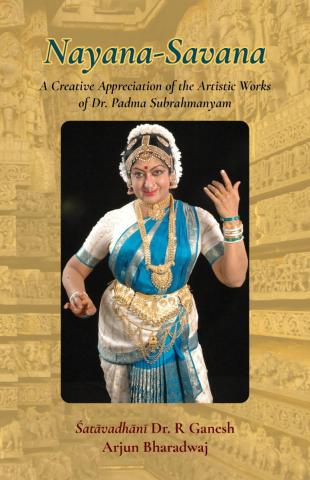
The current article is an extract from the book Nayana-Savana, authored by Shatavadhani Dr R. Ganesh and Arjun Bharadwaj.


[1] Going around in a circle on the stage is also a nāṭya-dharmī technique of the Nāṭyaśāstra to suggest the change of scene, which is creatively adapted by Padma in various presentations.


Author(s)

About:

Dr. Ganesh is a 'shatavadhani' and one of India’s foremost Sanskrit poets and scholars. He writes and lectures extensively on various subjects pertaining to India and Indian cultural heritage. He is a master of the ancient art of avadhana and is credited with reviving the art in Kannada. He is a recipient of the Badarayana-Vyasa Puraskar from the President of India for his contribution to the Sanskrit language.
About:

Arjun is a writer, translator, engineer, and enjoys composing poems. He is well-versed in Sanskrit, Kannada, English, Greek, and German languages. His research interests lie in comparative aesthetics of classical Greek and Sanskrit literature. He has deep interest in the theatre arts and music. Arjun has (co-) translated the works of AR Krishna Shastri, DV Gundappa, Dr. SL Bhyrappa, Dr. SR Ramaswamy and Shatavadhani Dr. R Ganesh

Prekshaa Publications

Karnataka’s celebrated polymath, D V Gundappa brings together in the eighth volume of reminiscences character sketches of his ancestors teachers, friends, etc. and portrayal of rural life. These remarkable individuals hailing from different parts of South India are from the early part of the twentieth century. Written in Kannada in the 1970s, these memoirs go beyond personal memories and offer...

Karnataka’s celebrated polymath, D V Gundappa brings together in the seventh volume of reminiscences character sketches of prominent scholars, businessmen, hoteliers, as well as of the laity. These remarkable individuals hailing from different parts of South India are from the early part of the twentieth century. Written in Kannada in the 1970s, these memoirs go beyond personal memories and...

Poets on Poetics: Literary Aesthetics Envisioned by Sanskrit Poets uncovers the tenets of literary theory conceptualized by masters from Bharata to Jagannātha that are embedded in the works of poets from Vālmīki to Nīlakaṇṭha-dīkṣita. Poets typically present their insights in the form of suggestive verses and rarely as an organized body of facts. Their exposition, inchoate though it might seem...

India is a land of stories. It is a fountainhead of various story-telling traditions of Greater India, Asia, and Europe. The now lost Bṛhat-kathā of Guṇāḍhya was an inexhaustible treasure-trove of stories that influenced generations of listeners. Somadeva’s Kathā-sarit-sāgara is a twelfth century Sanskrit retelling of this grand compendium. To read this work is to understand the heart of the...

Among the many contributions of ancient Indians to world thought, perhaps the most insightful is the realisation that ānanda (Bliss) is the ultimate goal of human existence. Since time immemorial, India has been a land steeped in contemplation about the nature of humans and the universe. The great ṛṣis (seers) and ṛṣikās (seeresses) embarked on critical analysis of subjective experience and...

One of the two great epics of India and arguably the most popular epic in the world, the Ramayana has enchanted generations of people not just in Greater India but the world over. In less than three hundred pages The Essential Ramayana captures all the poetic subtleties and noble values of the original and offers the great epic in an eminently readable form that will appeal to the learned and...

The Bhagavad-gītā isn’t merely a treatise on ultimate liberation. It is also a treatise on good living. Even the laity, which does not have its eye on mokṣa, can immensely benefit from the Gītā. It has the power to grant an attitude of reverence in worldly life, infuse enthusiasm in the execution of duty, impart fortitude in times of adversity, and offer solace to the heart when riddled by...

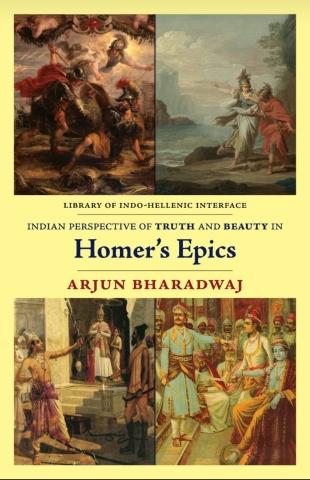
Indian Perspective of Truth and Beauty in Homer’s Epics is a unique work on the comparative study of the Greek Epics Iliad and Odyssey with the Indian Epics – Rāmāyaṇa and Mahābhārata. Homer, who laid the foundations for the classical tradition of the West, occupies a stature similar to that occupied by the seer-poets Vālmīki and Vyāsa, who are synonymous with the Indian culture. The author...

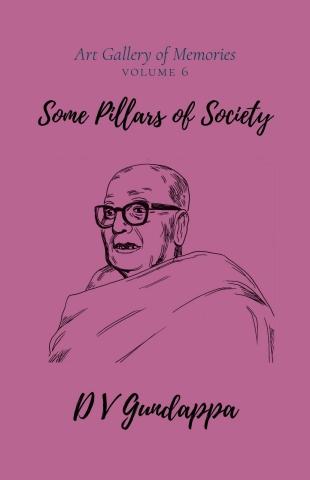
Karnataka’s celebrated polymath, D V Gundappa brings together in the sixth volume of reminiscences character sketches of prominent public figures, liberals, and social workers. These remarkable personages hailing from different corners of South India are from a period that spans from the late nineteenth century to the mid-twentieth century. Written in Kannada in the 1970s, these memoirs go...

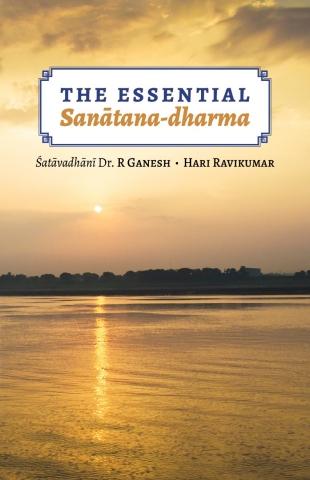
An Introduction to Hinduism based on Primary Sources

Authors: Śatāvadhānī Dr. R Ganesh, Hari Ravikumar

What is the philosophical basis for Sanātana-dharma, the ancient Indian way of life? What makes it the most inclusive and natural of all religio-philosophical systems in the world?

The Essential Sanātana-dharma serves as a handbook for anyone who wishes to grasp the...

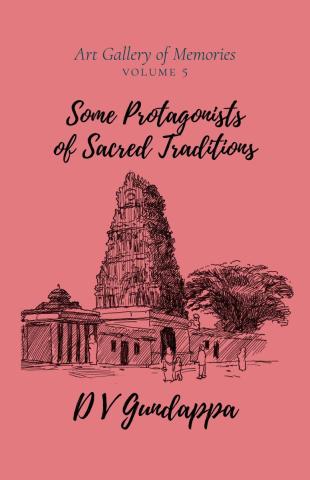
Karnataka’s celebrated polymath, D V Gundappa brings together in the fifth volume, episodes from the lives of traditional savants responsible for upholding the Vedic culture. These memorable characters lived a life of opulence amidst poverty— theirs  was the wealth of the soul, far beyond money and gold. These vidvāns hailed from different corners of the erstwhile Mysore Kingdom and lived...

Padma Bhushan Dr. Padma Subrahmanyam represents the quintessence of Sage Bharata’s art and Bhārata, the country that gave birth to the peerless seer of the Nāṭya-veda. Padma’s erudition in various streams of Indic knowledge, mastery over many classical arts, deep understanding of the nuances of Indian culture, creative genius, and sublime vision bolstered by the vedāntic and nationalistic...

Bhārata has been a land of plenty in many ways. We have had a timeless tradition of the twofold principle of Brāhma (spirit of wisdom) and Kṣāttra (spirit of valour) nourishing and protecting this sacred land. The Hindu civilisation, rooted in Sanātana-dharma, has constantly been enriched by brāhma and safeguarded by kṣāttra.
The renowned Sanskrit poet and scholar, Śatāvadhānī Dr. R...

ಛಂದೋವಿವೇಕವು ವರ್ಣವೃತ್ತ, ಮಾತ್ರಾಜಾತಿ ಮತ್ತು ಕರ್ಷಣಜಾತಿ ಎಂದು ವಿಭಕ್ತವಾದ ಎಲ್ಲ ಬಗೆಯ ಛಂದಸ್ಸುಗಳನ್ನೂ ವಿವೇಚಿಸುವ ಪ್ರಬಂಧಗಳ ಸಂಕಲನ. ಲೇಖಕರ ದೀರ್ಘಕಾಲಿಕ ಆಲೋಚನೆಯ ಸಾರವನ್ನು ಒಳಗೊಂಡ ಈ ಹೊತ್ತಗೆ ಪ್ರಧಾನವಾಗಿ ಛಂದಸ್ಸಿನ ಸೌಂದರ್ಯವನ್ನು ಲಕ್ಷಿಸುತ್ತದೆ. ತೌಲನಿಕ ವಿಶ್ಲೇಷಣೆ ಮತ್ತು ಅಂತಃಶಾಸ್ತ್ರೀಯ ಅಧ್ಯಯನಗಳ ತೆಕ್ಕೆಗೆ ಬರುವ ಬರೆಹಗಳೂ ಇಲ್ಲಿವೆ. ಶಾಸ್ತ್ರಕಾರನಿಗಲ್ಲದೆ ಸಿದ್ಧಹಸ್ತನಾದ ಕವಿಗೆ ಮಾತ್ರ ಸ್ಫುರಿಸಬಲ್ಲ ಎಷ್ಟೋ ಹೊಳಹುಗಳು ಕೃತಿಯ ಮೌಲಿಕತೆಯನ್ನು ಹೆಚ್ಚಿಸಿವೆ. ಈ...

Karnataka’s celebrated polymath, D V Gundappa brings together in the fourth volume, some character sketches of the Dewans of Mysore preceded by an account of the political framework of the State before Independence and followed by a review of the political conditions of the State after 1940. These remarkable leaders of Mysore lived in a period that spans from the mid-nineteenth century to the...

Bharatiya Kavya-mimamseya Hinnele is a monograph on Indian Aesthetics by Mahamahopadhyaya N. Ranganatha Sharma. The book discusses the history and significance of concepts pivotal to Indian literary theory. It is equally useful to the learned and the laity.

Sahitya-samhite is a collection of literary essays in Kannada. The book discusses aestheticians such as Ananda-vardhana and Rajashekhara; Sanskrit scholars such as Mena Ramakrishna Bhat, Sridhar Bhaskar Varnekar and K S Arjunwadkar; and Kannada litterateurs such as DVG, S L Bhyrappa and S R Ramaswamy. It has a foreword by Shatavadhani Dr. R Ganesh.

The Mahābhārata is the greatest epic in the world both in magnitude and profundity. A veritable cultural compendium of Bhārata-varṣa, it is a product of the creative genius of Maharṣi Kṛṣṇa-dvaipāyana Vyāsa. The epic captures the experiential wisdom of our civilization and all subsequent literary, artistic, and philosophical creations are indebted to it. To read the Mahābhārata is to...

Shiva Rama Krishna

சிவன். ராமன். கிருஷ்ணன்.
இந்திய பாரம்பரியத்தின் முப்பெரும் கதாநாயகர்கள்.
உயர் இந்தியாவில் தலைமுறைகள் பல கடந்தும் கடவுளர்களாக போற்றப்பட்டு வழிகாட்டிகளாக விளங்குபவர்கள்.
மனித ஒற்றுமை நூற்றாண்டுகால பரிணாம வளர்ச்சியின் பரிமாணம்.
தனிநபர்களாகவும், குடும்ப உறுப்பினர்களாகவும், சமுதாய பிரஜைகளாகவும் நாம் அனைவரும் பரிமளிக்கிறோம்.
சிவன் தனிமனித அடையாளமாக அமைகிறான்.
ராமன்...

ऋतुभिः सह कवयः सदैव सम्बद्धाः। विशिष्य संस्कृतकवयः। यथा हि ऋतवः प्रतिसंवत्सरं प्रतिनवतामावहन्ति मानवेषु तथैव ऋतुवर्णनान्यपि काव्यरसिकेषु कामपि विच्छित्तिमातन्वते। ऋतुकल्याणं हि सत्यमिदमेव हृदि कृत्वा प्रवृत्तम्। नगरजीवनस्य यान्त्रिकतां मान्त्रिकतां च ध्वनदिदं चम्पूकाव्यं गद्यपद्यमिश्रितमिति सुव्यक्तमेव। ऐदम्पूर्वतया प्रायः पुरीपरिसरप्रसृतानाम् ऋतूनां विलासोऽत्र प्रपञ्चितः। बेङ्गलूरुनामके...

The Art and Science of Avadhānam in Sanskrit is a definitive work on Sāhityāvadhānam, a form of Indian classical art based on multitasking, lateral thinking, and extempore versification. Dotted throughout with tasteful examples, it expounds in great detail on the theory and practice of this unique performing art. It is as much a handbook of performance as it is an anthology of well-turned...

This anthology is a revised edition of the author's 1978 classic. This series of essays, containing his original research in various fields, throws light on the socio-cultural landscape of Tamil Nadu spanning several centuries. These compelling episodes will appeal to scholars and laymen alike.
“When superstitious mediaevalists mislead the country about its judicial past, we have to...

The cultural history of a nation, unlike the customary mainstream history, has a larger time-frame and encompasses the timeless ethos of a society undergirding the course of events and vicissitudes. A major key to the understanding of a society’s unique character is an appreciation of the far-reaching contributions by outstanding personalities of certain periods – especially in the realms of...

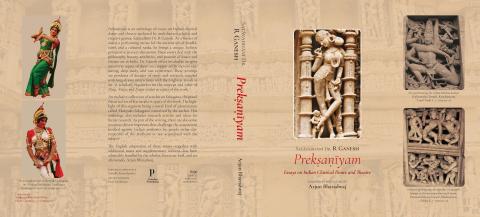
Prekṣaṇīyam is an anthology of essays on Indian classical dance and theatre authored by multifaceted scholar and creative genius, Śatāvadhānī Dr. R Ganesh. As a master of śāstra, a performing artiste (of the ancient art of Avadhānam), and a cultured rasika, he brings a unique, holistic perspective to every discussion. These essays deal with the philosophy, history, aesthetics, and practice of...

Yaugandharam

इदं किञ्चिद्यामलं काव्यं द्वयोः खण्डकाव्ययोः सङ्कलनरूपम्। रामानुरागानलं हि सीतापरित्यागाल्लक्ष्मणवियोगाच्च श्रीरामेणानुभूतं हृदयसङ्क्षोभं वर्णयति । वात्सल्यगोपालकं तु कदाचिद्भानूपरागसमये घटितं यशोदाश्रीकृष्णयोर्मेलनं वर्णयति । इदम्प्रथमतया संस्कृतसाहित्ये सम्पूर्णं काव्यं...

Vanitakavitotsavah

इदं खण्डकाव्यमान्तं मालिनीछन्दसोपनिबद्धं विलसति। मेनकाविश्वामित्रयोः समागमः, तत्फलतया शकुन्तलाया जननम्, मातापितृभ्यां त्यक्तस्य शिशोः कण्वमहर्षिणा परिपालनं चेति काव्यस्यास्येतिवृत्तसङ्क्षेपः।

Vaiphalyaphalam

इदं खण्डकाव्यमान्तं मालिनीछन्दसोपनिबद्धं विलसति। मेनकाविश्वामित्रयोः समागमः, तत्फलतया शकुन्तलाया जननम्, मातापितृभ्यां त्यक्तस्य शिशोः कण्वमहर्षिणा परिपालनं चेति काव्यस्यास्येतिवृत्तसङ्क्षेपः।

Nipunapraghunakam

इयं रचना दशसु रूपकेष्वन्यतमस्य भाणस्य निदर्शनतामुपैति। एकाङ्करूपकेऽस्मिन् शेखरकनामा चित्रोद्यमलेखकः केनापि हेतुना वियोगम् अनुभवतोश्चित्रलेखामिलिन्दकयोः समागमं सिसाधयिषुः कथामाकाशभाषणरूपेण निर्वहति।

Bharavatarastavah

अस्मिन् स्तोत्रकाव्ये भगवन्तं शिवं कविरभिष्टौति। वसन्ततिलकयोपनिबद्धस्य काव्यस्यास्य कविकृतम् उल्लाघनाभिधं व्याख्यानं च वर्तते।

Karnataka’s celebrated polymath, D V Gundappa brings together in the third volume, some character sketches of great literary savants responsible for Kannada renaissance during the first half of the twentieth century. These remarkable...

Karnataka’s celebrated polymath, D V Gundappa brings together in the second volume, episodes from the lives of remarkable exponents of classical music and dance, traditional storytellers, thespians, and connoisseurs; as well as his...

Karnataka’s celebrated polymath, D V Gundappa brings together in the first volume, episodes from the lives of great writers, poets, literary aficionados, exemplars of public life, literary scholars, noble-hearted common folk, advocates...

Evolution of Mahabharata and Other Writings on the Epic is the English translation of S R Ramaswamy's 1972 Kannada classic 'Mahabharatada Belavanige' along with seven of his essays on the great epic. It tells the riveting...

Shiva-Rama-Krishna is an English adaptation of Śatāvadhāni Dr. R Ganesh's popular lecture series on the three great...

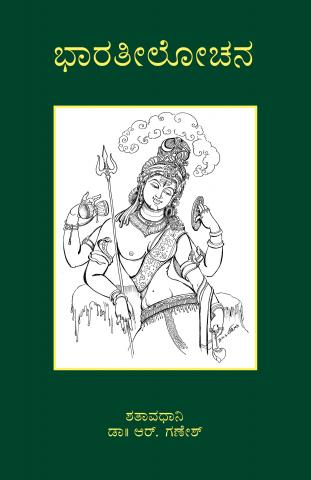
Bharatilochana

ಮಹಾಮಾಹೇಶ್ವರ ಅಭಿನವಗುಪ್ತ ಜಗತ್ತಿನ ವಿದ್ಯಾವಲಯದಲ್ಲಿ ಮರೆಯಲಾಗದ ಹೆಸರು. ಮುಖ್ಯವಾಗಿ ಶೈವದರ್ಶನ ಮತ್ತು ಸೌಂದರ್ಯಮೀಮಾಂಸೆಗಳ ಪರಮಾಚಾರ್ಯನಾಗಿ  ಸಾವಿರ ವರ್ಷಗಳಿಂದ ಇವನು ಜ್ಞಾನಪ್ರಪಂಚವನ್ನು ಪ್ರಭಾವಿಸುತ್ತಲೇ ಇದ್ದಾನೆ. ಭರತಮುನಿಯ ನಾಟ್ಯಶಾಸ್ತ್ರವನ್ನು ಅರ್ಥಮಾಡಿಕೊಳ್ಳಲು ಇವನೊಬ್ಬನೇ ನಮಗಿರುವ ಆಲಂಬನ. ಇದೇ ರೀತಿ ರಸಧ್ವನಿಸಿದ್ಧಾಂತವನ್ನು...

Vagarthavismayasvadah

“वागर्थविस्मयास्वादः” प्रमुखतया साहित्यशास्त्रतत्त्वानि विमृशति । अत्र सौन्दर्यर्यशास्त्रीयमूलतत्त्वानि यथा रस-ध्वनि-वक्रता-औचित्यादीनि सुनिपुणं परामृष्टानि प्रतिनवे चिकित्सकप्रज्ञाप्रकाशे। तदन्तर एव संस्कृतवाङ्मयस्य सामर्थ्यसमाविष्कारोऽपि विहितः। क्वचिदिव च्छन्दोमीमांसा च...

The Best of Hiriyanna

The Best of Hiriyanna is a collection of forty-eight essays by Prof. M. Hiriyanna that sheds new light on Sanskrit Literature, Indian...

Stories Behind Verses

Stories Behind Verses is a remarkable collection of over a hundred anecdotes, each of which captures a story behind the composition of a Sanskrit verse. Collected over several years from...