
March 2026
Conclusion
There is much to say about Hinduism’s antiquity and history, but just a few illustrative examples will suffice.
The oldest available composition in the world is ṛg-veda-saṃhitā, which has been passed on by means of an oral tradition across seven thousand years. At a time when the rest of the world was discovering the early threads of civilization, we had not only the two great epics but also detailed treatises on law, polity,...
A Life of Celebration
Given that the Hindu view is one of identifying oneself with the universe, and the ultimate objective of every individual is the realization of the Bliss that lies within, life is itself seen as a grand celebration.
While a ‘temple’ (devāyatana, devālaya) or ‘centre of pilgrimage’ (tīrtha, tīrtha-kṣetra) represents the Space aspect of celebration, rituals, customs, and festivals represent the aspect of Time. In other words...
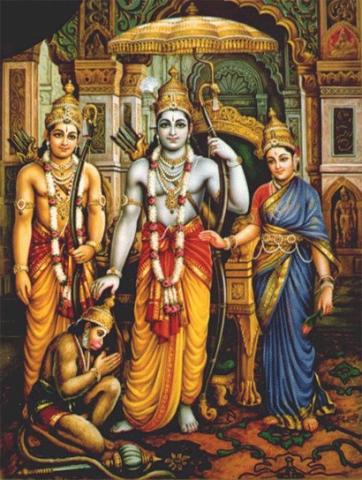
Padma then goes on to the line tau pituḥ vācā pañcavaṭi-vane viharataḥ to continue the story and in the process, she indicates how Rāma, Sītā, and Lakṣmaṇa were ferried across the River Gaṅgā – she uses a special movement of the feet while she rows (the invisible boat) with her hands; it gives the viewer the illusion of a real boat moving across the stage. The movement is also along the diagonal of the stage, giving us the three-dimensional feel...
Unity in Variety
Humans differ from one another in many ways: physical, intellectual, moral, social, cultural, etc. There are inherent temperamental differences in people. If we do not take into account these differences while prescribing a certain path to lead a good life—and instead offer a single formula to all, it will only lead to incompatibility. Moreover, it is this variety in human beings that makes them valuable to one another.
While...
Rāma’s Story to Baby Kṛṣṇa
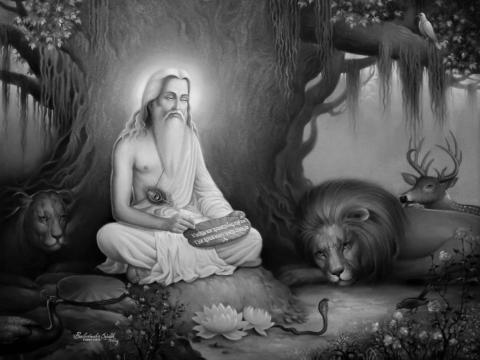
The first segment of the production is centred around the verse rāmo nāma babhūva[1] found in the work Śrī-kṛṣṇa-karṇāmṛtam composed by Līlāśuka. It involves mother Yaśodā narrating the story of Śrī-rāma to the Purāṇa-śiśu – the Timeless and Immortal Child, Kṛṣṇa. Before transforming herself into Yaśodā, Padma performs a quick nṛtta for the phrase rāmo nāma babhūva even as she holds Rāma’s posture, establishing his...
The Individual and Society
From what we have seen so far, it is quite clear that Sanātana-dharma constantly straddles between high ideals on one side and rooted pragmatism on the other. It is a consistent attempt to take humans closer towards the ideal while always making allowance for their basic instincts. Intimately familiar with human nature, the ancient seers focussed on individuals—getting them to try and raise their standards through...
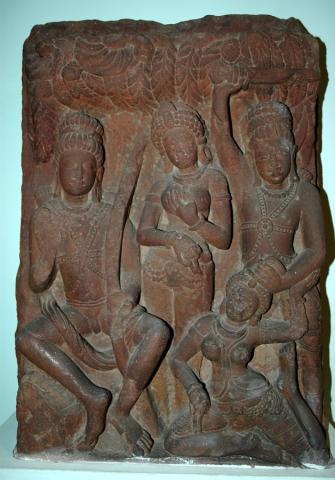
The ekārtha presentation Rāmāya Tubhyaṃ Namaḥ by Dr. Padma Subrahmanyam has captured the imagination of three generations of audience and has touched the hearts of the lay and the learned alike. As typical to an ekārtha presentation, Padma presents several episodes and characters, and thereby, sketches the physical, emotional, and spiritual journey – ayana – of Rāma. In the Indian tradition, Rāma is held as one of the highest ideals of a son,...
Supreme Spirit
We now come to the all-pervading Supreme Spirit (known as ‘Brahman’) defined in the Hindu texts. Brahman[1] is beyond creation and dissolution. It is beyond thought, form, and attributes. Brahman is the highest reality. The Vedas mention that the idea of ‘god’ is subsequent to creation[2], thus making a clear distinction between god(s) and Brahman. Hinduism has many deities but only one Supreme Being.[3]
Brahman includes all of...