Bhāṇa (Continued...)
The theme and structure of most of the bhāṇas are similar; the events take place in brothels; the protagonist is usually a viṭa; he describes his surroundings using the technique of ākāṣa-bhāṣita; he brings to the streets everyone he sees around; the śṛṅgāra and hāsya that occur as a part of bhāṇa are, in most cases, distasteful; they lack refinement and go well with viṭa’s character; in fact, at times, it is embarrassing and unsettling to even read it; these bhāṇas abound in all the shortcomings of modern-day plays. They are more products of scholarship and less of creative talent; in many cases, they are pedantic. In the play Mukundānanda-bhāṇa authored by Kāśīpati-kavirāja (who is said to belong to the 13th Century CE), the playwright has used double entendre to make it sound like kṛṣṇa-gopī-vilāsa – the romantic joys of Śrī-kṛṣṇa and the gopikās. It is probably because the play is embedded with a second layer of meaning that it can be classified as miśra-bhāṇa.
The following is the list of the other bhāṇas that have been discovered: Anaṅga-jīvana, Anaṅga-brama-vidyā-vilāsa, Anaṅga-vijaya, Anaṅga-sarvasva, Ānanda-tilaka, Kandarpa-darpa, Kandarpa-vijaya, Karpūra-carita, Kāma-vilāsa, Kusuma-bāṇa-vilāsa, Keralābharaṇa, Gopāla-līlārṇava, Candra-rekhā-vilāsa, Cola-bhāṇa, Pañca-bāṇa-vijaya, Pañca-bāṇa-vilāsa, Pañcāyudha-prapañca, Madana-gopāla-vilāsa, Madana-bhūṣaṇa, Madana-mahotsava, Madana-sañjīvana, Māla-maṅgala, Mukundānanda, Rasa-vilāsa, Rasa-sadana, Rasika-rañjana, Rasika-jana-rasollāsa, Rasikāmṛta, Rasollāsa, Līlā-madhuraka, Vasanta-tilaka (Ammā-bhāṇa), Śāradā-tilaka, Śāradā-nandana, Śṛṅgāra-kośa, Śṛṅgāra-candrikā, Śṛṅgāra-jīvana, Śṛṅgāra-taraṅgiṇī, Śṛṅgāra-tilaka (Ayyā-bhāṇa), Śṛṅgāra-dīpika, Śṛṅgāra-pāvana, Śṛṅgāra-bhūṣaṇa, Śṛṅgāra-mañjarī (Śrī-raṅga-rāja-bhāṇa), Śṛṅgāra-rasodaya, Śṛṅgāra-rāja-tilaka, Śṛṅgāra-śṛṅgāṭaka, Śṛṅgāra-sarvasva, Śṛṅgāra-stabaka, Śṛṅgāra-sudhākara, Śṛṅgāra-sudhārṇava, Sampat-kumāra-vilāsa (Mādhava-bhūṣaṇa-bhāṇa), Sarasa-kavi-kulānandana, and Hari-vilāsa-bhāṇa.
Prahasana
Prahasana is one of the older genres of theatrical presentation; however, the prahasanas available to us today are rather recent. Perhaps, Mahendra-vikrama-varmā’s Mattavilāsa-prahasana (7th Century CE) is the oldest one we have been able to trace.
Prahasanas caricature the socio-religious shortcomings of people; in many cases, the content of the prahasanas is rather vulgar for today’s tastes; the comedy is also distasteful. Bhāṇas and Prahasanas are filled with descriptions of ‘kaca-kuca-nitamba’; such instances naturally make the cultured connoisseurs uncomfortable, and women embarrassed. There hardly seems to be a prahasana in the Sanskrit language, which is comfortable for everyone’s reading and viewing. The kind of sophisticated comedy that we see in the English plays is rarely found in Sanskrit literature.
In order to illustrate the nature of Sanskrit prahasanas, we present, in summary, the Laṭaka-melaka. The name of the play suggests a conglomeration of the wicked; the prahasana is structured in two acts; the first act is named Lajjā-vikrama, and the second, Danturā Vivāha. All events take place in the house of a veśyā named Madana-mañjarī.
An upādhyāya named Sabhāsali, along with his student called Kulavyādhi, comes looking for Madana-mañjarī. His wife had shooed him away from his house by beating him up with ladles, spoons, utensils, containers, and everything else she could place her hands on. Upon hearing his sad tale, Madana-mañjarī thinks that a romantic affair with such a person is as good as a vandhyā-suta wearing a gagana-kusuma (i.e., a combination of impossibilities). Her mother had an ulcer on her thigh, and to get it treated, Sabhāsali invited a physician named Jantuketu; his treatment was extreme on all counts. He would treat a person suffering from fever with milk and ghee; a person afflicted with Tuberculosis would be treated by extracting blood from his body; and the one afflicted with an eye disease would be treated by stuffing their eye with salt, etc. By the time the physician arrived there, a fishbone had got stuck in Madana-mañjarī’s throat. He suggests that the best way to remove the bone would be by tying up her mouth open, inserting a rope to pull it out from her throat; he says that his father pulled out a gooseberry that was stuck in a camel’s throat in a similar manner. Madana-mañjarī laughs out loud upon hearing this, and the bone that was stuck in her throat pops out in no time.
The town had a rule that if a patient passed away due to a physician’s treatment, the latter was to remove the corpse of the deceased. As it was rather common for people to die than survive because of his treatment, he had given up on treating elephants and would treat only children. He describes his expertise in medicine as follows –
yasya kasya tarormūlaṃ yena kenāpi peṣayet|
yasmai kasmai pradātavyaṃ yadvā tadvā bhaviṣyati||
cakṣū roge samutpanne taptaphālaṃ gude nyaset|
tadā netrodbhavāṃ pīḍāṃ manasāpi na saṃsmaret||
The physician, besotted by her beauty, falls in love with Madana-mañjarī. He tries to win her over by using vaśīkaraṇa and other mantras.
Following this, a digambara named Jaṭāsura comes there looking for Madana-mañjarī. The following verse describes him –
naṣṭa-śrutirvyakta-bhujaṅga-saṅgaḥ
saṅgītakānanda-vinodabandhuḥ|
vikrīta-lajjaḥ smara-bāṇavartī
jaṭāsurastaskara-cakravartī||
Ajñāna-rāśi, who had killed one of his goats, also comes there. Sabhāsali listens to his case and says that the accused had not killed the goat on purpose, and only by chance; he had mistaken it for a calf and butchered it; and thus declares that he is free of all guilt, and does not require to be punished.
To be continued ...
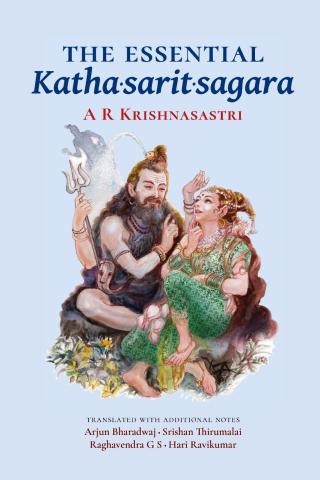
The current series of articles is an enlarged adaptation of Prof. A. R. Krishnasastri's Kannada treatise Saṃskṛta-nāṭaka. They are presented along with additional information and footnotes by Arjun Bharadwaj.