[The following forms the Editors’ Introduction to DVG through Letters, a volume published by the Gokhale Institute of Public Affairs, Bengaluru, to mark the fiftieth death anniversary of D V Gundappa.]
The publication of this volume of letters is a significant milestone in our endeavour to make available the major works of D V Gundappa in English. Together with the eleven-volume Selected Writings of D. V. Gundappa, it brings to light important primary material for the first time.
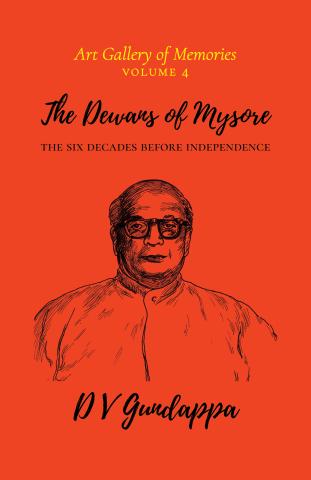
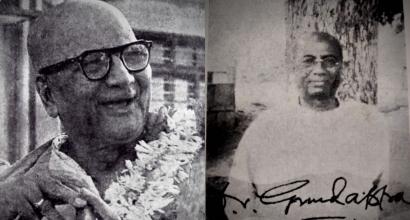
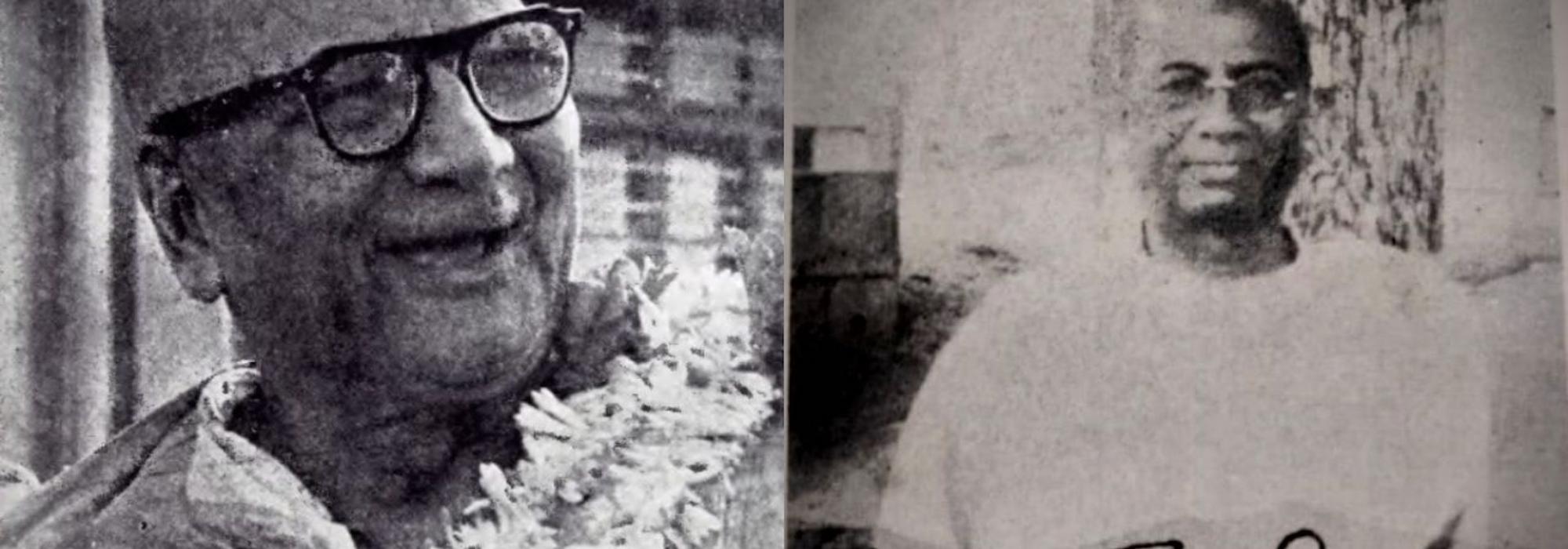
D V Gundappa (17.3.1887–7.10.1975) was a consummate polymath. He was a poet, scholar, journalist, political analyst, social worker, builder of institutions, democrat, philosopher. His attainments as a littérateur, a scholar of statecraft and the conscience-keeper of public life are the stuff of legend. He endeavoured to instil a positive sense of community consciousness in our people and turn public opinion into a force for the good. He lived like a sage and offered everything he had to society, without expecting anything in return.
Though based in Karnataka, DVG was truly a global citizen unfettered by parochial considerations. It would be instructive to analyze his life at the regional, national and international levels. At the regional level, he was a participant in and witness to: (1) the development of Mysore as a Princely State and its eventual merger into the Republic of India, (2) the rise of Kannada from mediocrity to renascence. At the national level, he saw the glorious sunrise of Independence as well as the dolorous darkness of Emergency (1975). At the international level, he lived through the two World Wars. Although a period of intense churn enveloped his life, DVG remained steady and serene, and left the world a better place. Ralph Waldo Emerson’s definition of success eminently applies to him:
“To laugh often and much; to win the respect of intelligent people and the affection of children; to earn the appreciation of honest critics and endure the betrayal of false friends; to appreciate beauty; to find the best in others; to leave the world a bit better, whether by a healthy child, a garden patch or a redeemed social condition; to know even one life has breathed easier because you have lived. This is to have succeeded.”
* * *
There is hardly any need to offer a long-winded explanation for bringing out the present miscellany. Above all, the culture of letter-writing has now all but vanished. (We are in the age of WhatsApp and email communication.) This compilation may, we hope, serve to provide to the mid-twenty-first-century generation a glimpse of the enrichment of life made possible by letters, which were the only medium of communication in the era gone by. Recourse to letter-writing was not merely imperative but also enjoyable for all concerned, since it gave physical shape to feelings and emotions. Oral communication is fleeting; intentions are not always verbalized as gestures often make do as substitutes for words.
There is an element of leisure and spontaneity in informal letters as distinct from the formal variety, which demands brevity and precision. Though the formal domain has survived, it often tends to be jejune and merely functional, unlike in the earlier century when it too used to be full-blooded. Incidentally, letters sent abroad in the past would be in transit for weeks since they had to travel by sea. Today the journey-time of letters is a few hours, maximum. This fact had to be mentioned to indicate that technology too has contributed to the manner of communication. It is well recognized that letters, both official and personal, provide valuable inputs for reconstructing biographies.
* * *
Now to the present volume.
Among the generations active before mid-twentieth century, the habit of letter-writing was fairly widespread. With D V Gundappa and men of his ilk this habit was religion. Prof. K Sampathgiri Rao, a long-time associate of the Gokhale Institute of Public Affairs, used to remark jocularly: “You Liberals are literally ‘men of letters.’ Your habit of letter-writing considerably enhances the public exchequer since you inevitably have to rely on postal services.” No letter to them, however casual, went unanswered. Most of the time at least an acknowledgement could be expected within days.
DVG accorded priority to correspondence over other work. On most days this activity consumed the greater part of the forenoon. Not unoften some time had to be snatched from late-afternoon hours to catch up with any leftover correspondence. Though in real terms DVG was not accountable to anyone, he would become restive if any letters remained unwritten. A N Krishna Rao, a renowned Kannada novelist, has counted M Govinda Pai and DVG among his senior contemporaries who promptly replied to letters.
In passing we may mention that the daily mail received by DVG was more voluminous than by any other individual. His name had become so familiar to the Postal Department that even letters merely addressed ‘D V Gundappa, Bangalore’ reached him promptly.
* * *
[[{"fid":"10580","view_mode":"teaser","fields":{"format":"teaser","alignment":"center","field_file_image_alt_text[und][0][value]":"Cover Image of DVG through Letters","field_file_image_title_text[und][0][value]":"DVG through Letters"},"type":"media","field_deltas":{"2":{"format":"teaser","alignment":"center","field_file_image_alt_text[und][0][value]":"Cover Image of DVG through Letters","field_file_image_title_text[und][0][value]":"DVG through Letters"}},"attributes":{"alt":"Cover Image of DVG through Letters","title":"DVG through Letters","class":"media-element file-teaser media-wysiwyg-align-center","data-delta":"2"}}]]
The compilation of letters in the present volume was not an easy task. DVG was a prolific writer of letters. From his early twenties, not a day passed without his writing letters – some days a few and many times several. People close to him affirm that the average would fall between five and ten a day. One can only imagine the staggering proportion this epistolary literature should have assumed over a period of six decades. If the letters happened to be typewritten, copies could have survived if someone cared to preserve them. This was chancy at best. As to handwritten letters, not only are there no records, but even the likelihood of any of them surviving is too remote to contemplate.
From the foregoing it should be evident that the material collected in this volume is what has fortuitously survived the ravages of time. The immensity of the loss impelled us to salvage at least the remaining scanty material as soon as possible, lest it perish in the same manner.
We got in touch with some contemporaries of DVG who are still with us, contacted the children of his students and associates, sought the help of scholars well-versed in his works, accessed archives in many institutions, particularly the Gokhale Institute of Public Affairs, consulted the writings of his fellow littérateurs and searched the internet. The result is some two hundred letters and personal writings spread over six decades (1913 to 1975). We have arranged these under six broad headings:
- Statesmen and Public Intellectuals
- Scholars and Littérateurs
- Responses to Significant Events
- Family Members and Relatives
- Friends, Students and Associates
- Notes and Stray Jottings.
Although the last item cannot be counted among letters, we have included it here as it adds colour and depth to the personality of DVG emerging from the foregoing sections.
We have restricted this collection to letters written by DVG because it suits our immediate objective of publishing his major works, and because letters written to DVG are not easily available. Individuals and institutions in our country generally do not preserve personal memorabilia. Nor do they systematically maintain archives and make them accessible to the public. This binds the hands of the enthusiastic researcher. Although there is some material to go on as far as letters written to DVG are concerned, much remains to be found. That is a job for another day.
* * *
The scheme of arrangement in this volume is fairly straightforward:
The letters in each section are arranged as per provenance or the seniority of the recipient. Multiple letters addressed to the same recipient are organized chronologically. Some letters are not available in toto; only a few fragments or extracts survive. In such cases the clipped portions are indicated by ellipses (‘…’). In rare cases, some routine matters are edited out. These, too, are indicated by ellipses. We have retained some letters, insignificant though they may seem, for the eminence of the recipient. Examples include those written to M Visvesvaraya and M Hiriyanna. We have transliterated occasional Kannada words and lines into the Roman script, adhering to the International Alphabet of Sanskrit Transliteration (IAST). Letters written entirely in Kannada have been retained as is.
With a view to assisting the readers and making this volume self-complete, we have provided notes at the beginning of each section and within most letters. While the notes at the beginning introduce the recipient or occasion, the footnotes explain the context of the letter and provide additional information about the people, places and organizations that it mentions. If multiple letters mention the same person or organization, notes about them are provided at the first place of occurrence. Further, if a recipient of one letter is mentioned in several others, notes about him or her are given at the primary instance. For example, notes on G P Rajaratnam are included in the letter addressed to him and not in other letters that mention him. Footnotes are not provided if sufficient context is set by a letter.
* * *
Most of the yesteryear Kannada littérateurs used to correspond primarily in English, and so it is no surprise that a majority of the letters here are in English. This does not mean they disrespected Kannada or found it lacking in any way. This trend perhaps developed because many such people had their basic training in English and used it every day at the workplace. DVG explains in a letter written to K V Puttappa (Kuvempu) on 26.2.1928: “I hope you won’t grouse at finding me write in English. Because I am fated to use this language more largely, the pen moves faster in it.” English was such an intimate language to DVG that he used to use it even in the letters to his children. Incidentally, this volume is perhaps the largest collection of English letters written by a Kannada littérateur.
The letters in this volume contain the quintessence of everything we associate with DVG and celebrate him for: filial affection, unconditional friendship, self-forgetting humility, rollicking sense of humour, candour, fearlessness, emotional sensibility, prodigious scholarship, aesthetic feel, creative energy, analytical acumen, intellectual integrity, literary flair, philosophical insight, social concern, institutional work, political activism, journalistic rigour, pragmatic nature guided by idealism, liberal outlook, non-judgemental attitude and overall a healthy, balanced and constructive perspective on life.
To order a copy, contact: +91 74836 81708 (Sahitya Bharati).
To be continued.