
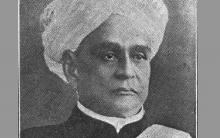
After P N Krishnamurti, V P Madhava Rao came to power as the Dewan. He was a smārta Deśastha brāhmaṇa from the Tanjore region. We could see a little bit of Sir K Seshadri Iyer’s mien in him. Employed by the Government of Mysore during Rungacharlu’s tenure as Dewan, Madhava Rao rose to prominence and became well known for his competence. He became successful as the Inspector General of Police. It was the period when the plague had struck for the first time. To prevent the disease, the government had made arrangements such as inoculation.
Author:hari

The first relates to the word sampṛktau. The poet has preferred the rather rare word sampṛkti to the more common saṃyukti. Let us understand the nuances of these words. Sampṛkti is derived from the verbal root ‘pṛcī–samparke.’ It means union, mutuality and parity. On the other hand, the word saṃyukti simply means a merger or combination. The first evokes a feeling of compatibility and complementariness. The second does not.
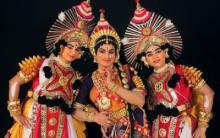
A Summary of our Productions
The following is an overview of our productions.
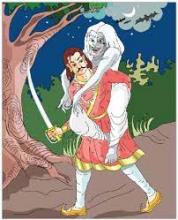
Trivikramasena, for the third time, took the dead body, placed it on his shoulders and set out. The vetāla started narrating another story:-

A person who carries out his duties without considering it an offering, will not even gain the good in this world. Then, how can he obtain a good state in other worlds? Mokṣa is the best among the four cardinal aims of human life. Karma helps achieve dharma, artha and kāma (dharma, wealth, and enjoyment). Even so, karma is the necessary first step for mokṣa. Mokṣa is liberation from the burden of the universe.
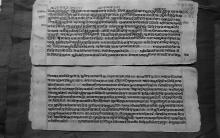
This is a short list of poetic works in Sanskrit. Most of the works included here are well known to our literary tradition. This list is divided into two parts: The first part keeps in mind a lover of Sanskrit poetry who might not actively compose verses in the language. The second part comprises works that a budding Sanskrit poet who is serious about his passion ought to read. Needless, the first part is a must-read for budding poets as well.
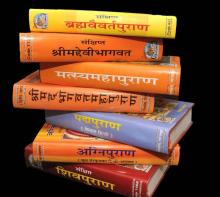
The Purāṇas occupy a high rank amongst India’s literary contribution to the world. In addition to being written lore of the highest magnitude, the Purāṇas have also remained in the oral tradition, percolating to the grassroots.

After listening to these words, Padmāvatī thought for a while and said “It wasn’t right of you to tell me only now about your friend. I consider him now as my elder brother. So, mustn’t I receive him with due honours?”

The interpretation and elaboration that Mantap does for the line raṅganyātakè bārano is extraordinary. He shows several different emotions of the gopikā as he enacts the line. O Raṅga! Why haven’t you come? – Do you think I am ugly? Or has our love lost lusture? Have other women captured you more than me? Or am I hallucinating? I am not able to bear this! Why is he so proud? Why is he arrogant and insensitive? Why do you still ignore?