Saṃskṛta-nāṭaka - Bhāṇa and Prahasana

Bhāṇa (Continued...)

The theme and structure of most of the bhāṇas are similar; the events take place in brothels; the protagonist is usually a viṭa; he describes his surroundings using the technique of ākāṣa-bhāṣita; he brings to the streets everyone he sees around; the śṛṅgāra and hāsya that occur as a part of bhāṇa are, in most cases, distasteful; they lack refinement and go well with viṭa’s character; in fact, at times, it is embarrassing and unsettling to even read it; these bhāṇas abound in all the shortcomings of modern-day plays. They are more products of scholarship and less of creative talent; in many cases, they are pedantic. In the play Mukundānanda-bhāṇa authored by Kāśīpati-kavirāja (who is said to belong to the 13th Century CE), the playwright has used double entendre to make it sound like kṛṣṇa-gopī-vilāsa – the romantic joys of Śrī-kṛṣṇa and the gopikās. It is probably because the play is embedded with a second layer of meaning that it can be classified as miśra-bhāṇa.

The following is the list of the other bhāṇas that have been discovered: Anaṅga-jīvana, Anaṅga-brama-vidyā-vilāsa, Anaṅga-vijaya, Anaṅga-sarvasva, Ānanda-tilaka, Kandarpa-darpa, Kandarpa-vijaya, Karpūra-carita, Kāma-vilāsa, Kusuma-bāṇa-vilāsa, Keralābharaṇa, Gopāla-līlārṇava, Candra-rekhā-vilāsa, Cola-bhāṇa, Pañca-bāṇa-vijaya, Pañca-bāṇa-vilāsa, Pañcāyudha-prapañca, Madana-gopāla-vilāsa, Madana-bhūṣaṇa, Madana-mahotsava, Madana-sañjīvana, Māla-maṅgala, Mukundānanda, Rasa-vilāsa, Rasa-sadana, Rasika-rañjana, Rasika-jana-rasollāsa, Rasikāmṛta, Rasollāsa, Līlā-madhuraka, Vasanta-tilaka (Ammā-bhāṇa), Śāradā-tilaka, Śāradā-nandana, Śṛṅgāra-kośa, Śṛṅgāra-candrikā, Śṛṅgāra-jīvana, Śṛṅgāra-taraṅgiṇī, Śṛṅgāra-tilaka (Ayyā-bhāṇa), Śṛṅgāra-dīpika, Śṛṅgāra-pāvana, Śṛṅgāra-bhūṣaṇa, Śṛṅgāra-mañjarī (Śrī-raṅga-rāja-bhāṇa), Śṛṅgāra-rasodaya, Śṛṅgāra-rāja-tilaka, Śṛṅgāra-śṛṅgāṭaka, Śṛṅgāra-sarvasva, Śṛṅgāra-stabaka, Śṛṅgāra-sudhākara, Śṛṅgāra-sudhārṇava, Sampat-kumāra-vilāsa (Mādhava-bhūṣaṇa-bhāṇa), Sarasa-kavi-kulānandana, and Hari-vilāsa-bhāṇa.

Prahasana

Prahasana is one of the older genres of theatrical presentation; however, the prahasanas available to us today are rather recent. Perhaps, Mahendra-vikrama-varmā’s Mattavilāsa-prahasana (7th Century CE) is the oldest one we have been able to trace.

Prahasanas caricature the socio-religious shortcomings of people; in many cases, the content of the prahasanas is rather vulgar for today’s tastes; the comedy is also distasteful. Bhāṇas and Prahasanas are filled with descriptions of ‘kaca-kuca-nitamba’; such instances naturally make the cultured connoisseurs uncomfortable, and women embarrassed. There hardly seems to be a prahasana in the Sanskrit language, which is comfortable for everyone’s reading and viewing. The kind of sophisticated comedy that we see in the English plays is rarely found in Sanskrit literature.

In order to illustrate the nature of Sanskrit prahasanas, we present, in summary, the Laṭaka-melaka. The name of the play suggests a conglomeration of the wicked; the prahasana is structured in two acts; the first act is named Lajjā-vikrama, and the second, Danturā Vivāha. All events take place in the house of a veśyā named Madana-mañjarī.

An upādhyāya named Sabhāsali, along with his student called Kulavyādhi, comes looking for Madana-mañjarī. His wife had shooed him away from his house by beating him up with ladles, spoons, utensils, containers, and everything else she could place her hands on. Upon hearing his sad tale, Madana-mañjarī thinks that a romantic affair with such a person is as good as a vandhyā-suta wearing a gagana-kusuma (i.e., a combination of impossibilities). Her mother had an ulcer on her thigh, and to get it treated, Sabhāsali invited a physician named Jantuketu; his treatment was extreme on all counts. He would treat a person suffering from fever with milk and ghee; a person afflicted with Tuberculosis would be treated by extracting blood from his body; and the one afflicted with an eye disease would be treated by stuffing their eye with salt, etc. By the time the physician arrived there, a fishbone had got stuck in Madana-mañjarī’s throat. He suggests that the best way to remove the bone would be by tying up her mouth open, inserting a rope to pull it out from her throat; he says that his father pulled out a gooseberry that was stuck in a camel’s throat in a similar manner. Madana-mañjarī laughs out loud upon hearing this, and the bone that was stuck in her throat pops out in no time.

The town had a rule that if a patient passed away due to a physician’s treatment, the latter was to remove the corpse of the deceased. As it was rather common for people to die than survive because of his treatment, he had given up on treating elephants and would treat only children. He describes his expertise in medicine as follows –

yasya kasya tarormūlaṃ yena kenāpi peṣayet|

yasmai kasmai pradātavyaṃ yadvā tadvā bhaviṣyati||

cakṣū roge samutpanne taptaphālaṃ gude nyaset|

tadā netrodbhavāṃ pīḍāṃ manasāpi na saṃsmaret||


The physician, besotted by her beauty, falls in love with Madana-mañjarī. He tries to win her over by using vaśīkaraṇa and other mantras.

Following this, a digambara named Jaṭāsura comes there looking for Madana-mañjarī. The following verse describes him –


naṣṭa-śrutirvyakta-bhujaṅga-saṅgaḥ

saṅgītakānanda-vinodabandhuḥ|

vikrīta-lajjaḥ smara-bāṇavartī

jaṭāsurastaskara-cakravartī||

Ajñāna-rāśi, who had killed one of his goats, also comes there. Sabhāsali listens to his case and says that the accused had not killed the goat on purpose, and only by chance; he had mistaken it for a calf and butchered it; and thus declares that he is free of all guilt, and does not require to be punished.

To be continued ...
The current series of articles is an enlarged adaptation of Prof. A. R. Krishnasastri's Kannada treatise Saṃskṛta-nāṭaka. They are presented along with additional information and footnotes by Arjun Bharadwaj.


Author(s)

About:

Prof. A R Krishna Sastri was a journalist, scholar, polyglot, and a pioneer of the modern Kannada renaissance, who founded the literary journal Prabuddha Karnāṭaka. His Vacana-bhārata and Kathāmṛta are classics of Kannada literature while his Saṃskṛta-nāṭaka and Bankimacandra are of unrivalled scholarship.
Translator(s)

About:

Arjun is a writer, translator, engineer, and enjoys composing poems. He is well-versed in Sanskrit, Kannada, English, Greek, and German languages. His research interests lie in comparative aesthetics of classical Greek and Sanskrit literature. He has deep interest in the theatre arts and music. Arjun has (co-) translated the works of AR Krishna Shastri, DV Gundappa, Dr. SL Bhyrappa, Dr. SR Ramaswamy and Shatavadhani Dr. R Ganesh

Prekshaa Publications

Karnataka’s celebrated polymath, D V Gundappa brings together in the eighth volume of reminiscences character sketches of his ancestors teachers, friends, etc. and portrayal of rural life. These remarkable individuals hailing from different parts of South India are from the early part of the twentieth century. Written in Kannada in the 1970s, these memoirs go beyond personal memories and offer...

Karnataka’s celebrated polymath, D V Gundappa brings together in the seventh volume of reminiscences character sketches of prominent scholars, businessmen, hoteliers, as well as of the laity. These remarkable individuals hailing from different parts of South India are from the early part of the twentieth century. Written in Kannada in the 1970s, these memoirs go beyond personal memories and...

Poets on Poetics: Literary Aesthetics Envisioned by Sanskrit Poets uncovers the tenets of literary theory conceptualized by masters from Bharata to Jagannātha that are embedded in the works of poets from Vālmīki to Nīlakaṇṭha-dīkṣita. Poets typically present their insights in the form of suggestive verses and rarely as an organized body of facts. Their exposition, inchoate though it might seem...

India is a land of stories. It is a fountainhead of various story-telling traditions of Greater India, Asia, and Europe. The now lost Bṛhat-kathā of Guṇāḍhya was an inexhaustible treasure-trove of stories that influenced generations of listeners. Somadeva’s Kathā-sarit-sāgara is a twelfth century Sanskrit retelling of this grand compendium. To read this work is to understand the heart of the...

Among the many contributions of ancient Indians to world thought, perhaps the most insightful is the realisation that ānanda (Bliss) is the ultimate goal of human existence. Since time immemorial, India has been a land steeped in contemplation about the nature of humans and the universe. The great ṛṣis (seers) and ṛṣikās (seeresses) embarked on critical analysis of subjective experience and...

One of the two great epics of India and arguably the most popular epic in the world, the Ramayana has enchanted generations of people not just in Greater India but the world over. In less than three hundred pages The Essential Ramayana captures all the poetic subtleties and noble values of the original and offers the great epic in an eminently readable form that will appeal to the learned and...

The Bhagavad-gītā isn’t merely a treatise on ultimate liberation. It is also a treatise on good living. Even the laity, which does not have its eye on mokṣa, can immensely benefit from the Gītā. It has the power to grant an attitude of reverence in worldly life, infuse enthusiasm in the execution of duty, impart fortitude in times of adversity, and offer solace to the heart when riddled by...

Indian Perspective of Truth and Beauty in Homer’s Epics is a unique work on the comparative study of the Greek Epics Iliad and Odyssey with the Indian Epics – Rāmāyaṇa and Mahābhārata. Homer, who laid the foundations for the classical tradition of the West, occupies a stature similar to that occupied by the seer-poets Vālmīki and Vyāsa, who are synonymous with the Indian culture. The author...

Karnataka’s celebrated polymath, D V Gundappa brings together in the sixth volume of reminiscences character sketches of prominent public figures, liberals, and social workers. These remarkable personages hailing from different corners of South India are from a period that spans from the late nineteenth century to the mid-twentieth century. Written in Kannada in the 1970s, these memoirs go...

An Introduction to Hinduism based on Primary Sources

Authors: Śatāvadhānī Dr. R Ganesh, Hari Ravikumar

What is the philosophical basis for Sanātana-dharma, the ancient Indian way of life? What makes it the most inclusive and natural of all religio-philosophical systems in the world?

The Essential Sanātana-dharma serves as a handbook for anyone who wishes to grasp the...

Karnataka’s celebrated polymath, D V Gundappa brings together in the fifth volume, episodes from the lives of traditional savants responsible for upholding the Vedic culture. These memorable characters lived a life of opulence amidst poverty— theirs  was the wealth of the soul, far beyond money and gold. These vidvāns hailed from different corners of the erstwhile Mysore Kingdom and lived...

Padma Bhushan Dr. Padma Subrahmanyam represents the quintessence of Sage Bharata’s art and Bhārata, the country that gave birth to the peerless seer of the Nāṭya-veda. Padma’s erudition in various streams of Indic knowledge, mastery over many classical arts, deep understanding of the nuances of Indian culture, creative genius, and sublime vision bolstered by the vedāntic and nationalistic...

Bhārata has been a land of plenty in many ways. We have had a timeless tradition of the twofold principle of Brāhma (spirit of wisdom) and Kṣāttra (spirit of valour) nourishing and protecting this sacred land. The Hindu civilisation, rooted in Sanātana-dharma, has constantly been enriched by brāhma and safeguarded by kṣāttra.
The renowned Sanskrit poet and scholar, Śatāvadhānī Dr. R...

ಛಂದೋವಿವೇಕವು ವರ್ಣವೃತ್ತ, ಮಾತ್ರಾಜಾತಿ ಮತ್ತು ಕರ್ಷಣಜಾತಿ ಎಂದು ವಿಭಕ್ತವಾದ ಎಲ್ಲ ಬಗೆಯ ಛಂದಸ್ಸುಗಳನ್ನೂ ವಿವೇಚಿಸುವ ಪ್ರಬಂಧಗಳ ಸಂಕಲನ. ಲೇಖಕರ ದೀರ್ಘಕಾಲಿಕ ಆಲೋಚನೆಯ ಸಾರವನ್ನು ಒಳಗೊಂಡ ಈ ಹೊತ್ತಗೆ ಪ್ರಧಾನವಾಗಿ ಛಂದಸ್ಸಿನ ಸೌಂದರ್ಯವನ್ನು ಲಕ್ಷಿಸುತ್ತದೆ. ತೌಲನಿಕ ವಿಶ್ಲೇಷಣೆ ಮತ್ತು ಅಂತಃಶಾಸ್ತ್ರೀಯ ಅಧ್ಯಯನಗಳ ತೆಕ್ಕೆಗೆ ಬರುವ ಬರೆಹಗಳೂ ಇಲ್ಲಿವೆ. ಶಾಸ್ತ್ರಕಾರನಿಗಲ್ಲದೆ ಸಿದ್ಧಹಸ್ತನಾದ ಕವಿಗೆ ಮಾತ್ರ ಸ್ಫುರಿಸಬಲ್ಲ ಎಷ್ಟೋ ಹೊಳಹುಗಳು ಕೃತಿಯ ಮೌಲಿಕತೆಯನ್ನು ಹೆಚ್ಚಿಸಿವೆ. ಈ ಗ್...

Karnataka’s celebrated polymath, D V Gundappa brings together in the fourth volume, some character sketches of the Dewans of Mysore preceded by an account of the political framework of the State before Independence and followed by a review of the political conditions of the State after 1940. These remarkable leaders of Mysore lived in a period that spans from the mid-nineteenth century to the...

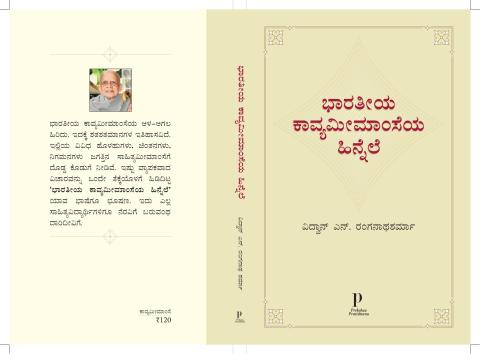
Bharatiya Kavya-mimamseya Hinnele is a monograph on Indian Aesthetics by Mahamahopadhyaya N. Ranganatha Sharma. The book discusses the history and significance of concepts pivotal to Indian literary theory. It is equally useful to the learned and the laity.

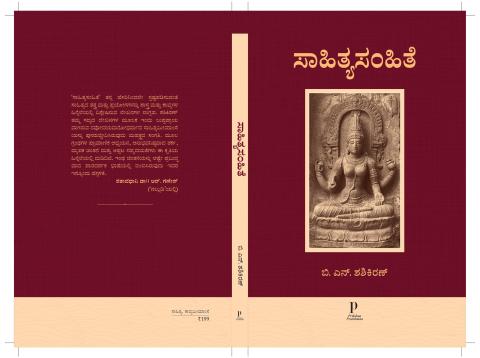
Sahitya-samhite is a collection of literary essays in Kannada. The book discusses aestheticians such as Ananda-vardhana and Rajashekhara; Sanskrit scholars such as Mena Ramakrishna Bhat, Sridhar Bhaskar Varnekar and K S Arjunwadkar; and Kannada litterateurs such as DVG, S L Bhyrappa and S R Ramaswamy. It has a foreword by Shatavadhani Dr. R Ganesh.

The Mahābhārata is the greatest epic in the world both in magnitude and profundity. A veritable cultural compendium of Bhārata-varṣa, it is a product of the creative genius of Maharṣi Kṛṣṇa-dvaipāyana Vyāsa. The epic captures the experiential wisdom of our civilization and all subsequent literary, artistic, and philosophical creations are indebted to it. To read the Mahābhārata is to...

Shiva Rama Krishna

சிவன். ராமன். கிருஷ்ணன்.
இந்திய பாரம்பரியத்தின் முப்பெரும் கதாநாயகர்கள்.
உயர் இந்தியாவில் தலைமுறைகள் பல கடந்தும் கடவுளர்களாக போற்றப்பட்டு வழிகாட்டிகளாக விளங்குபவர்கள்.
மனித ஒற்றுமை நூற்றாண்டுகால பரிணாம வளர்ச்சியின் பரிமாணம்.
தனிநபர்களாகவும், குடும்ப உறுப்பினர்களாகவும், சமுதாய பிரஜைகளாகவும் நாம் அனைவரும் பரிமளிக்கிறோம்.
சிவன் தனிமனித அடையாளமாக அமைகிறான்.
ராமன் குடு...

ऋतुभिः सह कवयः सदैव सम्बद्धाः। विशिष्य संस्कृतकवयः। यथा हि ऋतवः प्रतिसंवत्सरं प्रतिनवतामावहन्ति मानवेषु तथैव ऋतुवर्णनान्यपि काव्यरसिकेषु कामपि विच्छित्तिमातन्वते। ऋतुकल्याणं हि सत्यमिदमेव हृदि कृत्वा प्रवृत्तम्। नगरजीवनस्य यान्त्रिकतां मान्त्रिकतां च ध्वनदिदं चम्पूकाव्यं गद्यपद्यमिश्रितमिति सुव्यक्तमेव। ऐदम्पूर्वतया प्रायः पुरीपरिसरप्रसृतानाम् ऋतूनां विलासोऽत्र प्रपञ्चितः। बेङ्गलूरुनामके महा...

The Art and Science of Avadhānam in Sanskrit is a definitive work on Sāhityāvadhānam, a form of Indian classical art based on multitasking, lateral thinking, and extempore versification. Dotted throughout with tasteful examples, it expounds in great detail on the theory and practice of this unique performing art. It is as much a handbook of performance as it is an anthology of well-turned...

This anthology is a revised edition of the author's 1978 classic. This series of essays, containing his original research in various fields, throws light on the socio-cultural landscape of Tamil Nadu spanning several centuries. These compelling episodes will appeal to scholars and laymen alike.
“When superstitious mediaevalists mislead the country about its judicial past, we have to...

The cultural history of a nation, unlike the customary mainstream history, has a larger time-frame and encompasses the timeless ethos of a society undergirding the course of events and vicissitudes. A major key to the understanding of a society’s unique character is an appreciation of the far-reaching contributions by outstanding personalities of certain periods – especially in the realms of...

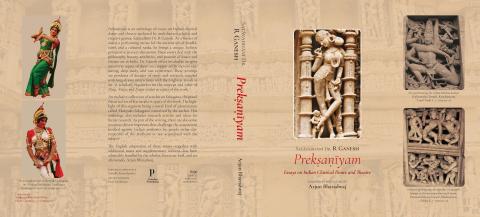
Prekṣaṇīyam is an anthology of essays on Indian classical dance and theatre authored by multifaceted scholar and creative genius, Śatāvadhānī Dr. R Ganesh. As a master of śāstra, a performing artiste (of the ancient art of Avadhānam), and a cultured rasika, he brings a unique, holistic perspective to every discussion. These essays deal with the philosophy, history, aesthetics, and practice of...

Yaugandharam

इदं किञ्चिद्यामलं काव्यं द्वयोः खण्डकाव्ययोः सङ्कलनरूपम्। रामानुरागानलं हि सीतापरित्यागाल्लक्ष्मणवियोगाच्च श्रीरामेणानुभूतं हृदयसङ्क्षोभं वर्णयति । वात्सल्यगोपालकं तु कदाचिद्भानूपरागसमये घटितं यशोदाश्रीकृष्णयोर्मेलनं वर्णयति । इदम्प्रथमतया संस्कृतसाहित्ये सम्पूर्णं काव्यं चम्पकमालोत...

Vanitakavitotsavah

इदं खण्डकाव्यमान्तं मालिनीछन्दसोपनिबद्धं विलसति। मेनकाविश्वामित्रयोः समागमः, तत्फलतया शकुन्तलाया जननम्, मातापितृभ्यां त्यक्तस्य शिशोः कण्वमहर्षिणा परिपालनं चेति काव्यस्यास्येतिवृत्तसङ्क्षेपः।

Vaiphalyaphalam

इदं खण्डकाव्यमान्तं मालिनीछन्दसोपनिबद्धं विलसति। मेनकाविश्वामित्रयोः समागमः, तत्फलतया शकुन्तलाया जननम्, मातापितृभ्यां त्यक्तस्य शिशोः कण्वमहर्षिणा परिपालनं चेति काव्यस्यास्येतिवृत्तसङ्क्षेपः।

Nipunapraghunakam

इयं रचना दशसु रूपकेष्वन्यतमस्य भाणस्य निदर्शनतामुपैति। एकाङ्करूपकेऽस्मिन् शेखरकनामा चित्रोद्यमलेखकः केनापि हेतुना वियोगम् अनुभवतोश्चित्रलेखामिलिन्दकयोः समागमं सिसाधयिषुः कथामाकाशभाषणरूपेण निर्वहति।

Bharavatarastavah

अस्मिन् स्तोत्रकाव्ये भगवन्तं शिवं कविरभिष्टौति। वसन्ततिलकयोपनिबद्धस्य काव्यस्यास्य कविकृतम् उल्लाघनाभिधं व्याख्यानं च वर्तते।

Karnataka’s celebrated polymath, D V Gundappa brings together in the third volume, some character sketches of great literary savants responsible for Kannada renaissance during the first half of the twentieth century. These remarkable...

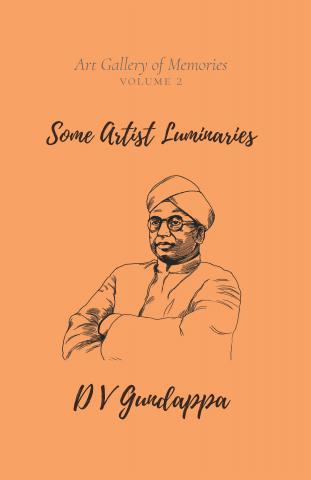
Karnataka’s celebrated polymath, D V Gundappa brings together in the second volume, episodes from the lives of remarkable exponents of classical music and dance, traditional storytellers, thespians, and connoisseurs; as well as his...

Karnataka’s celebrated polymath, D V Gundappa brings together in the first volume, episodes from the lives of great writers, poets, literary aficionados, exemplars of public life, literary scholars, noble-hearted common folk, advocates...

Evolution of Mahabharata and Other Writings on the Epic is the English translation of S R Ramaswamy's 1972 Kannada classic 'Mahabharatada Belavanige' along with seven of his essays on the great epic. It tells the riveting...

Shiva-Rama-Krishna is an English adaptation of Śatāvadhāni Dr. R Ganesh's popular lecture series on the three great...

Bharatilochana

ಮಹಾಮಾಹೇಶ್ವರ ಅಭಿನವಗುಪ್ತ ಜಗತ್ತಿನ ವಿದ್ಯಾವಲಯದಲ್ಲಿ ಮರೆಯಲಾಗದ ಹೆಸರು. ಮುಖ್ಯವಾಗಿ ಶೈವದರ್ಶನ ಮತ್ತು ಸೌಂದರ್ಯಮೀಮಾಂಸೆಗಳ ಪರಮಾಚಾರ್ಯನಾಗಿ  ಸಾವಿರ ವರ್ಷಗಳಿಂದ ಇವನು ಜ್ಞಾನಪ್ರಪಂಚವನ್ನು ಪ್ರಭಾವಿಸುತ್ತಲೇ ಇದ್ದಾನೆ. ಭರತಮುನಿಯ ನಾಟ್ಯಶಾಸ್ತ್ರವನ್ನು ಅರ್ಥಮಾಡಿಕೊಳ್ಳಲು ಇವನೊಬ್ಬನೇ ನಮಗಿರುವ ಆಲಂಬನ. ಇದೇ ರೀತಿ ರಸಧ್ವನಿಸಿದ್ಧಾಂತವನ್ನ...

Vagarthavismayasvadah

“वागर्थविस्मयास्वादः” प्रमुखतया साहित्यशास्त्रतत्त्वानि विमृशति । अत्र सौन्दर्यर्यशास्त्रीयमूलतत्त्वानि यथा रस-ध्वनि-वक्रता-औचित्यादीनि सुनिपुणं परामृष्टानि प्रतिनवे चिकित्सकप्रज्ञाप्रकाशे। तदन्तर एव संस्कृतवाङ्मयस्य सामर्थ्यसमाविष्कारोऽपि विहितः। क्वचिदिव च्छन्दोमीमांसा च प्रकल्पित...

The Best of Hiriyanna

The Best of Hiriyanna is a collection of forty-eight essays by Prof. M. Hiriyanna that sheds new light on Sanskrit Literature, Indian...

Stories Behind Verses

Stories Behind Verses is a remarkable collection of over a hundred anecdotes, each of which captures a story behind the composition of a Sanskrit verse. Collected over several years from...