

Vaiṣṇavāgamas
Vaiṣṇavāgamas are similar to the Śaivāgamas. They are scriptures containing the procedure for worshipping Viṣṇu, the procedure for temple construction, and philosophy. The Vaiṣṇavāgamas are of two types – Pāñcarātra and Vaikhānasa. The Pāñcātrāgamas are older than the latter. They have been mentioned in the Mahābhārata. The roots of the Pāñcarātra texts can be traced to the Taittirīya Āraṇyaka and Śatapatha Brāhmaṇa. Some...

The Āgamika Abhicāras
The Āgamas are scriptures that predominantly deal with the worship of principal Vaidika deities like Śiva, Viṣṇu and Śakti. They also contain philosophy, nityakarmas, sixteen saṁskāras, procedures for temple construction, idol worship, hōmas, and sādhanās. The Āgamas can be classified into three – (1) Śaivāgmas, (2) Vaiṣṇavāgamas and (3) Śāktāgamas (also called as Śakta Tantras). In these Āgamas, there are various rituals...
Ekāha Category
In the Ekāha rites, the details will be provided only for the Śyēnayāga. The rest of the abhicāra rites only have differences in the śastras, stōmas and sāmans. Those details will not be dealt with here. After the performance of these rites, the yajamāna has to perform Jyōtiṣṭōma for peace or prāyaścitta[1] since violence is involved.
(1) Syēna-yāga
The Śyēnayāga is the most important among all the abhicāra rites found in the...

(2) Rudravagnīṣṭi
This is considered a very potent abhicāra to slay one’s enemy. It is performed to Rudrāgni, a dangerous form of Agni or in simple terms, Rudra himself. Purōḍāśa cooked on eight potsherds in the oblation in this iṣṭi[1]. The purōḍāśa is prepared from black rice. The arthavāda states that Rudravat Agni strikes down the foes quickly[2]. Baudhāyana states that ṛtviks are to wear red turbans and clothes while performing this...
(6) Rājasūya[1]
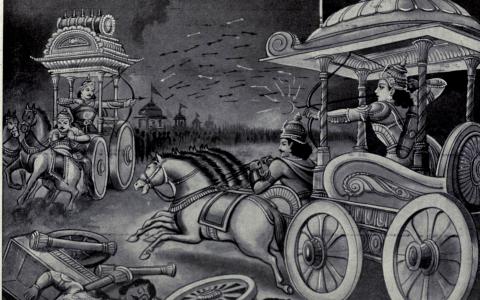
In the Rājasūya-yāga, the indraturīya oblation is offered to smite rākṣāsas and adversaries. This is an obligatory rite performed in the Rājasūya. In addition to that, the Rāṣṭrabhṛt libations are also poured to secure the sovereignty of the emperor. The King can offer an optional libation of Jaya and Abhyātana. The pañcavātīya offering is also offered in the Rājasūya to ensure the elimination of the enemy[2]. In the Taittirīya-...
(4) Somayāgas and Paśuyāgas
The yajñas where the soma plant is used as the substance are called as somayāga. There are more than a thousand somayāgas mentioned in the Vedas.
Before the commencement of the somayāga, dīkṣaṇiyēṣṭi is performed to initiate the yajamāna. While the initiation process takes place, the yajamāna applies collyrium to his eyes. It is stated that by applying collyrium, the yajamāna takes away the eye of his enemy. [1]...
(3) Jaya, Abhyātāna, and Rāṣṭrabhṛt
The Jaya, Abhyātāna, and Rāṣṭrabhṛt offerings are offerings given in Somayāgas. They are optional in the Vājapēya, Rājasūya, and Aśvamēdha. Kumārila-bhaṭṭa, however, opines that the above three homas are to be performed as a subsidiary to Darśapūrṇamāsa and similar śrauta rites[1].
They are also performed as an obligatory rite by the Yajurvēdins during the marriage ceremony, as mentioned by both Baudhāyana[2]...
Vaidika Abhicāras
The abhicāras in the Vedas can be divided into three types: (1) Sāmānya-abhicāras, (2) Viśēṣa-abhicāras, and (3) Abhicāra-Soma-yāgas.
Sāmanya-abhicāras:
These are the abhicāras that are a subsidiary of a principal rite. Some of these are obligatory, while the majority are optional rites.
(1) Agnyādhēya and Agnihotra
The concept of abhicāra can be traced back to the Agnyādheya, a rite performed by brahmāṇas, kṣattriyas, vaiśyas...

The Tattva Behind Abhicāra
Abhicāra is defined as the performance of specific rites directed toward an adversary with the intent of causing harm or neutralisation[1]. The term has often been mistranslated as "witchcraft" or "black magic," both of which carry modern, culturally dissonant connotations. In truth, abhicāra comprises twelve types[2]: (1) elimination, (2) expulsion, (3) annihilation, (4) paralysis, (5) stupefying, (6) nailing down, (7...
Preface
(Maṅgalam)
सामोपायनयप्रपञ्चपटवः प्रायेण ये भीरवः
शूराणां व्यवसाय एव हि परं संसिद्धये कारणम्।
विस्फूर्जद्विकटाटवीगजघटापीठैकसञ्चूर्णन-
व्यापारैकरसस्य सन्ति विजये सिंहस्य के मन्त्रिणः ॥
~ Subhāṣitaratnabhāṇḍāgāra, 2nd Prakaraṇa, Vīra-praśaṁsā
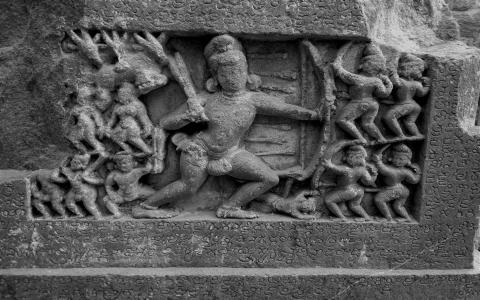
The Kṣāttra spirit or the spirit of valour — that fiery, resolute force of righteous power — is not merely a part of Sanātana-dharma; it is its pulse, breath, and blade of sacred...