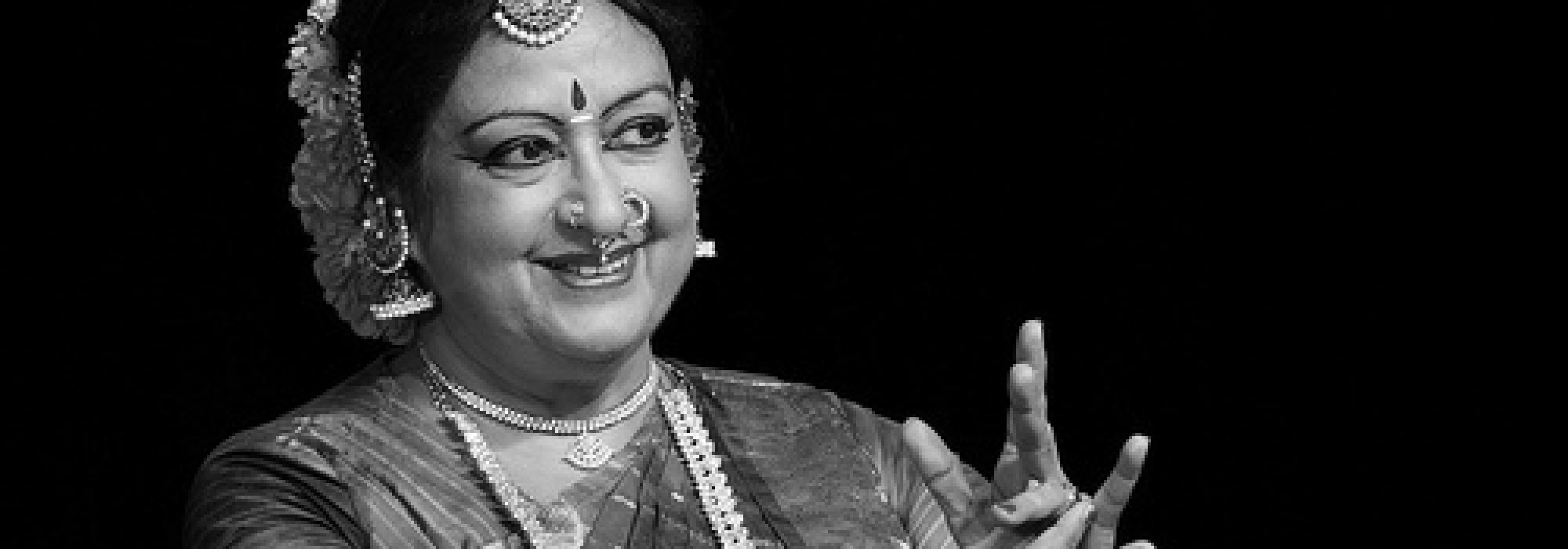
We are never witnesses to the events of the past; it is therefore hard to write authentic history. Written history, regardless of its authenticity, is but a coarse inference based on the relics of yore. This problem is further aggravated in the case of Indian history, where tangible evidence that the modern mind expects is meagre, and the oral tradition, i.e., the unwritten history, rather reigns supreme. This is most evident in the historical documentation of art. Even here, sculpture, painting, and poetry enjoy greater benefits than music and dance. Only a handful of performers are historians of art, and this worsens the predicament of honest seekers. Further, those artists who double up as art historians singularly lack an integrated vision that is essential to appreciate classical arts. In this background, the creative works and writings of Dr. Padma Subrahmanyam are seminal and invaluable, as she overcomes all the lacunae in the field of art and aesthetics and stands tall as an artist and a scholar.
In recent decades, there appears to be a divorce between theory (tattva) and practice (prayoga) in India. Like a number of other branches of human endeavour, dance too suffers from this problem. Dr. Padma Subrahmanyam’s thorough scholarship and creative presentations, that know no peer, effortlessly bridge this gap. There exists another dichotomy: the one between form (rūpa) and content (svarūpa). Although this plagues all systems of intellectual inquiry and creative expression, it affects the fraternity of classical arts most acutely. Dr. Padma Subrahmanyam’s artistic brilliance and profound vision resolve the issue as though without any effort. There is yet another apparent conflict, and that is related to inspiration/talent (pratibhā) and erudition (vyutpatti). Again, Padma readily bridges the gap. Similar is the disconnect between lakṣya and lakṣaṇa. In her pursuit of lakṣya-lakṣaṇa-samanvaya, Padma herself became the samanvaya! It is akin to the statement brahmavid-brahmaiva bhavati.[1]
There are other conflicts connected with apparent ‘opposites’ such as tradition and modernity, classicality and innovation, consolidation and experimentation, and so on. In all these issues of divergence, Padma has experienced and expressed her vision that is singularly devoted to non-duality. Through her unwavering adherence to Rasa and her vedāntic perspective, every pair of apparent opposites and conflicts is reconciled and sublimated. This is the reason for her art to be appealing to all audiences – lay and learned, traditional and modern, local and global. In her time and space find absolute fulfilment in terms of material insignificance and aesthetic significance. Thanks to her, emotion and expression have found new meaning.[2]
In most artists, the statics and dynamics of dance remain merely at the level of physics and physiology. In Padma, however, they rise to the level of metaphysics and spirituality. As far as the art of dance is concerned, she is the meeting point of structure and substance as well as instruction and entertainment. All four forms of aesthetic communication (caturvidhābhinaya) find absolute confluence and fulfilment in her art. Bharata, the universal seer of art and aesthetics, the ṛṣi of the sārva-varṇika-veda, is indeed lucky to find himself in her. One cannot censure the Creator for gender discrimination anymore!
In Dr. Padma Subrahmanyam, one unfailingly notices the integrated vision, which has a pan-Asian outlook of all performing arts. At a subtler level, one also encounters innumerable flashes of global art. Since Padma binds together all classical art forms of India, she reconciles every conflict between classical, popular, commercial, and folk varieties of dance, music, and literature. She is intimately conversant not merely with dance, but with all other allied arts and sciences, and this ensures the freshness of her performances. Unwavering fidelity to Sanātana-dharma, selfless concern for the nation, and a truly spiritual attitude have added to her all-pervading imagination (pratibhā), astounding erudition (vyutpatti), and dedicated practice (abhyāsa), only to sculpt her as an eternal embodiment of dance and pan-Indian arts.
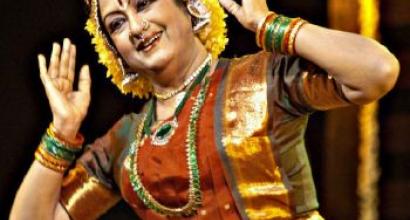
The sparkling set of eyes in her glowing face is the abode of all vivid emotions. Padma’s expression is so perfect that it renders precise even a vague and passing sentiment. By mere articulation of emotional energy, her limbs create visual poetry that enraptures the lay and the learned. In her performances, subtlety and sharpness, agility and aptness, spontaneity and sophistication, simplicity and sublimity compete to create an ambience that befits profound aesthetic appeal. She makes music, dance and dance sing!
Every performance of hers is an honest representation of our multi-coloured heritage. Padma’s selection of lyrics and music bears testimony to this fact: she culls out lyrics from various classics composed in a variety of languages and composes music that includes the nuances of Indian classical music (both Carnatic and Hindustani), folk tunes, and Western melodies. While picking segments from literary works and interpreting them, Padma has always ensured that she has remained true to the vision of seer-poets as well as the immortal spirit of the Sanātana-saṃskṛti.[3] She has always been an embodiment and epitome of aucitya.[4] These features make her art transcend the limitations of space and time.
To be continued
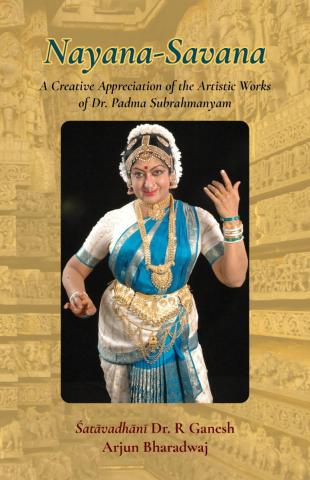
The current article is an extract from the book Nayana-Savana, authored by Shatavadhani Dr R. Ganesh and Arjun Bharadwaj.
[1] The Knower of Brahman becomes Brahman. In this case, Padma who has realized the lakṣya-lakṣaṇa-samanvaya has become an embodiment of the same.
[2] Padma’s artistic presentations truly adhere to the following statement of Ānanda-vardhana –
sandhi-sandhyaṅga-ghaṭanaṃ rasābhivyaktyapekṣayā|
na tu kevalayā śāstra-sthiti-sampādanecchayā|| (Dhvanyāloka, 3.12)
Padma’s choreography ultimately has Rasa as the vision. Even when she brings in diverse elements in her presentation, all of them invariably become subservient to Rasa. She does not bring them merely for the sake of variety or to show off her skill and knowledge of the śāstras. Nothing in her presentations looks extraneous or force-fitted. Every element of caturvidhābhinaya harmoniously blends to provide the connoisseur with a supremely fulfilling aesthetic experience.
[3] Padma has always remained true to words of the literary aesthetician Ānanda-vardhana
santi siddha-rasa-prakhyā ye ca rāmāyaṇādayaḥ |
kathāśrayā na tairyojyā svecchā rasavirodhinī || (Dhvanyāloka, Udyota 3, segment after verse 14)
Epics such as the Rāmāyaṇā are siddha-rasas i.e., are rasas perfected, which do not need further intervention. In other words, the epics are filled with rasas that are well-established in the community consciousness. Ānanda-vardhana tells us that the poets (artists) should exercise their creative liberty ensuring that these established rasas are not violated while developing their plot.
Padma has been true to every letter of the following verse
vālmīki-vyāsa-mukhyāśca ye prakhyātāḥ kavīśvarāḥ |
tad-abhiprāyabāhyo'yaṃ nāsmābhir-darśito nayaḥ || (Dhvanyāloka, Udyota 3, segment after verse 19)
Padma has never presented anything that is against the opinions of the most celebrated first-rate poets like Vālmīki and Vyāsa.
[4] aucityaṃ vacasāṃ prakṛtyanugataṃ sarvatra pātrocitā
puṣṭiḥ svāvasare rasasya ca katha-mārge na cātikramaḥ|
śuddhiḥ prastuta-saṃvidhānaka-vidhau prauḍhiśca śabdārthayor-
-vidvadbhiḥ paribhāvyatām-avahitair-etāvad-evāstu naḥ|| (Rāmābhudaya of Yaśovarmā)
Just as the above verse says, Padma has always maintained aucitya in the portrayal of characters, their speech and behaviour; she evokes rasa, which goes well with the particular context and never transgresses the propriety of the plot; the stories that she narrates are well-knitted and wisdom guides them; she excels both in form and content.